
1μg (R: reducing condition, N: non-reducing condition).
BLAME/SLAMF8 Fc Chimera Protein, Human
BLAME/SLAMF8 Fc Chimera Protein, Human
Price:
Regular price
$604 USD
Regular price
Sale price
$604 USD
Unit price
per
For shipping services or bulk orders, you may request a quotation.
Secure checkout with

View full details
Product Details
Product Details
Product Specification
| Species | Human |
| Synonyms | BLAME,SLAMF8,CD353 |
| Accession | Q9P0V8-1 |
| Amino Acid Sequence | Ala23-Asp233, with C-terminal Fc |
| Expression System | HEK293 |
| Molecular Weight | 55-60kDa (Reducing) |
| Purity | >95% by SDS-PAGE |
| Endotoxin | <0.1EU/μg |
| Conjugation | Unconjugated |
| Tag | Human Fc Tag |
| Physical Appearance | Lyophilized Powder |
| Storage Buffer | PBS, pH7.4. |
| Reconstitution | Reconstitute at 0.1-1 mg/ml according to the size in ultrapure water after rapid centrifugation. |
| Stability & Storage | · 12 months from date of receipt, lyophilized powder stored at -20 to -80℃. · 3 months, -20 to -80℃ under sterile conditions after reconstitution. · 1 week, 2 to 8℃ under sterile conditions after reconstitution. · Please avoid repeated freeze-thaw cycles. |
| Reference | 1.Sci Rep . 2020 Feb 13;10(1):2505. |
Background
B-lymphocyte activator macrophage expressed (BLAME), also known as SLAMF8, is a type I transmembrane protein that belongs to the CD2 subset of immunoglobulin superfamily cell receptors. BLAME is a cell surface receptor that is expressed upon activation of macrophages (MΦs) by IFN-γ or bacteria, is a negative regulator of ROS in response to Gram+ and Gram- bacteria. These receptors share a common ectodomain organization: a membrane-proximal immunoglobulin constant domain and a membrane-distal immunoglobulin variable domain that is responsible for ligand recognition. BLAME is highly expressed in T cells of childhood cancer and Epstein-Barr virus positive gastric cancer, and is a potential immunotherapeutic target for a variety of diseases.
Picture
Picture
SDS-PAGE
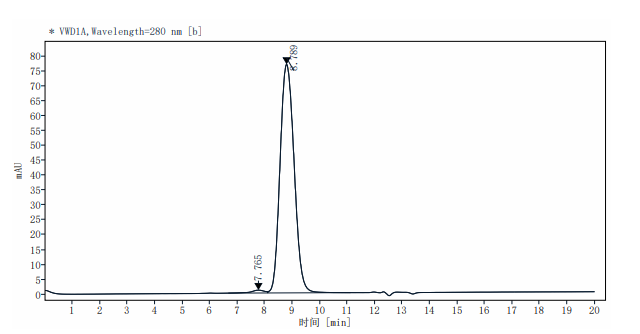
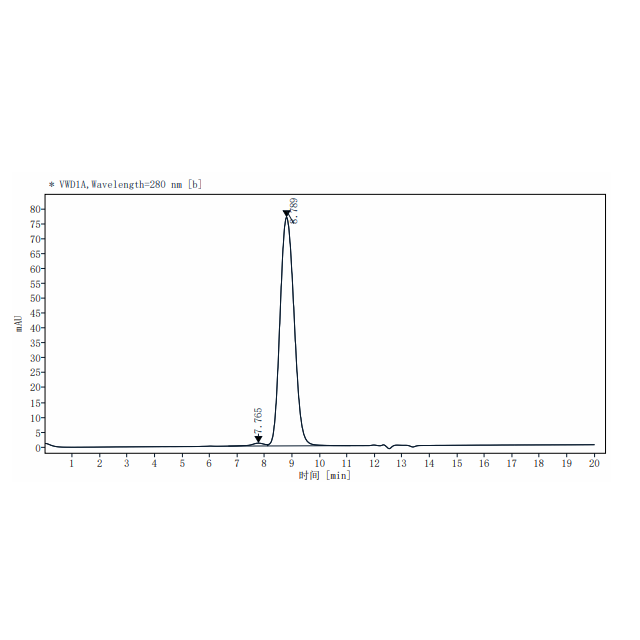
SEC-HPLC