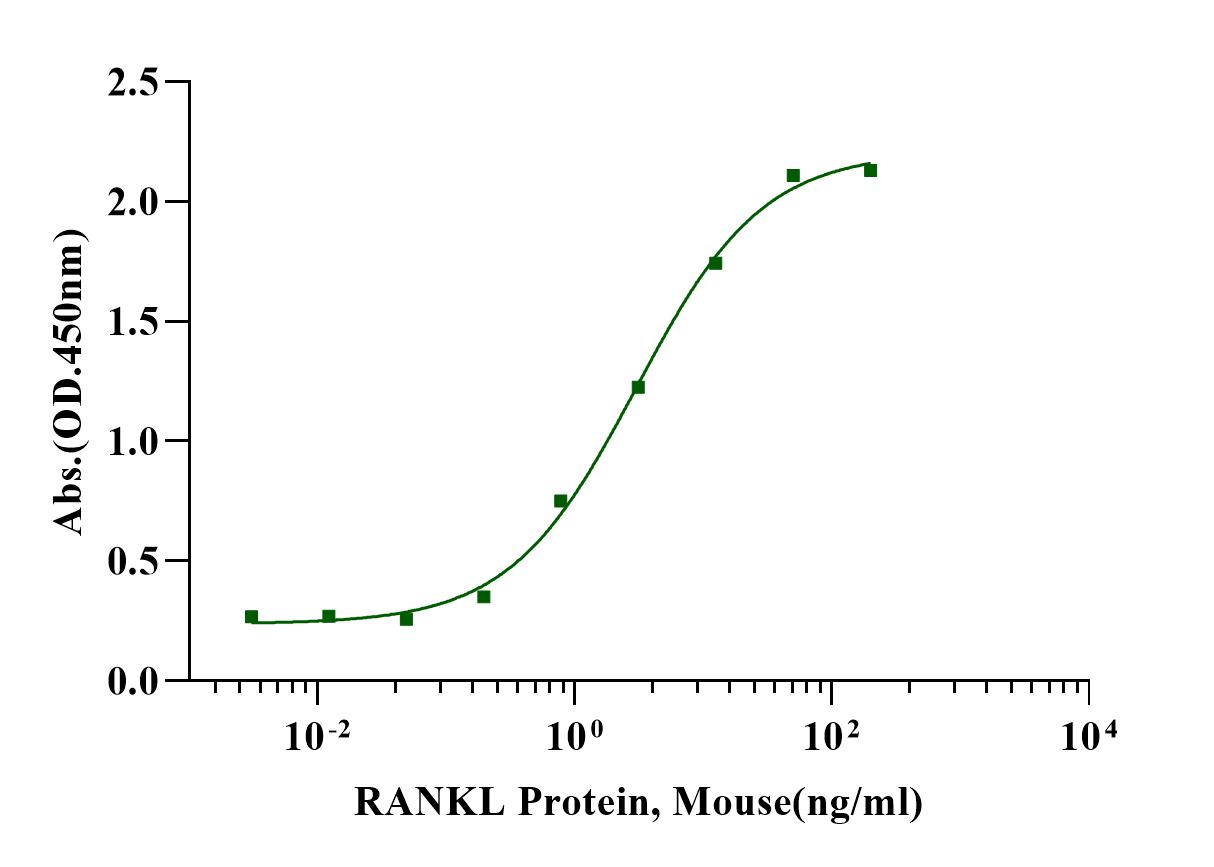
Measured by its ability to induce osteoclast differentiation of RAW 264.7 mouse monocyte/macrophage cells.The EC50 for this effect is less than 5ng/ml.
TNFSF11/RANKL Fc Chimera Protein, Human
TNFSF11/RANKL Fc Chimera Protein, Human
Price:
Regular price
$864 USD
Regular price
Sale price
$864 USD
Unit price
per
For shipping services or bulk orders, you may request a quotation.
Secure checkout with

View full details
Product Details
Product Details
Product Specification
| Species | Human |
| Antigen | TNFSF11/RANKL |
| Synonyms | RANKL,CD254,TRANCE,OPGL,ODF |
| Accession | O14788-2 |
| Amino Acid Sequence | Gly63-Asp244,with N-terminal Human IgG Fc |
| Expression System | HEK293 |
| Molecular Weight | 55-60kDa (Reducing) |
| Purity | >95% by SDS-PAGE |
| Endotoxin | <0.1EU/μg |
| Conjugation | Unconjugated |
| Tag | Human Fc Tag |
| Physical Appearance | Lyophilized powder |
| Storage Buffer | PBS, pH7.4 |
| Reconstitution | Reconstitute at 0.1-1 mg/ml according to the size in ultrapure water after rapid centrifugation. |
| Stability & Storage |
· 12 months from date of receipt, lyophilized powder stored at -20 to -80℃. · 3 months, -20 to -80℃ under sterile conditions after reconstitution. · 1 week, 2 to 8℃ under sterile conditions after reconstitution. · Please avoid repeated freeze-thaw cycles. |
| Reference |
1.O'Brien, C.A. (2010) Bone 46, 911-9. |
Background
RANKL (also known asTRANCE or OPGL) is a member of the TNF ligand superfamily. RANKL is produced byT cells, mammary epithelial cells and endothelial cells. RANKL, through its ability to stimulateosteoclast formation and activity, is a critical mediator of bone resorptionand overall bone density. RANK and RANKL are key regulators of bone remodelingand regulate T cell/dendritic cell communications, and lymph node formation.RANK-RANKLsignaling not only activates a variety of downstream signaling pathwaysrequired for osteoclast development, but crosstalk with other signalingpathways also fine-tunes bone homeostasis both in normal physiology anddisease.
Guidelines
Picture
Picture
Bioactivity
SDS-PAGE
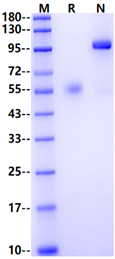
1μg (R: reducing condition, N: non-reducing condition).
ELISA
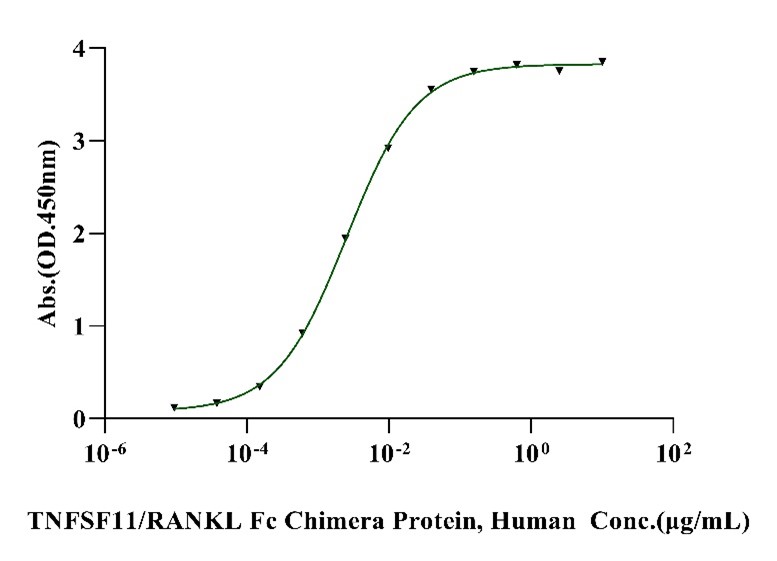
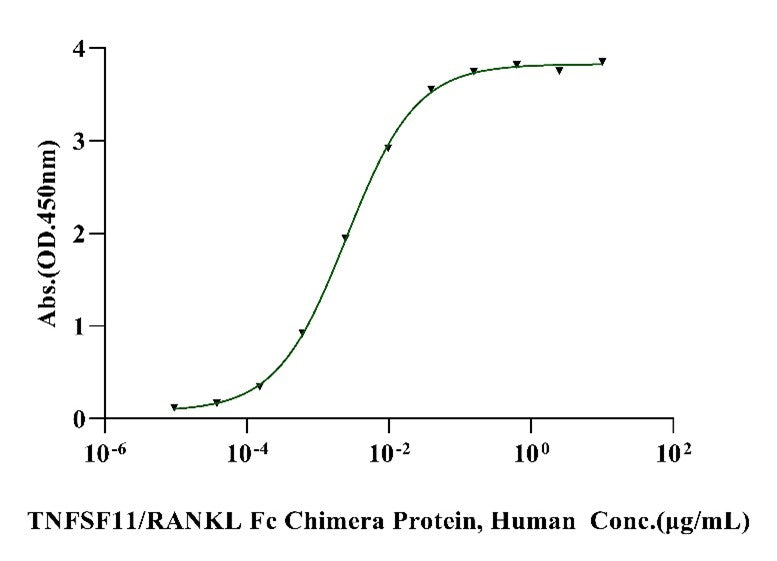
Immobilized Osteoprotegerin/TNFRSF11B His Tag Protein, Human (Cat. No.UA011378) at 10.0μg/mL (100μL/well) can bind TNFSF11/RANKL Fc Chimera Protein, Human (Cat. No. UA010453) with EC50 of 2.28-2.78 ng/mL.