
Human HSD17B4 ELISA Kit
Human HSD17B4 ELISA Kit

Product Details
Product Details
Product Specification
| protein | HSD17B4 | ||||||||||||||||||||||||||||||
| Usage |
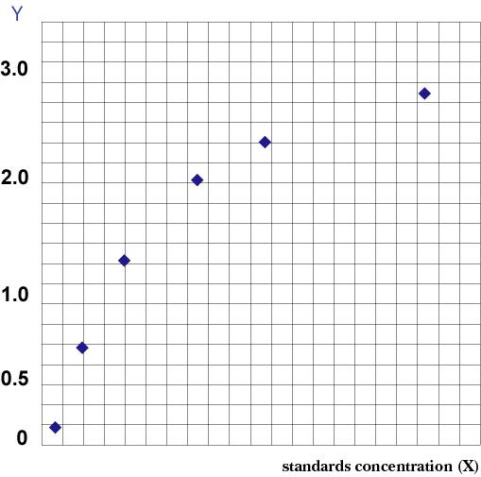
Sample collection, processing and preservation methods1. Serum: Use pyrogen-and endotoxin-free test tubes, avoid any cell irritation during operation, after blood collection, 3000 Rotational centrifugation 10 Serum and red blood cells were rapidly and carefully separated. 2. Plasma: EDTA , citrate or heparin anticoagulation. 3000 Rotational centrifugation 30 The supernatant was removed in minutes. 3. Cell supernatant: 3000 Rotational centrifugation 10 Min to remove particles and polymers. 4. Tissue homogenization: Add appropriate amount of normal saline to mash the tissue. 3000 Rotational centrifugation 10 The supernatant was removed in minutes. 5. Storage: If the sample is not tested in time after collection, please pack it according to the dosage once and store it frozen in -20℃ , avoid repeated freezing and thawing, thaw at room temperature and ensure that the sample is thawed evenly and well. Preparation of reagents20× Dilution of wash buffer: distilled water according to 1 : 20 Dilution, i.e. 1 Portion of 20× Wash buffer plus 19 Parts of distilled water. Plate washing method1. Manual plate washing: throw out the liquid in the holes, fill each hole with washing liquid, and let it stand 1min Then throw out the liquid in the hole, pat it dry on absorbent paper, and wash the plate in this way 5 Times. 2. Automatic plate washing machine: inject wash liquid into each well 350μL , immersion 1min , wash plate 5 Times. Operation steps 1. Equilibration from room temperature 20min Take out the required slats from the aluminum foil bag after that, and seal the remaining slats with ziplock bag and put them back 4℃ 。 2. Set up standard wells and sample wells, add different concentrations of standards to each standard well 50μL ; 3. Add the sample to be tested first to the sample well 10μL , add sample diluent 40μL ; Blank holes are not added. 4. In addition to the blank wells, horseradish peroxidase ( HRP ) Labeled detection antibody 100μL Sealing the reaction hole with a sealing plate membrane, 37℃ Incubation in water bath or incubator 60min 。 5. Discard the liquid, pat dry on absorbent paper, fill each well with washing solution, and let stand 1min , throw off the washing liquid, pat dry on absorbent paper, and repeat washing the plate 5 Times (the plate can also be washed with a plate washing machine). 6. Substrate added per well A 、 B Each 50μL , 37℃ Incubate in the dark 15min 。 7. Add stop solution to each well 50μL , 15min Inside, in 450nm Wavelength measurement of each well OD Value. Result judgment Draw the standard curve: in Excel In the worksheet, the standard concentration is used as the abscissa, corresponding to OD Value as ordinate, Draw the linear regression curve of the standard, and calculate the concentration value of each sample according to the curve equation.
|
||||||||||||||||||||||||||||||
| Species Reactivity | Human | ||||||||||||||||||||||||||||||
| Theory | The kit uses a double-antibody one-step sandwich enzyme-linked immunosorbent assay (ELISA). To the coated microwells previously coated with 17β hydroxysteroid dehydrogenase 4 (HSD17B4) antibody, the specimen, the standard, and the HRP-labeled detection antibody were sequentially added, incubated and washed thoroughly. The color is developed with the substrate TMB, which is converted to blue under the catalysis of peroxidase and to the final yellow under the action of acid. There was a positive correlation between the depth of color and 17β hydroxysteroid dehydrogenase 4 (HSD17B4) in the sample. The absorbance (OD value) was measured with a microplate reader at a wavelength of 450nm, and the sample concentration was calculated. | ||||||||||||||||||||||||||||||
| Source | Human | ||||||||||||||||||||||||||||||
| Synonym | Human 17-β-hydroxysteroid dehydrogenase 4 (HSD17B4) enzyme-linked immunosorbent assay kit | ||||||||||||||||||||||||||||||
| Composition |
Note: Standard ( S0-S5 ) The concentrations are in order: 0 、 7.5 、 15 、 30 、 60 、 120 pg/mL |
||||||||||||||||||||||||||||||
| General Notes |
1. The kit is stored at 2-8 ℃ and equilibrated at room temperature for 20 minutes before use. The concentrated washing liquid taken out of the refrigerator will crystallize, which is a normal phenomenon. The water bath is heated to completely dissolve the crystals before use. 2. The slats not used in the experiment should be immediately put back into the ziplock bag and stored in a sealed (low temperature dried) manner. 3. The S0 standard with a concentration of 0 can be regarded as a negative control or blank; When operating according to the instructions, the sample has been diluted 5 times, and the final result multiplied by 5 is the actual concentration of the sample. 4. Carry out incubation operations in strict accordance with the time, amount and sequence indicated in the instructions. 5. Shake all liquid components well before use. |
||||||||||||||||||||||||||||||
| Storage Temp. | Unopened kit, stored at 2-8 °C, shelf life 6 months. | ||||||||||||||||||||||||||||||
| Test Range | Detection range : 1.0-120 pg/mL; Sensitivity: The lowest detection concentration is less than 1.0 pg/mL. |
 Note:
Note: