Dog FT3 ELISA Kit
Dog FT3 ELISA Kit

Product Details
Product Details
Product Specification
| Usage |
Sample Collection and Storage The following are general guidelines for sample collection and storage. 1. Cell Culture Supernatant: 2. Serum: 3. Plasma: After sample collection, if testing cannot be completed in one go, please aliquot and freeze the sample in a single-use aliquot to avoid repeated freezing and thawing. 4. Tissue homogenization: 5. Cell Extract: 6. Other biological fluids: 1. Before use, warm all components for at least 60 minutes to ensure they are fully warmed to room temperature. 2. Concentrated Wash Solution: 3. Substrate: 4. Procedure: 1. Prepare the working solutions of all components of the kit as described in the previous instructions. 2. Remove the required strips from the aluminum foil pouch. 3. Add 100 μL of horseradish peroxidase (HRP)-labeled detection antigen to the standard and sample wells, except for the blank wells. 4. Cover the reaction plate with a sealing film and incubate at 37°C in a waterbath or incubator for 60 min. 5. Remove the sealing film, discard the liquid, and pat dry on absorbent paper. 6. Thoroughly mix substrates A and B at a 1:1 volume ratio. 7. Add 50 μL of stop solution to all wells and read the absorbance (OD) of each well on a microplate reader. Calculation of Results 1. Using the standard concentration as the horizontal axis and the corresponding absorbance (OD value) as the vertical axis, use computer software and four-parameter logistic curve fitting (4-PL) to create a standard curve equation. 2. If the sample is diluted, the concentration measured using the above method must be multiplied by the dilution factor to obtain the final sample concentration. |
|||||||||||||||||||||||||||
| Sensitivity | The minimum detectable dose was less than 0.1 pmol/L. | |||||||||||||||||||||||||||
| Species Reactivity | Dog | |||||||||||||||||||||||||||
| Theory | This kit utilizes a competitive enzyme-linked immunosorbent assay (ELISA). To a microplate pre-coated with anti-canine free triiodothyronine (FT3) antibody (solid-phase antibody), a canine free triiodothyronine (FT3) calibrator and the test sample are added. Then, HRP-labeled canine free triiodothyronine (FT3) antigen (enzyme-labeled antigen) is added. After incubation and extensive washing to remove unbound components, an immune complex of the solid-phase antibody and enzyme-labeled antigen forms on the solid-phase surface of the microplate. Substrates A and B are added. HRP-catalyzed reaction produces a blue product, which eventually turns yellow with the addition of a stop solution (2M sulfuric acid). The absorbance (OD) is measured at 450 nm on a microplate reader. The absorbance (OD) is negatively correlated with the concentration of canine free triiodothyronine (FT3) in the test sample. The concentration of canine free triiodothyronine (FT3) in the sample can be calculated by fitting the calibrator curve. | |||||||||||||||||||||||||||
| Detection Type | To quantitatively determine the concentration of canine free triiodothyronine (FT3) in serum, plasma and cell culture supernatant. | |||||||||||||||||||||||||||
| Composition |
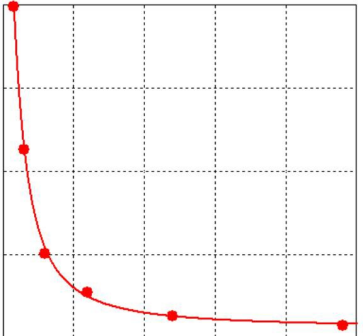
The concentrations of the standards are: 32, 16, 8, 4, 2, 0 pmol/L. |
|||||||||||||||||||||||||||
| General Notes |
1. Avoid foaming when mixing protein solutions. 2. When adding calibrators and samples, change pipette tips for each calibrator concentration and sample. Common components should be added using a cantilever to avoid cross-contamination. 3. Appropriate incubation times and sufficient washing steps are essential to ensure the accuracy of experimental results. 4. When using an automated plate washer, adding a 30-second soaking step can improve detection accuracy. 5. The substrate solution is a colorless liquid. If it turns blue during storage, it has expired and should not be used. 6. The stop solution should be added in the same order as the substrate solution. After adding the stop solution, the blue substrate product will instantly turn yellow. 7. During the experiment, any remaining strips should be immediately returned to the ziplock bag and sealed (stored dry at low temperature). 8. All liquid components should be shaken thoroughly before use, and incubation should be carried out strictly according to the time, sample volume and sample addition sequence indicated in the instructions. 9. Components of different batches of this reagent must not be mixed. |
|||||||||||||||||||||||||||
| Storage Temp. | Unopened test kit, stored at 2-8°C, has a shelf life of 6 months. | |||||||||||||||||||||||||||
| Test Range | 1 pmol/L - 32 pmol/L |