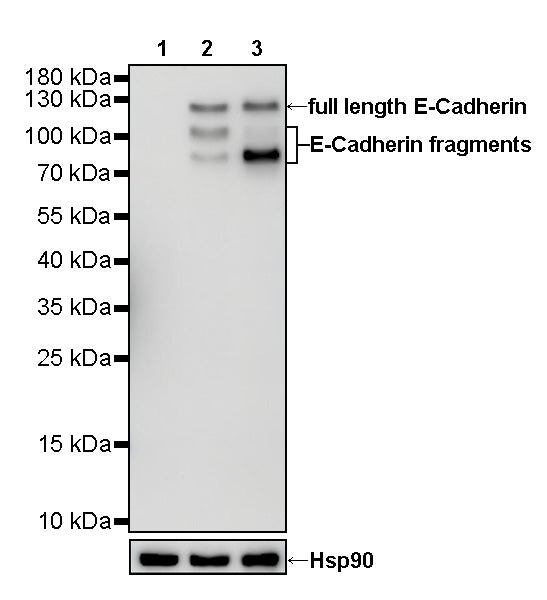
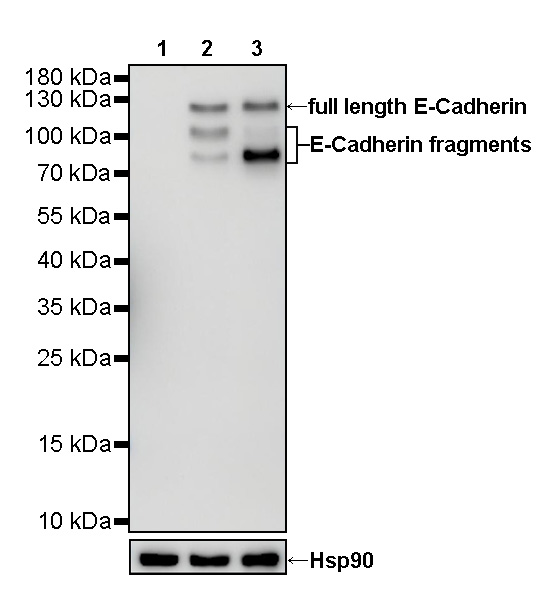
WB result of E-cadherin Rabbit mAb
Primary antibody: E-cadherin Rabbit mAb at 1/5000 dilution
Lane 1: HeLa whole cell lysate 20 µg
Lane 2: MCF7 whole cell lysate 20 µg
Lane 3: HT-29 whole cell lysate 20 µg
Negative control: HeLa whole cell lysate
Secondary antibody: Goat Anti-Rabbit IgG, (H+L), HRP conjugated at 1/10000 dilution
Predicted MW: 97 kDa
Observed MW: 80~125 kDa
S-RMab® E-Cadherin Recombinant Rabbit mAb (SDT-R088)
S-RMab® E-Cadherin Recombinant Rabbit mAb (SDT-R088)
Price:
Regular price
$100 USD
Regular price
Sale price
$100 USD
Unit price
per
For shipping services or bulk orders, you may request a quotation.
Secure checkout with

View full details
Product Details
Product Details
Product Specification
| Host | Rabbit |
| Antigen | E-Cadherin |
| Synonyms | Cadherin-1, CD324 |
| Immunogen | N/A |
| Location | Cell membrane |
| Accession | P12830 |
| Clone Number | SDT-R088 |
| Antibody Type | Rabbit mAb |
| Application | WB, IHC-P, ICC |
| Reactivity | Hu |
| Purification | Protein A |
| Concentration | 0.25 mg/ml |
| Physical Appearance | Liquid |
| Storage Buffer | PBS, 40% Glycerol, 0.05%BSA, 0.03% Proclin 300 |
| Stability & Storage | 12 months from date of receipt / reconstitution, -20 °C as supplied |
Dilution
| application | dilution | species |
| IHC-P | 1:1000 | |
| WB | 1:1000-1:5000 | |
| ICC | 1:100 |
Background
E-cadherin is a transmembrane glycoprotein which connects epithelial cells together at adherens junctions. In normal cells, E-cadherin exerts its tumour suppressing role mainly by sequestering β-catenin from its binding to LEF (Lymphoid enhancer factor)/TCF (T cell factor) which serves the function of transcribing genes of the proliferative Wnt signaling pathway. Despite the ongoing debate on whether the loss of E-cadherin is the cause or effect of epithelial-mesenchymal transition (EMT), E-cadherin functional loss has frequently been associated with poor prognosis and survival in patients of various cancers. The dysregulation of E-cadherin expression that leads to carcinogenesis happens mostly at the epigenetic level but there are cases of genetic alterations as well. E-cadherin expression has been linked to the cellular functions of invasiveness reduction, growth inhibition, apoptosis, cell cycle arrest and differentiation.
Picture
Picture
Western Blot
Immunohistochemistry
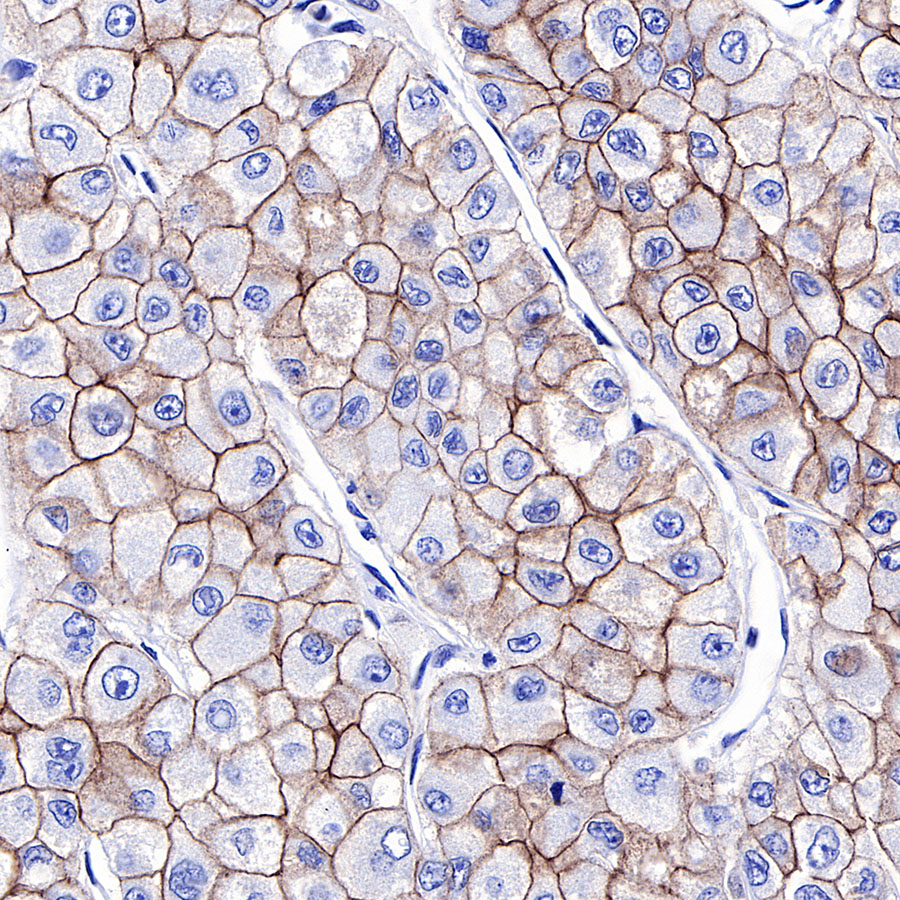
IHC shows positive staining in paraffin-embedded human hepatocellular carcinoma. Anti-E-cadherin antibody was used at 1/1000 dilution, followed by a HRP Polymer for Mouse & Rabbit IgG (ready to use). Counterstained with hematoxylin. Heat mediated antigen retrieval with Tris/EDTA buffer pH9.0 was performed before commencing with IHC staining protocol.
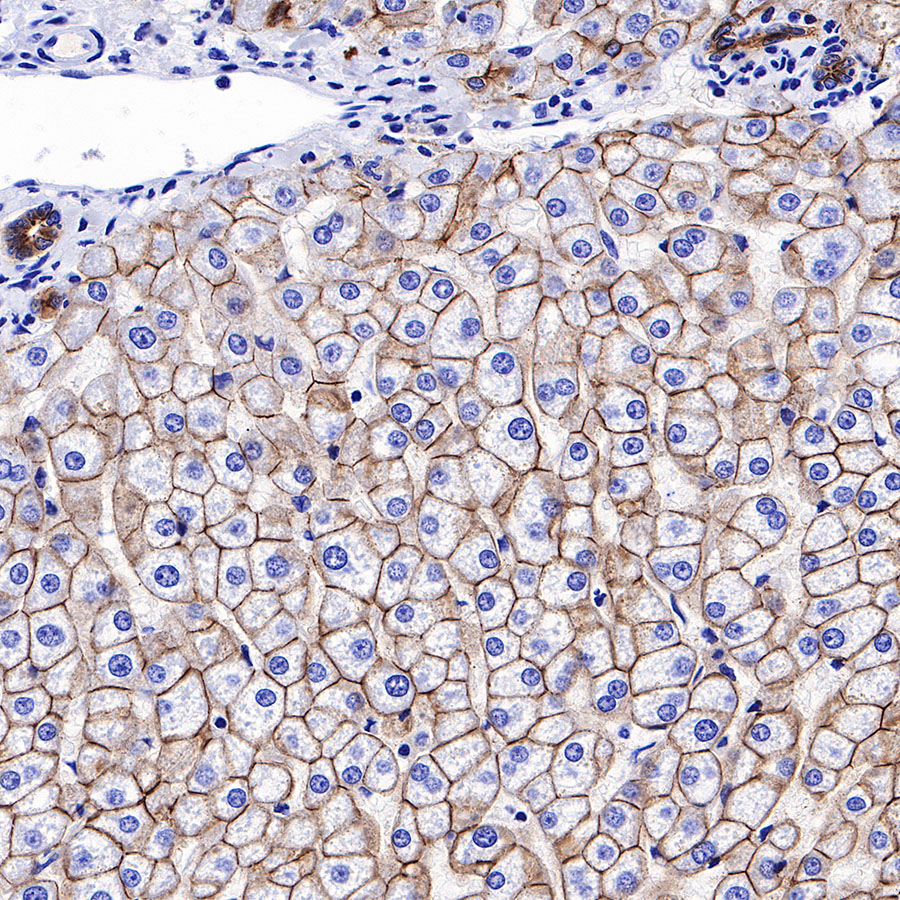
IHC shows positive staining in paraffin-embedded human liver. Anti-E-cadherin antibody was used at 1/1000 dilution, followed by a HRP Polymer for Mouse & Rabbit IgG (ready to use). Counterstained with hematoxylin. Heat mediated antigen retrieval with Tris/EDTA buffer pH9.0 was performed before commencing with IHC staining protocol.
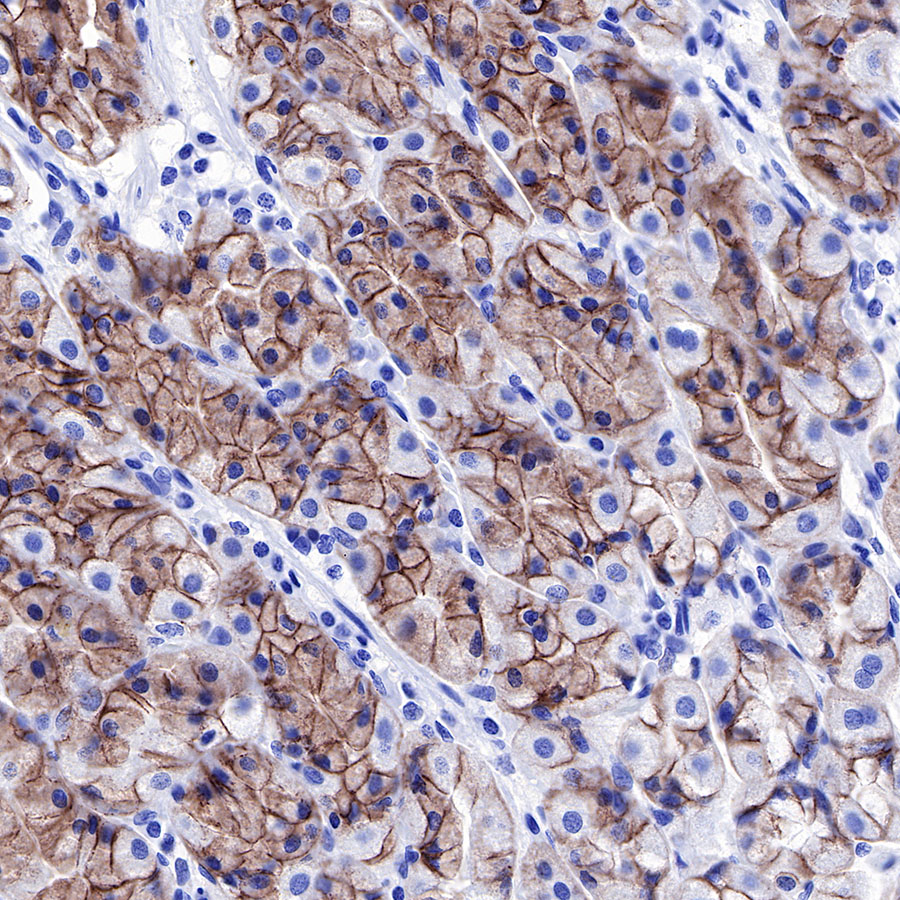
IHC shows positive staining in paraffin-embedded human stomach. Anti-E-cadherin antibody was used at 1/1000 dilution, followed by a HRP Polymer for Mouse & Rabbit IgG (ready to use). Counterstained with hematoxylin. Heat mediated antigen retrieval with Tris/EDTA buffer pH9.0 was performed before commencing with IHC staining protocol.
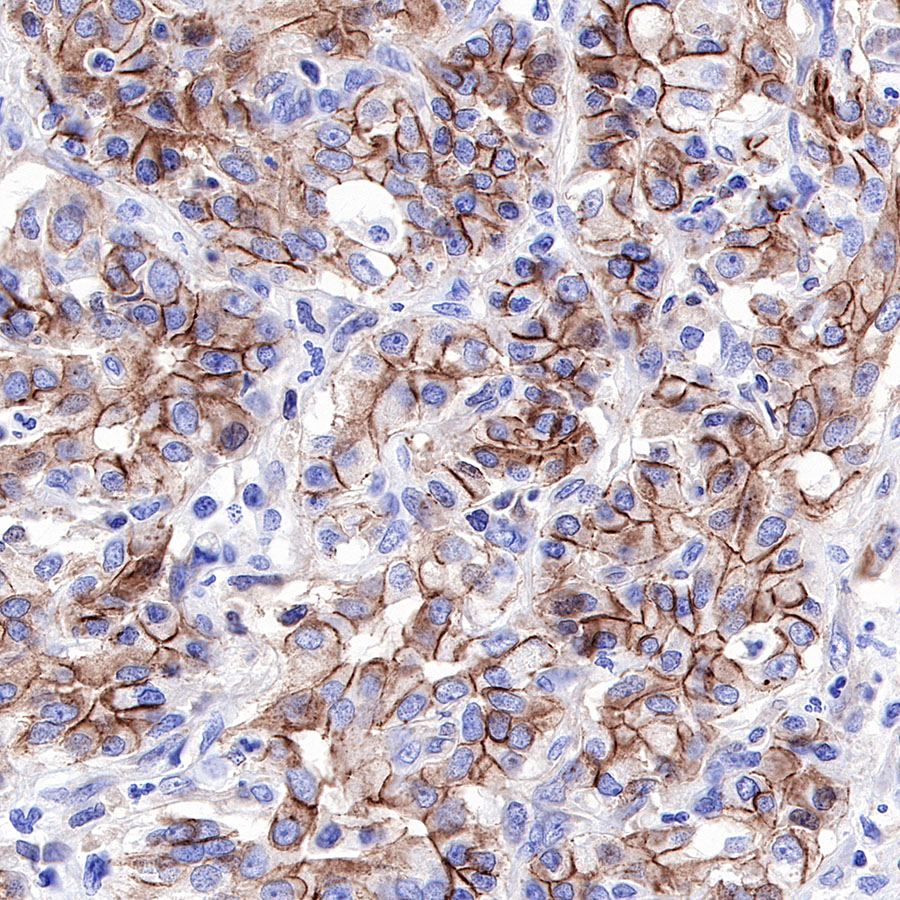
IHC shows positive staining in paraffin-embedded human pancreatic carcinoma. Anti-E-cadherin antibody was used at 1/1000 dilution, followed by a HRP Polymer for Mouse & Rabbit IgG (ready to use). Counterstained with hematoxylin. Heat mediated antigen retrieval with Tris/EDTA buffer pH9.0 was performed before commencing with IHC staining protocol.
Immunocytochemistry
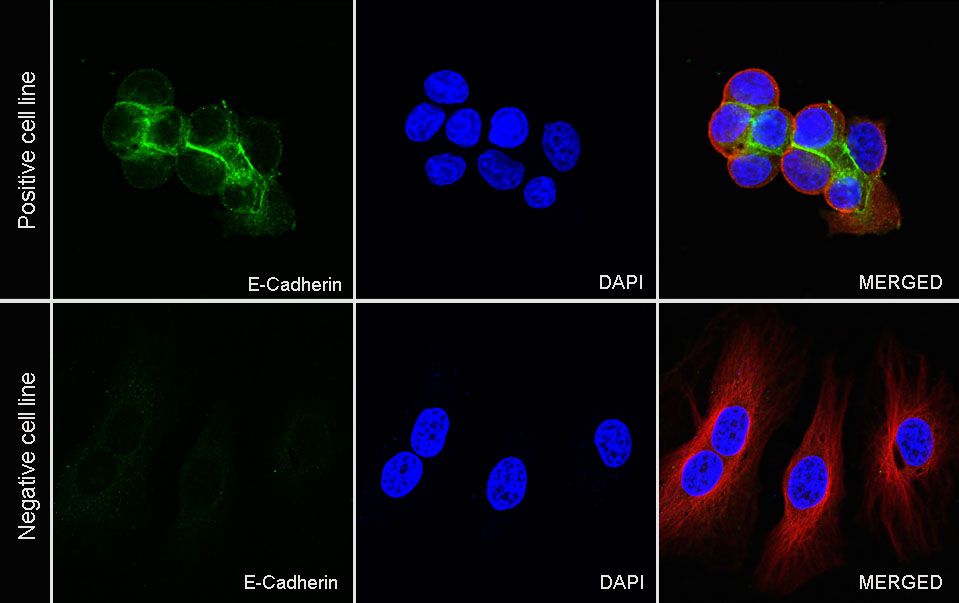
ICC shows positive staining in MCF7 cells (top panel) and negative staining in HeLa cells (below panel). Anti-E-Cadherin antibody was used at 1/100 dilution (Green) and incubated overnight at 4°C. Goat polyclonal Antibody to Rabbit IgG - H&L (Alexa Fluor® 488) was used as secondary antibody at 1/1000 dilution. The cells were fixed with 4% PFA and permeabilized with 0.1% PBS-Triton X-100. Nuclei were counterstained with DAPI (Blue). Counterstain with tubulin (Red).