WB result of Anti-Human VEGFR-2 Monoclonal Antibody (Ramucirumab)
Primary antibody: Anti-Human VEGFR-2 Monoclonal Antibody (Ramucirumab) at 1/1000 dilution
Lane 1: VEGFR-2 Protein, Mouse 1 µg
Lane 2: VEGFR-2 Protein, Human 1 µg
Secondary antibody: Goat Anti- human IgG, (H+L), HRP conjugated at 1/10000 dilution
Predicted MW: 150 kDa
Observed MW: 130 kDa
Anti-Human VEGFR-2 Monoclonal Antibody (Ramucirumab)
Anti-Human VEGFR-2 Monoclonal Antibody (Ramucirumab)
Price:
Regular price
$285 USD
Regular price
Sale price
$285 USD
Unit price
per
For shipping services or bulk orders, you may request a quotation.
Secure checkout with

View full details
Product Details
Product Details
Product Specification
| Host | Human |
| Synonyms | Vascular endothelial growth factor receptor 2; VEGFR-2; Fetal liver kinase 1 (FLK-1); Kinase insert domain receptor (KDR); Protein-tyrosine kinase receptor flk-1; CD309; FLK1; VEGFR2; KDR |
| Accession | P35968 |
| Clone Number | Ramucirumab |
| Antibody Type | Recombinant mAb |
| Isotype | IgG1 |
| Reactivity | Human, RhMk |
| Purification | Protein A |
| Concentration | 5 mg/ml |
| Endotoxin | <1EU/mg |
| Conjugation | Unconjugated |
| Physical Appearance | Liquid |
| Storage Buffer | PBS pH7.4, containing no preservative |
| Stability & Storage | 2 to 8 °C for 2 weeks under sterile conditions; |
Dilution
| application | dilution | species |
| WB | Hu |
Background
VEGF Receptor 2 (VEGFR-2), also known as KDR in humans and Flk-1 in mice, is a crucial receptor tyrosine kinase that plays a central role in angiogenesis, the formation of new blood vessels. This receptor has high affinity for VEGF-A and mediates most of the endothelial growth, migration, and survival signals induced by VEGF-A. Structurally, VEGFR-2 is a glycosylated transmembrane protein with a molecular weight of about 230 kDa, consisting of an extracellular domain (ECD) for ligand binding, a transmembrane domain (TMD), a juxtamembrane domain (JMD), a tyrosine kinase domain (TKD), and a C-terminal domain (CTD) for signaling. Upon binding to VEGF-A, VEGFR-2 undergoes dimerization and autophosphorylation, activating downstream signaling pathways such as the PLCγ-PKC-MAPK pathway, which promotes endothelial cell proliferation, migration, and vascular permeability. VEGFR-2 is widely expressed in vascular endothelial cells and is also found in some tumor cells, making it a key target for both pro-angiogenic therapies in conditions like ischemic diseases and anti-angiogenic therapies in cancer.
Picture
Picture
Western Blot
ELISA
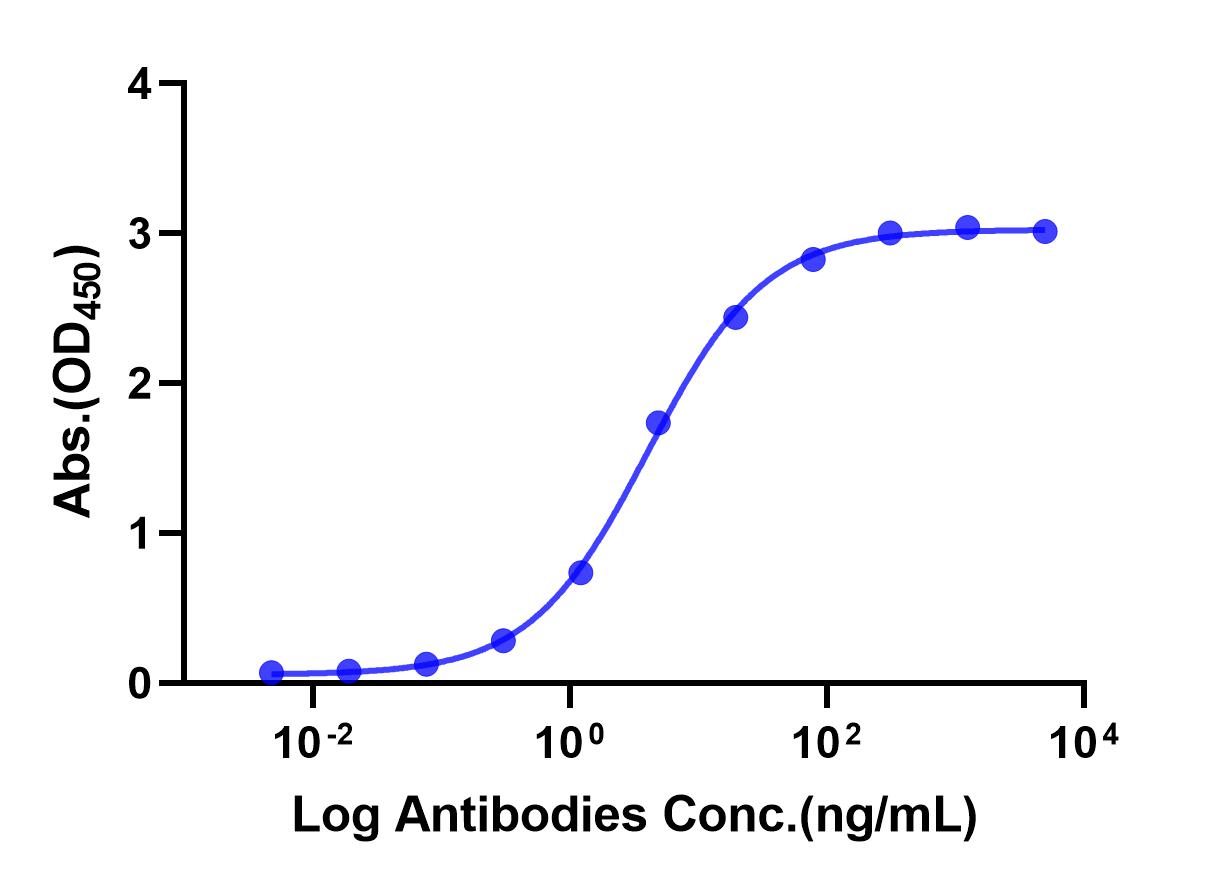
Immobilized VEGF-R2 His Tag Protein, Human(UA010164) can bind Ramucirumab. The EC50 for this effect is 4.037 ng/mL.
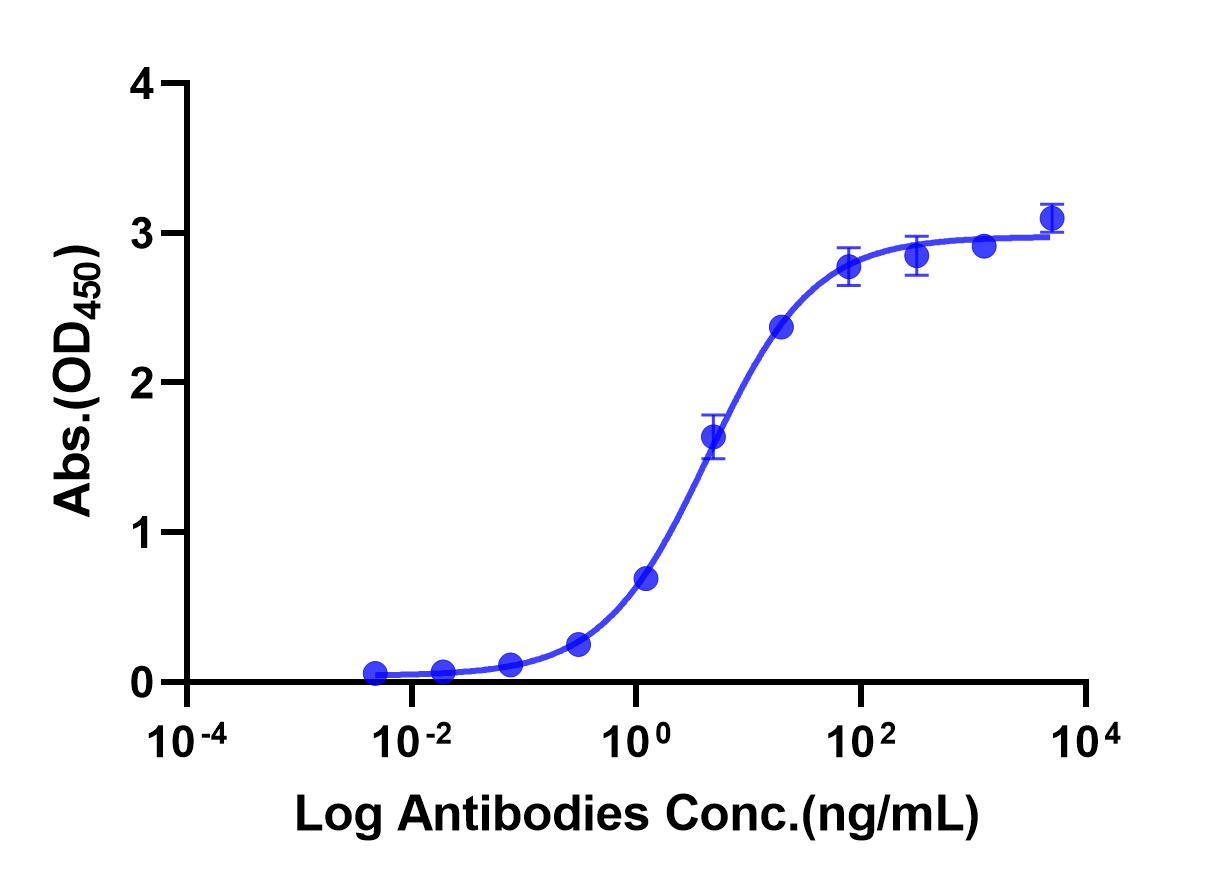
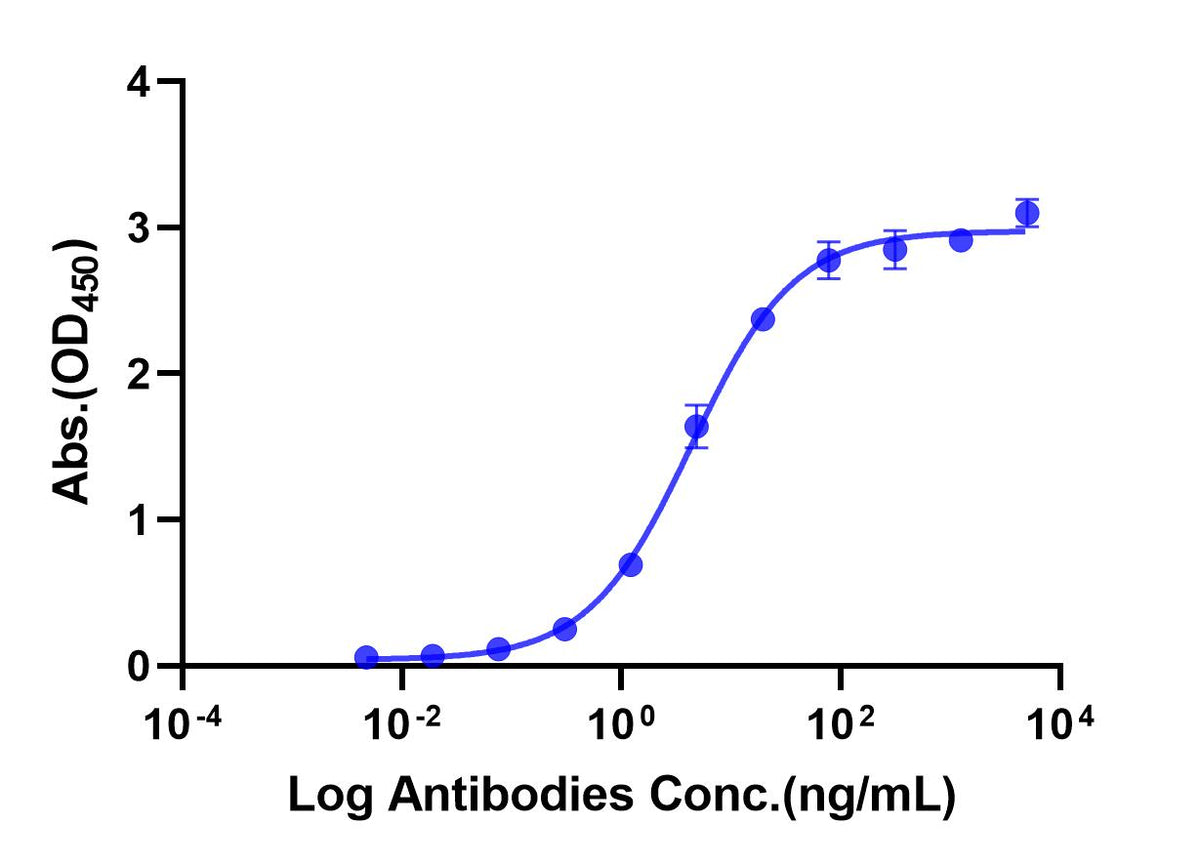
Immobilized VEGF R2/Flk-1/KDR His Tag Protein, Rhesus macaque(UA010877) can bind Ramucirumab. The EC50 for this effect is 4.369 ng/mL.