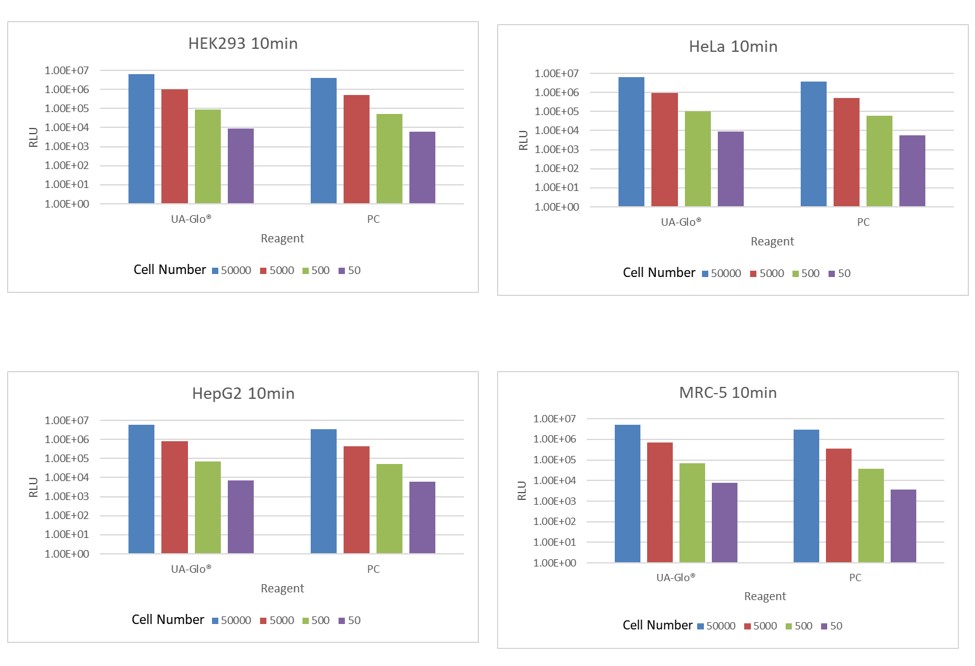
Cell Count Sensitivity Test
UA-Glo® Luminescent Cell Viability 2.0 Assay
UA-Glo® Luminescent Cell Viability 2.0 Assay
Price:
Regular price
$75 USD
Regular price
Sale price
$75 USD
Unit price
per
For shipping services or bulk orders, you may request a quotation.
Secure checkout with

View full details
Product Details
Product Details
Product Specification
| Synonyms | Cell viability assay 2.0 kit |
| Stability & Storage | Store at room temperature (22–25°C) for 7 days, or at 4°C for 8 weeks; luciferase retains >85% activity. Store in the dark at -20°C or below for a shelf life of 12 months. |
Background
The Homogeneous Ready-to-Use Cell Viability Assay Kit 2.0 is designed for quantitatively measuring ATP levels in cells, where ATP content is directly proportional to the number of viable cells. After initial reconstitution, the reagent can be stored at 4°C for up to two months with a signal intensity reduction of <15% and no loss of functionality. This kit features high signal-to-noise ratio, excellent reproducibility, and superior stability. Its ready-to-use formulation eliminates the need for separate lysis and detection steps, thereby minimizing errors caused by frequent pipetting. The stable glow signal makes it particularly suitable for high-throughput cell proliferation assays and compound screening.
Components
After mixing luciferase, luciferin, and buffer, the solution is filled into 10 ml, 100 ml, or 500 ml amber bottles. The specifications are as follows:
Specification |
Detectable 96-well plate wells |
Detectable 384-well plate wells |
10 ml |
200 |
1000 |
100 ml |
2,000 |
10,000 |
500 ml |
10,000 |
50,000 |
Protocol
1. Cell Preparation 1) Seed the cells to be tested at an appropriate density in a 96-well or 384-well cell culture plate. A white plate is recommended. 2) If the experiment involves assessing the effect of compounds on cells, add the test compounds at appropriate concentrations to the cell plate wells. Maintain the organic solvent concentration in the culture medium below 2%. Incubate for an appropriate duration based on experimental requirements. 2. Cell Viability Assay 1) Remove the Cell Viability Assay Reagent 2.0 [Note 1] and equilibrate it to room temperature (22°C–25°C) [Note 2]. Gently shake to mix. 2) Remove the cell culture plate to be tested and equilibrate it to room temperature (22°C–25°C). 3) Add 50 µL of Cell Viability Assay Reagent 2.0 to 100 µL of cells in a 96-well plate, or 10 µL of the reagent to 20 µL of cells in a 384-well plate [Note 3]. 4) Shake the plate for 2 minutes to ensure complete cell lysis, then incubate in the dark for 10 minutes to allow the reaction to equilibrate. 5) Measure the fluorescence signal using a fluorescence plate reader [Note 4].
Guidelines
1) After the first use, Cell Viability Assay Reagent 2.0 can be aliquoted and stored protected from light at -20°C or below. The signal intensity decreases by <10% after 5 freeze-thaw cycles, with no loss of functionality. After initial dissolution, the reagent can be stored at room temperature (22°C) for 10 days or at 4°C for two months with a signal intensity decrease of <15% and no loss of functionality. 2) The luciferase reaction in Cell Viability Assay Reagent 2.0 is sensitive to temperature changes. Both the reagent and assay plate must be equilibrated to room temperature (22°C-25°C), and the temperature should remain constant (±1°C) during testing. 3) Unless strictly validated, it is not recommended to arbitrarily change the reaction reagent volume. The volume ratio of cell culture medium to assay reagent should be 2:1. 4) The signal decay rate of Cell Viability Assay Reagent 2.0 varies among different cell types, with a signal half-life ranging from 1.5hr to 4hr. It is recommended to complete plate reading within 2hr. 5) This product is for research use only.
Picture
Picture
Bioactivity
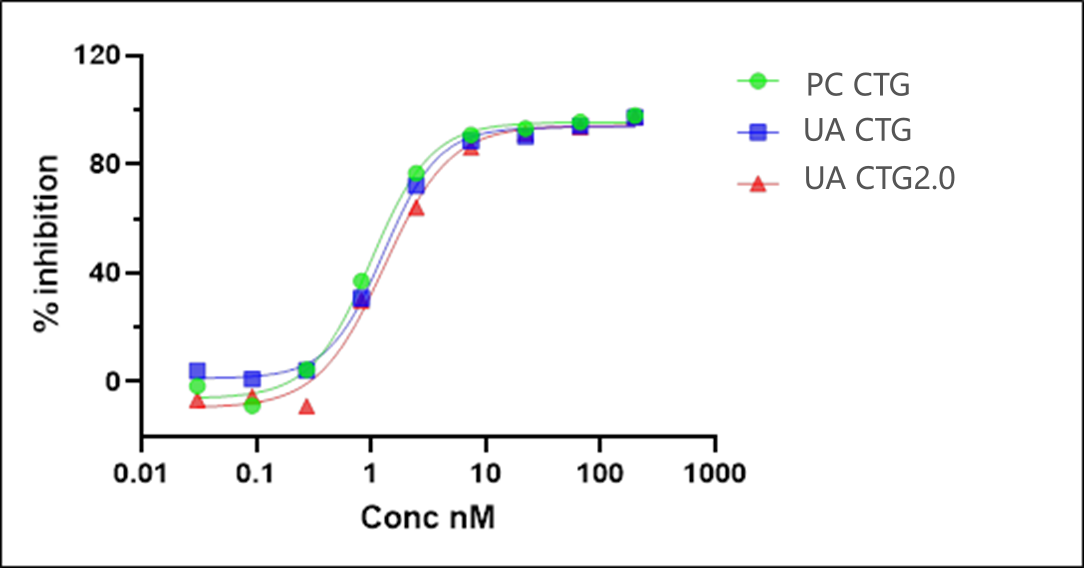
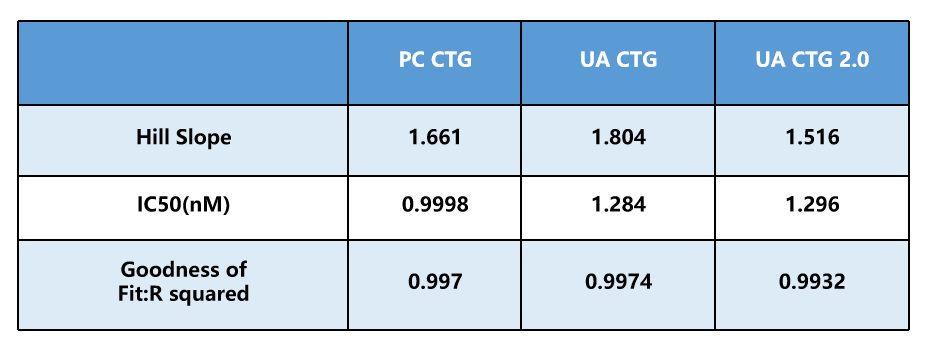
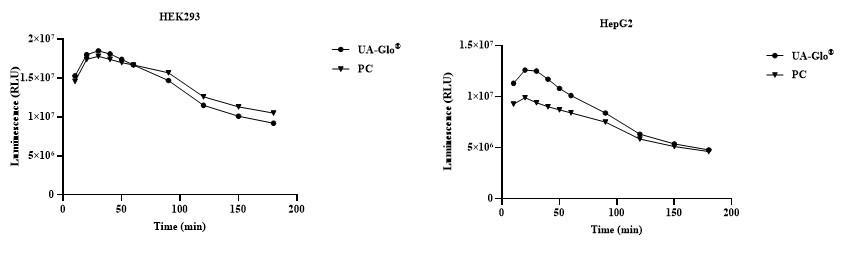
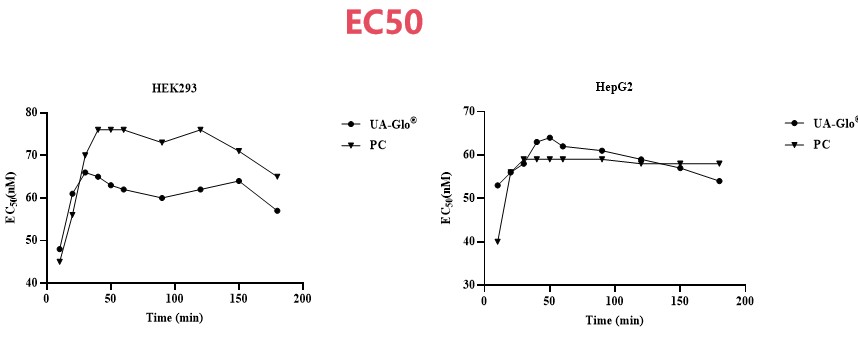
Stability testing