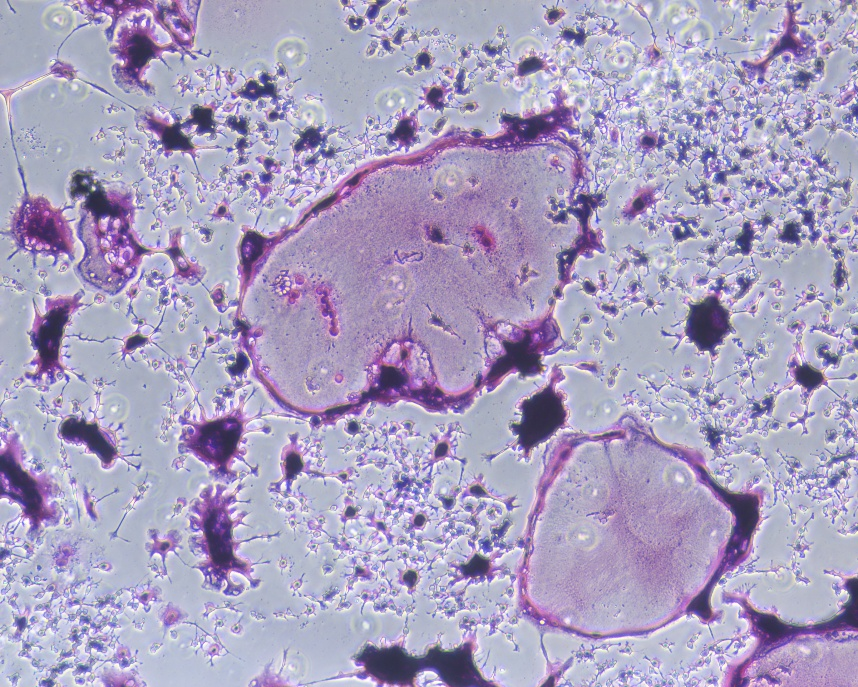

Measured by its ability to induce osteoclast differentiation of RAW 264.7 mouse monocyte/macrophage cells. The EC50 for this effect is less than 3ng/ml.
TRANCE/RANK L/TNFSF11 Protein, Mouse
TRANCE/RANK L/TNFSF11 Protein, Mouse
Price:
Regular price
$225 USD
Regular price
Sale price
$225 USD
Unit price
per
For shipping services or bulk orders, you may request a quotation.
Secure checkout with

View full details
Product Details
Product Details
Product Specification
| Species | Mouse |
| Synonyms | Tumor necrosis factor ligand superfamily member 11 (TNFSF11); Osteoclast differentiation factor (ODF); Osteoprotegerin ligand (OPGL); Receptor activator of nuclear factor kappa-B ligand (RANKL); TNF-related activation-induced cytokine (TRANCE); |
| Accession | O35235 |
| Amino Acid Sequence | Lys158-Asp316 |
| Expression System | E.coli |
| Molecular Weight | 18 kDa (Reducing) |
| Purity | >95% by SDS-PAGE and HPLC. |
| Endotoxin | <0.1EU/μg |
| Conjugation | Unconjugated |
| Tag | No Tag |
| Physical Appearance | Lyophilized powder |
| Storage Buffer | 20mM Tris, 150mM NaCl, pH8.0 |
| Reconstitution | Reconstitute at 0.1-1 mg/ml according to the size in ultrapure water after rapid centrifugation. |
| Stability & Storage |
· 12 months from date of receipt, lyophilized powder stored at -20 to -80℃. · 3 months, -20 to -80℃ under sterile conditions after reconstitution. · 1 week, 2 to 8℃ under sterile conditions after reconstitution. · Please avoid repeated freeze-thaw cycles. |
| Reference | Front Immunol. 2014 Oct 20:5:511. eCollection 2014. |
Background
TNFSF11, also known as RANKL (Receptor Activator of Nuclear Factor Kappa-B Ligand), is a cytokine belonging to the tumor necrosis factor (TNF) superfamily. It plays a crucial role in regulating bone metabolism and immune responses. TNFSF11 is primarily expressed by osteoblasts and activated T cells and functions as a key mediator of osteoclast differentiation and activation. By binding to its receptor RANK (Receptor Activator of Nuclear Factor Kappa-B) on osteoclast precursor cells, TNFSF11 stimulates osteoclastogenesis and bone resorption. Additionally, TNFSF11 is involved in the regulation of immune responses, lymph node development, and mammary gland development.
Guidelines
The recommended dosage for osteoclast differentiation RANKL is 100 ng/mL; the recommended dosage for M-CSF (Product No.: UA040128) is 50 ng/mL.
Picture
Picture
Bioactivity
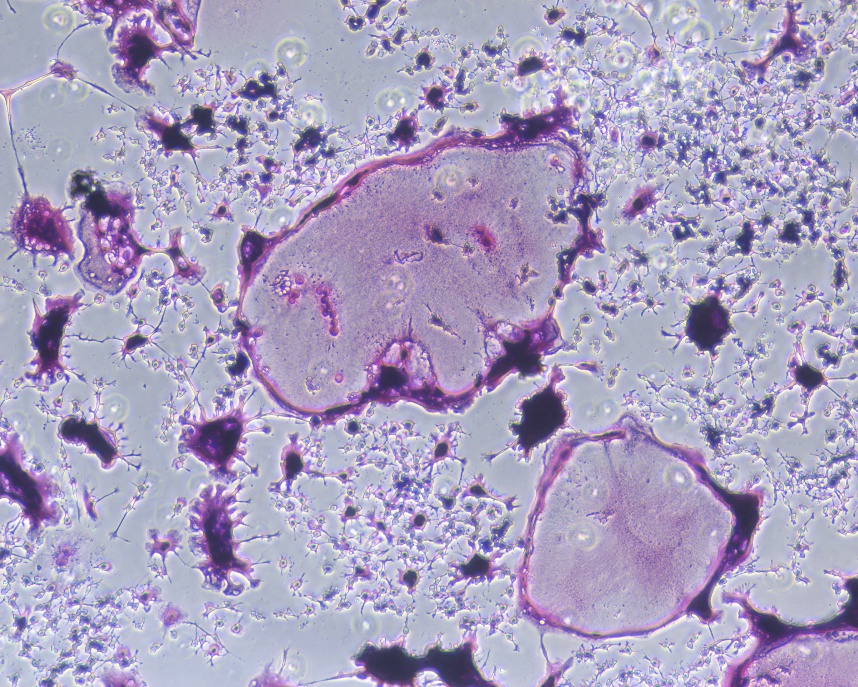
Five days after RANKL induction, tartrate-resistant acid phosphatase (TRAP) staining was performed to specifically identify osteoclasts. After staining, mature osteoclasts with red or reddish purple cytoplasm were observed under an optical microscope.
SDS-PAGE
2μg (R: reducing condition, N: non-reducing condition).
SEC-HPLC
>95% as determined by SEC-HPLC.