2μg (R: reducing condition, N: non-reducing condition).
GMF-β Protein, Mouse
GMF-β Protein, Mouse
Price:
Regular price
$140 USD
Regular price
Sale price
$140 USD
Unit price
per
For shipping services or bulk orders, you may request a quotation.
Secure checkout with

View full details
Product Details
Product Details
Product Specification
| Species | Mouse |
| Synonyms | Glia maturation factor beta, GMF-beta |
| Accession | Q9CQI3 |
| Amino Acid Sequence | Ser2-His142 |
| Expression System | E.coli |
| Molecular Weight | 16 kDa (Reducing) |
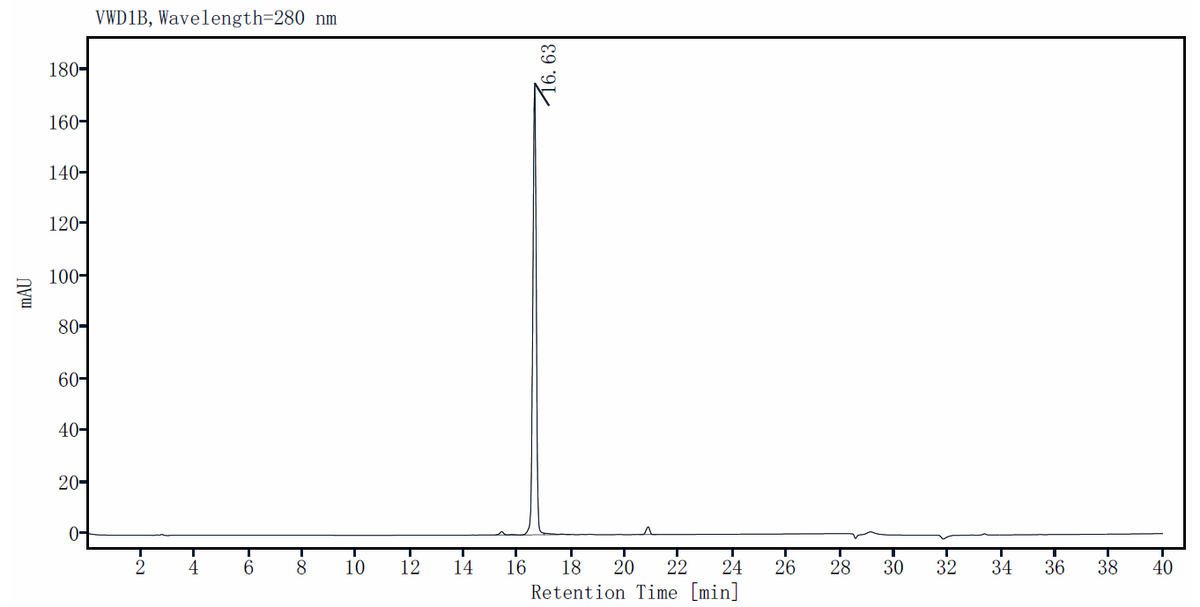
| Purity | >95% by SDS-PAGE and HPLC |
| Endotoxin | <0.1EU/μg |
| Conjugation | Unconjugated |
| Tag | No Tag |
| Physical Appearance | Lyophilized Powder |
| Storage Buffer | PBS, pH7.4 |
| Reconstitution | Reconstitute at 0.1-1 mg/ml according to the size in ultrapure water after rapid centrifugation. |
| Stability & Storage | ·12 months from date of receipt, lyophilized powder stored at -20 to -80℃. |
| Reference | Trends Cell Biol. 2018 Sep;28(9):749-760. |
Background
Glia maturation factor-β (GMF-β) is a highly evolutionarily conserved protein belonging to the ADF/cofilin superfamily, first isolated from bovine brain tissue in 1972. Predominantly expressed in the central nervous system (CNS), GMF-β is also detected in various peripheral tissues including colon, thymus, and kidney. As a critical regulator of the Arp2/3 complex-mediated actin cytoskeleton remodeling, GMF-β controls branched actin content, lamellipodial dynamics, and cellular motility. Structurally, GMF-β lacks a classical signal peptide but can be secreted through non-conventional pathways, functioning as both an intracellular signaling molecule and an extracellular modulator of glial cell maturation and differentiation. Whole-body knockout studies in mice demonstrate that GMF-β deficiency is non-lethal, suggesting potential redundancy or compensation mechanisms, yet reveals marked impairments in motor performance, learning capabilities, and inflammatory responses.
Picture
Picture
SDS-PAGE
RP-HPLC
>95% as determined by RP-HPLC.