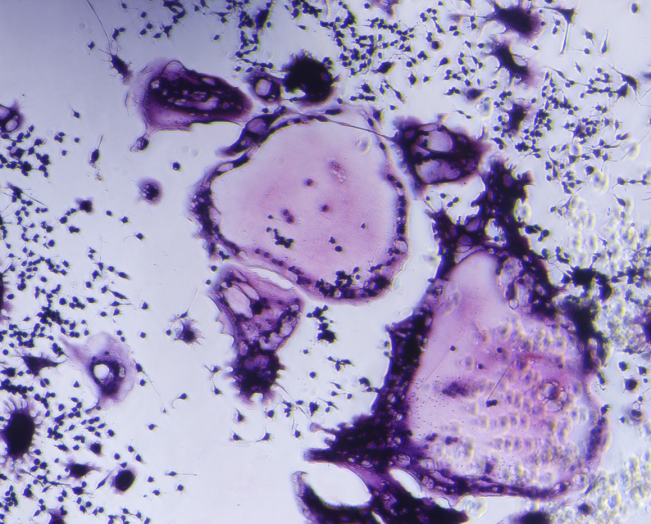


After 5 days of RANK L induction, the classic multinucleated osteoclast structure can be observed under the microscope.
Raw264.7 Osteoclast Differentiation Cytokine Kit
Raw264.7 Osteoclast Differentiation Cytokine Kit
Price:
Regular price
$225 USD
Regular price
Sale price
$225 USD
Unit price
per
For shipping services or bulk orders, you may request a quotation.
Secure checkout with

View full details
Product Details
Product Details
Product Specification
| Species | Mouse |
| Physical Appearance | Lyophilized powder |
| Reconstitution |
Reconstitute at 0.1-1 mg/ml according to the size in ultrapure water after rapid centrifugation.
|
| Stability & Storage | ·12 months from date of receipt, lyophilized powder stored at -20 to -80℃. |
Components
Protocol
Osteoclast Precursor Cell Seeding
1.1 Resuspend RAW 264.7 cells in good growth condition in α-MEM complete medium supplemented with 10% fetal bovine serum (FBS), and perform a cell count.
1.2 Seed the cells at a density of 2.5 × 10³ cells/mL into a 24-well cell culture plate pre-loaded with sterile glass coverslips. Add 1 mL of the cell suspension to each well.
1.3 Incubate the plate in a 37°C, 5% CO₂ cell culture incubator for 18 hours to allow for complete cell adhesion.
Osteoclast Induction
2.1 After cell adhesion (approximately 18 hours post-seeding), aspirate the old medium from the wells.
2.2 Replace with fresh osteoclast induction complete medium. The induction medium consists of α-MEM medium supplemented with 10% FBS, 50 ng/mL recombinant mouse M-CSF protein, and 100 ng/mL recombinant mouse RANK L protein.
2.3 Replace the induction medium every 3 days. During each change, gently aspirate the old medium and add an equal volume of fresh induction medium containing the same concentrations of M-CSF and RANK L proteins.
Cell Morphological Observation and Identification
3.1 Morphological Observation: Observe changes in cell morphology regularly under an inverted microscope starting from the initiation of induction. Typically, typical multinucleated osteoclast-like structures can be observed after 4 days of RANK L induction.
3.2 TRAP Staining Verification: After 5 days of RANK L induction, perform tartrate-resistant acid phosphatase (TRAP) staining to specifically identify osteoclasts. Strictly follow the instructions of the TRAP staining kit for the staining procedure. Upon completion of staining, observe under a light microscope. The cytoplasm of mature osteoclasts appears red or purple-red.
Picture
Picture
Bioactivity
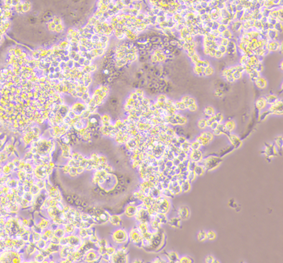
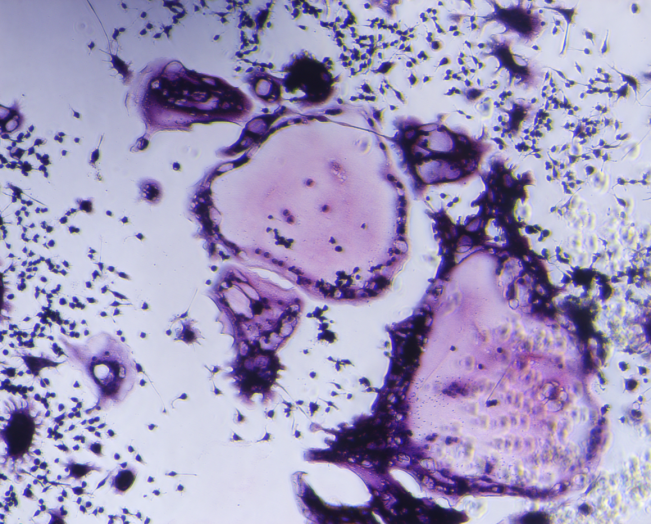
After 5 days of RANK L induction, tartrate-resistant acid phosphatase (TRAP) staining was performed to specifically identify osteoclasts. After the staining was completed, it was observed under an optical microscope. The cytoplasm of mature osteoclasts appeared red or red-purple.