WB result of AOAH Recombinant Rabbit mAb
Primary antibody: AOAH Recombinant Rabbit mAb at 1/1000 dilution
Lane 1: THP-1 whole cell lysate 20 µg
Lane 2: HL-60 whole cell lysate 20 µg
Secondary antibody: Goat Anti- rabbit IgG, (H+L), HRP conjugated at 1/10000 dilution
Predicted MW: 65 kDa
Observed MW: 80 kDa
AOAH Recombinant Rabbit mAb (S-3713-10)
AOAH Recombinant Rabbit mAb (S-3713-10)
Price:
Regular price
$100 USD
Regular price
Sale price
$100 USD
Unit price
per
For shipping services or bulk orders, you may request a quotation.
Secure checkout with

View full details
Product Details
Product Details
Product Specification
| Host | Rabbit |
| Antigen | AOAH |
| Synonyms | Acyloxyacyl hydrolase |
| Immunogen | Synthetic Peptide |
| Location | Secreted |
| Accession | P28039 |
| Clone Number | S-3713-10 |
| Antibody Type | Recombinant mAb |
| Isotype | IgG |
| Application | WB, IHC-P |
| Reactivity | Hu, Ms |
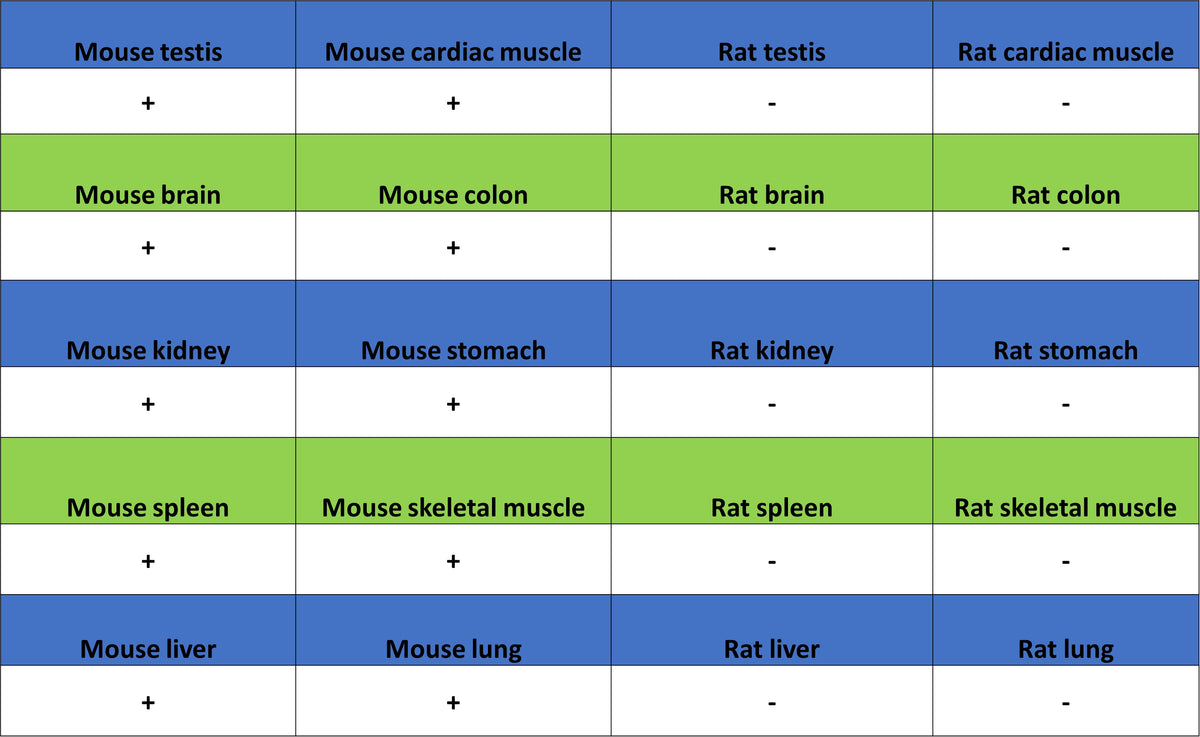
| Positive Sample | THP-1, HL-60, mouse skeletal muscle, mouse colon, mouse spleen |
| Predicted Reactivity | Rb |
| Purification | Protein A |
| Concentration | 0.5 mg/ml |
| Conjugation | Unconjugated |
| Physical Appearance | Liquid |
| Storage Buffer | PBS, 40% Glycerol, 0.05% BSA, 0.03% Proclin 300 |
| Stability & Storage | 12 months from date of receipt / reconstitution, -20 °C as supplied |
Dilution
| application | dilution | species |
| WB | 1:1000 | Hu, Ms |
| IHC-P | 1: 2000 | Hu, Ms |
Background
Acyloxyacyl hydrolase (AOAH) is a specific lipase predominantly encoded by the AOAH gene on chromosome 7, highly expressed in phagocytes such as macrophages and neutrophils, and stored within endocytic and cytoplasmic vesicles. Its most distinctive structural feature is that it is the only mammalian enzyme—apart from acid sphingomyelinase—that contains a GDSL hydrolase catalytic domain fused to a saposin-like B-type domain. The crystal structure published in 2021 (PDB: 5W7A) further revealed that this enzyme anchors its substrate via a hydrophobic platform formed by the saposin domain, while a narrow hydrophobic tunnel within the catalytic domain precisely inserts into and cleaves the secondary acyloxyacyl chains of lipid A, thereby converting intact hexa-acylated lipopolysaccharide (LPS) into an immunologically inert molecule bearing only four primary acyl chains. Contrary to classical assumptions, AOAH is not a broad-spectrum lipase; its catalytic efficiency is tightly regulated by the presentation form of LPS in the extracellular environment. When LPS forms a soluble monomeric complex with CD14, its secondary acyl chains become fully exposed, and AOAH's catalytic efficiency is up to 100-fold higher than when acting on LPS aggregates. However, once the substrate is transferred to MD-2 and loaded onto TLR4, the acyl chains are sequestered, rendering the complex resistant to AOAH. This dynamic regulatory mechanism ensures that negative feedback occurs only after TLR4 signaling has been activated. Functionally, the core physiological significance of AOAH lies in its ability to actively terminate endotoxin tolerance. AOAH-knockout mice remain hyporesponsive to restimulation for up to 21 days following a single LPS challenge (with significantly reduced TNF-α and IL-6 secretion), and their peritoneal macrophages retain immunologically active, non-deacylated LPS. These mice also exhibit significantly increased mortality upon sublethal E. coli infection due to impaired bacterial clearance. Furthermore, genetic polymorphisms in this gene are significantly associated with asthma, IgE levels, hypertension, and HIV-1 susceptibility. AOAH has also been shown to possess oxidized phospholipid hydrolase activity, alleviating acute lung injury by clearing pro-inflammatory oxidized phospholipid molecules. In summary, AOAH is not only an indispensable enzyme for the active "awakening" of the host from the immune paralysis following Gram-negative bacterial infection, but the ongoing elucidation of its substrate spectrum and tissue-specific expression regulatory mechanisms is positioning it as a potential interventional target for treating inflammatory diseases such as endotoxemia, inflammatory bowel disease, and asthma.
Picture
Picture
Western Blot
WB result of AOAH Recombinant Rabbit mAb
Primary antibody: AOAH Recombinant Rabbit mAb at 1/1000 dilution
Lane 1: mouse skeletal muscle lysate 20 µg
Lane 2: mouse colon lysate 20 µg
Lane 3: mouse spleen lysate 20 µg
Secondary antibody: Goat Anti- rabbit IgG, (H+L), HRP conjugated at 1/10000 dilution
Predicted MW: 65 kDa
Observed MW: 80 kDa
Immunohistochemistry
IHC shows positive staining in paraffin-embedded human colon. Anti-AOAH antibody was used at 1/2000 dilution, followed by a HRP Polymer for Mouse & Rabbit IgG (ready to use). Counterstained with hematoxylin. Heat mediated antigen retrieval with Tris/EDTA buffer pH9.0 was performed before commencing with IHC staining protocol.
IHC shows positive staining in paraffin-embedded human spleen. Anti-AOAH antibody was used at 1/2000 dilution, followed by a HRP Polymer for Mouse & Rabbit IgG (ready to use). Counterstained with hematoxylin. Heat mediated antigen retrieval with Tris/EDTA buffer pH9.0 was performed before commencing with IHC staining protocol.
IHC shows positive staining in paraffin-embedded human endometrial cancer. Anti-AOAH antibody was used at 1/2000 dilution, followed by a HRP Polymer for Mouse & Rabbit IgG (ready to use). Counterstained with hematoxylin. Heat mediated antigen retrieval with Tris/EDTA buffer pH9.0 was performed before commencing with IHC staining protocol.
IHC shows positive staining in paraffin-embedded human lung cancer. Anti-AOAH antibody was used at 1/2000 dilution, followed by a HRP Polymer for Mouse & Rabbit IgG (ready to use). Counterstained with hematoxylin. Heat mediated antigen retrieval with Tris/EDTA buffer pH9.0 was performed before commencing with IHC staining protocol.
IHC shows positive staining in paraffin-embedded mouse spleen. Anti-AOAH antibody was used at 1/2000 dilution, followed by a HRP Polymer for Mouse & Rabbit IgG (ready to use). Counterstained with hematoxylin. Heat mediated antigen retrieval with Tris/EDTA buffer pH9.0 was performed before commencing with IHC staining protocol.
IHC shows positive staining in paraffin-embedded mouse stomach. Anti-AOAH antibody was used at 1/2000 dilution, followed by a HRP Polymer for Mouse & Rabbit IgG (ready to use). Counterstained with hematoxylin. Heat mediated antigen retrieval with Tris/EDTA buffer pH9.0 was performed before commencing with IHC staining protocol.