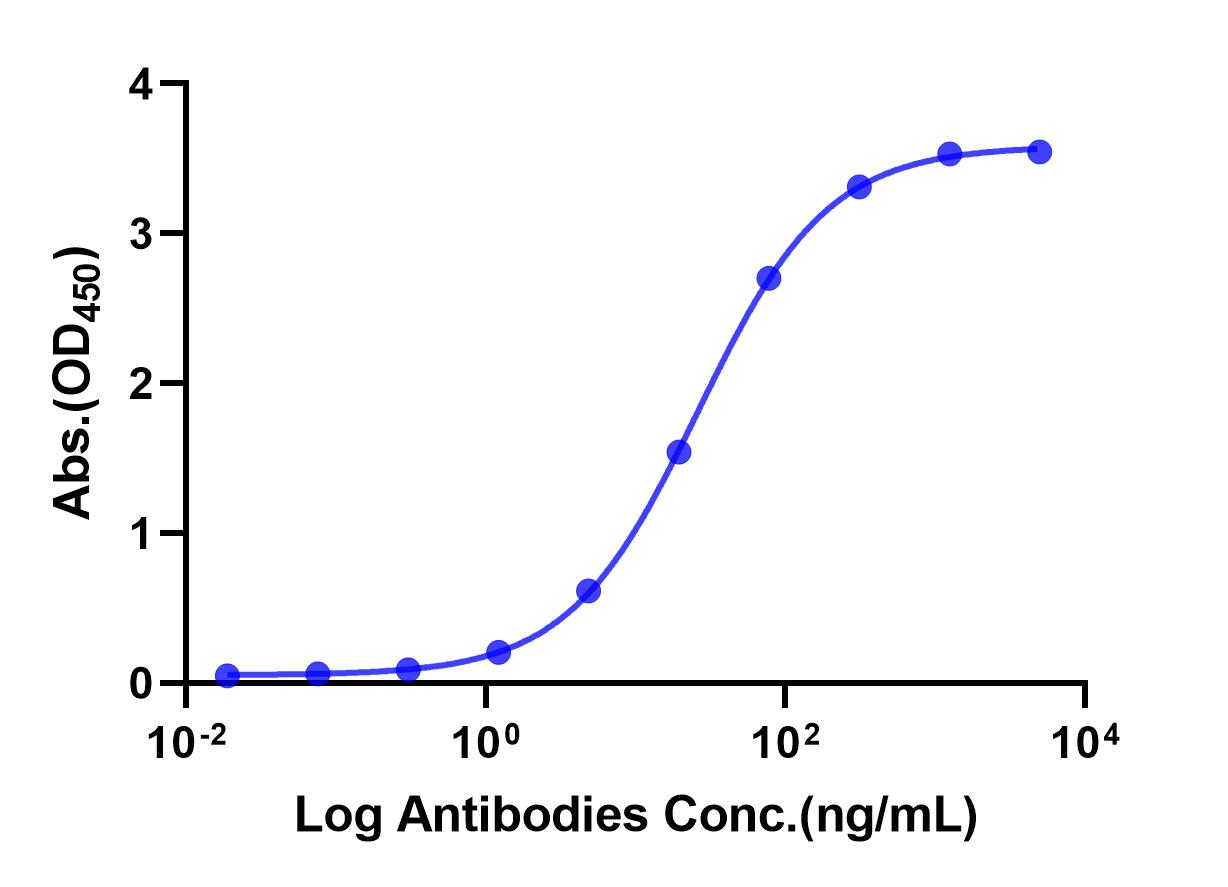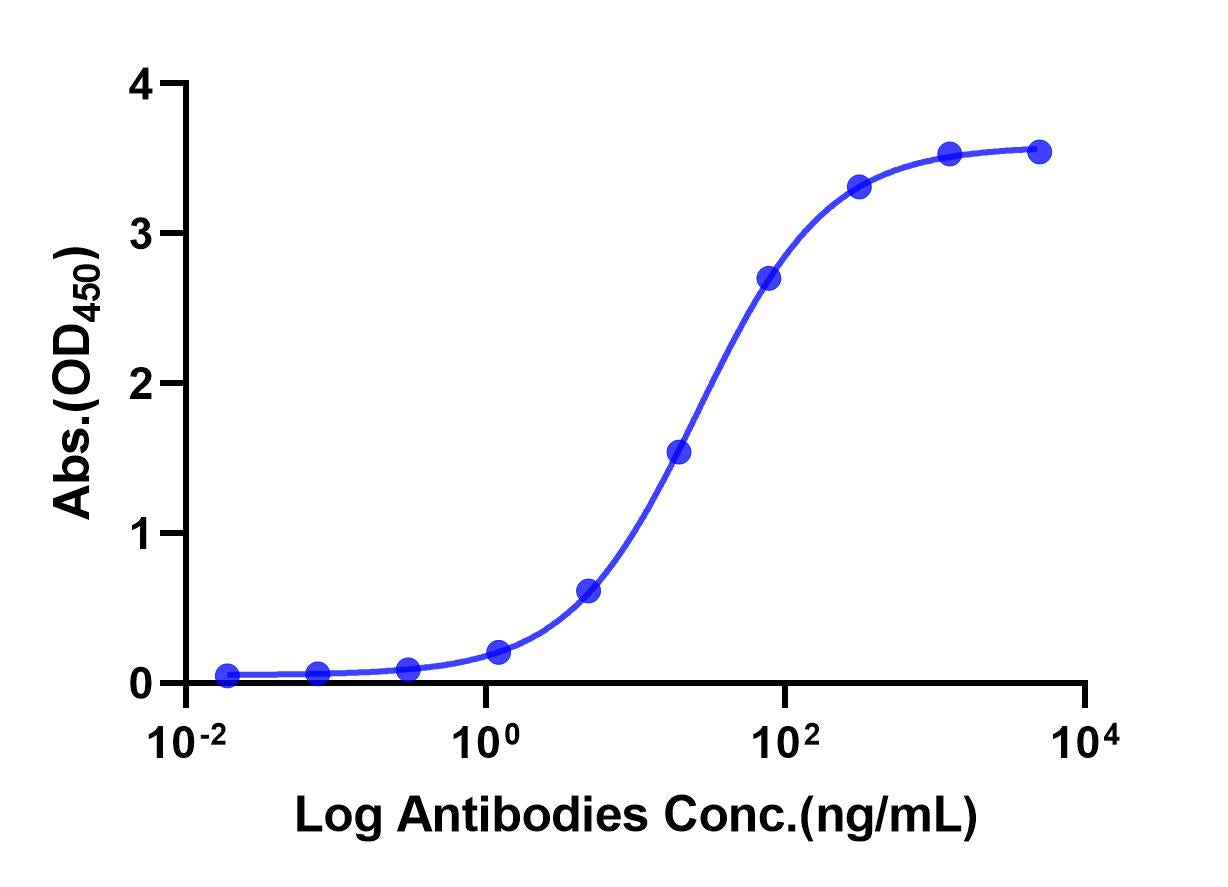

Immobilized VEGF-121 Protein, Human(UA040082) can bind Bevacizumab. The EC50 for this effect is 26.35 ng/mL.
Anti-VEGF Monoclonal Antibody(Bevacizumab)
Anti-VEGF Monoclonal Antibody(Bevacizumab)
Price:
Regular price
$285 USD
Regular price
Sale price
$285 USD
Unit price
per
For shipping services or bulk orders, you may request a quotation.
Secure checkout with

View full details
Product Details
Product Details
Product Specification
| Host | Human |
| Antigen | VEGF |
| Synonyms | Vascular endothelial growth factor A long form, L-VEGF, Vascular permeability factor (VPF), VEGFA |
| Location | Secreted |
| Accession | P15692 |
| Clone Number | S-SC020 |
| Antibody Type | Recombinant mAb |
| Isotype | IgG1,k |
| Application | Blocking of VEGF signaling Functional assays |
| Purification | Protein A |
| Concentration | 2 mg/ml |
| Endotoxin | <1EU/mg |
| Conjugation | Unconjugated |
| Physical Appearance | Liquid |
| Storage Buffer | PBS pH7.4, containing no preservative |
| Stability & Storage | 12 months from date of receipt / reconstitution, 2 to 8 °C as supplied |
Dilution
| application | dilution | species |
| ELISA | 1.221-5000 ng/ml |
Background
Bevacizumab works by blocking a protein called VEGF, which some cancer cells produce in large amounts. Blocking VEGF may prevent the growth of new blood vessels that tumors need to grow. Bevacizumab is a type of targeted therapy called an angiogenesis inhibitor. For cancer, it is given by slow injection into a vein (intravenous) and used for colon cancer, lung cancer, glioblastoma, and renal-cell carcinoma. In many of these diseases it is used as a first-line therapy. For age-related macular degeneration it is given by injection into the eye (intravitreal).
Picture
Picture
ELISA