

UA-Glo® Kinase ADP Max Assay Kit
UA-Glo® Kinase ADP Max Assay Kit

Product Details
Product Details
Product Specification
| Synonyms | 激酶 ADP-Max检测试剂盒 |
| Stability & Storage | Dry ice transportation. Store at -20°C or below, protected from light, with a shelf life of 12 months. |
Background
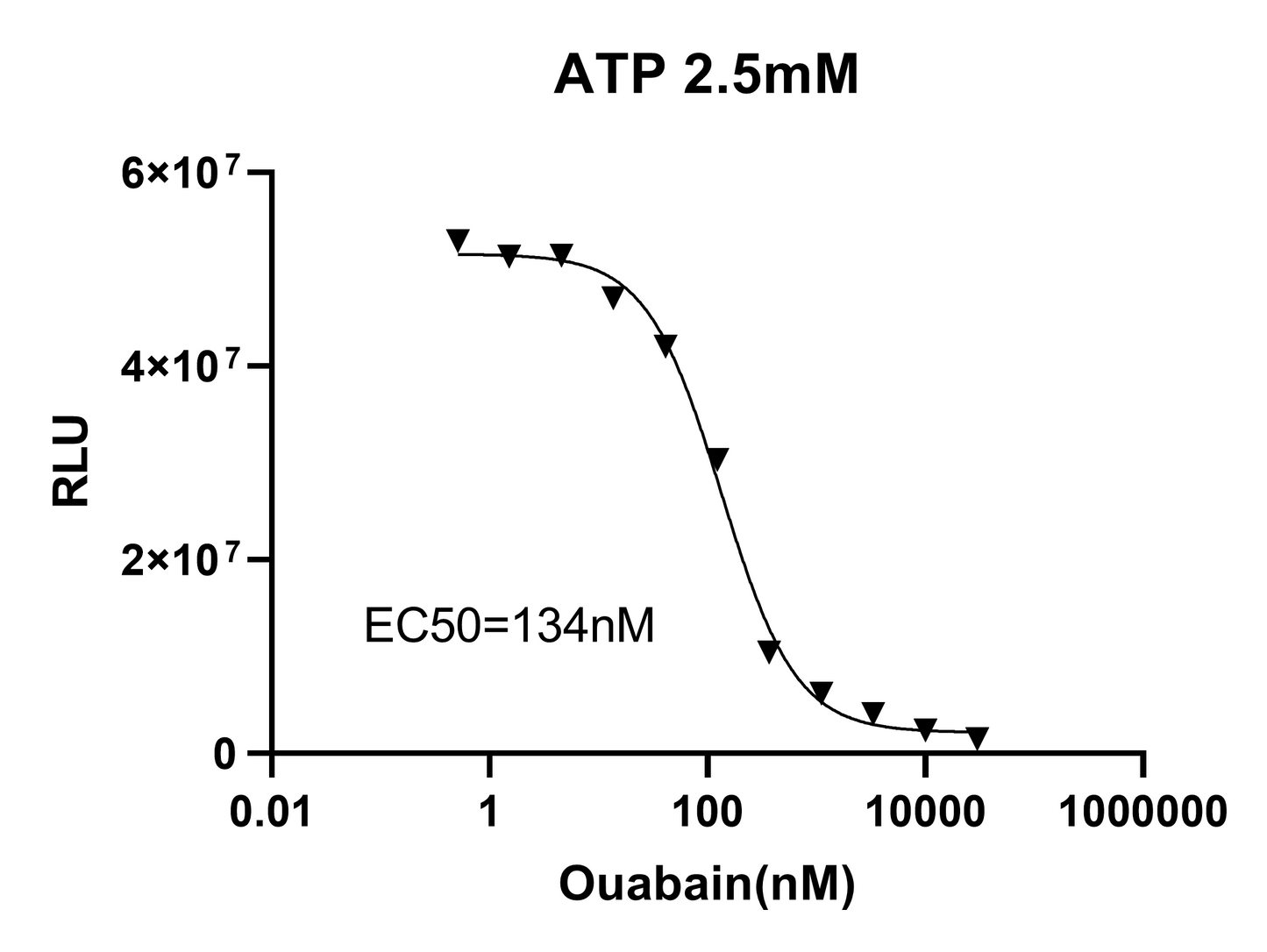
The UA-Glo Kinase ADP-Max Assay Kit quantitatively measures the activity of any enzyme that generates ADP in enzymatic assays, such as kinases or ATPases. The kit determines enzyme activity by quantifying the amount of ADP produced in the reaction: the amount of ADP is directly proportional to enzyme activity. When using the UA-Glo Kinase ADP-Max Assay Kit, the ATP concentration in the enzymatic reaction can be as high as 5 mM. The kit can detect most kinases, with kinase substrates including peptides, proteins, lipids, or sugars. It is suitable for high-throughput homogeneous screening of kinase/ATPase inhibitors and can distinguish between ATP-competitive and non-competitive inhibitors by adjusting ATP concentrations. Additionally, using high ATP concentrations in experiments can make the reaction conditions of certain kinases or ATPases more closely resemble their physiological conditions. The UA-Glo Kinase ADP-Max Assay Kit offers broad versatility, high detection sensitivity, a wide dynamic range, and minimal susceptibility to compound interference.
Components
The Kinase ADP-Max Assay Kit consists of two components: ATP Max Removal Reagent and ADP Max Detection Reagent, along with one bottle each of ATP and ADP reagents. The ATP Max Removal Reagent is used to terminate the enzymatic reaction and remove ATP, while the ADP Max Detection Reagent converts ADP into ATP, generating a luminescent signal through the reaction of luciferase and ATP. The kit specifications are as follows:
Specification |
Components |
96-well plate reactions |
384-well plate reactions |
1,000 assays |
ATP Max Removal Reagent 5mL ADP Max Detection Reagent 10mL ATP (100mM, 0.25mL) ADP (10mM, 1mL) |
200 |
1,000 |
10,000 assays |
ATP Max Removal Reagent 50mL ADP Max Detection Reagent 100mL ATP (100mM, 2.5mL) ADP (10mM, 5mL) |
2,000 |
10,000 |
Protocol
1. Enzyme Reaction Setup: Using Kinase Reaction as an Example
1) Perform the kinase reaction in a 96-well or 384-well white opaque assay plate. The recommended reaction volume is 25 μL for a 96-well plate and 5 μL for a 384-well plate. Test compounds with concentration gradients can be added to the kinase reaction.
2) The concentrations of kinase and substrate need to be optimized for different kinase reactions. Under conditions where the required signal-to-noise ratio is achieved, the kinase concentration within the linear range of the signal can be used. Due to the high sensitivity of the UA-Glo Kinase ADP-Max Assay Kit, the amount of kinase can be significantly reduced.
3) The ATP concentration in the kinase reaction can be as high as 5 mM but should not be lower than 0.5 mM. For kinase reactions with ATP concentrations below 0.5 mM, it is recommended to use the UA-Glo Kinase ADP Assay Kit (Catalog No. UA070101) for optimal results. Some commercially available ATP contains ADP residues. Due to the high sensitivity of the Kinase ADP-Max Assay Kit, ADP residues in ATP can lead to high background. Therefore, high-purity ATP should be used for kinase reactions. The kit's provided ATP or other high-purity ATP, such as Sigma-Aldrich ATP (Cat# A2383, purity ≥ 99%), can be used.
4) The kinase reaction can be performed in a universal reaction buffer (40 mM Tris-HCl (pH 7.5), 0.1 mg/ml BSA, 20 mM MgCl2) or using a buffer and cofactors reported in the literature.
5) The temperature and duration of the kinase reaction should be set according to the specific kinase. For high-throughput compound screening, it is recommended to optimize the kinase reaction at room temperature (22°C–25°C) to maintain uniform plate temperature during the Kinase ADP-Max Assay.
6) No additional reagents are required to terminate the kinase reaction after completion. If termination is necessary for specific experimental requirements, avoid using magnesium chelators such as EDTA. The Kinase ADP-Max Assay requires magnesium ions, and the final magnesium ion concentration must be at least 5 mM.
2. ATP Removal After Kinase Reaction
1) Take out the ATP Max Removal Reagent and equilibrate it to room temperature (22°C–25°C). Gently shake to mix [Note 1 2 3].
2) If the kinase reaction was performed at non-room temperature, e.g., 30°C, equilibrate the plate to room temperature [Note 4].
3) Add 25 μL of ATP Max Removal Reagent to the 25 μL 96-well plate (total volume 50 μL) or 5 μL of ATP Max Removal Reagent to the 5 μL 384-well plate (total volume 10 μL). Mix by shaking [Note 5].
4) Incubate at room temperature for 40 minutes.
3. Kinase Activity Assay (ADP Detection)
1) Take out the ADP Max Detection Reagent and equilibrate it to room temperature. Gently shake to mix [Note 4].
2) Add 50 μL of ADP Max Detection Reagent to the 50 μL 96-well plate or 10 μL of ADP Max Detection Reagent to the 10 μL 384-well plate. Mix by shaking. Incubate in the dark at room temperature for 30 minutes.
3) Luminescence signals can be read 30–180 minutes or longer after adding the ADP Max Detection Reagent [Note 6].
Guidelines
1. After first use, the reagent should be aliquoted and stored protected from light at -20°C or below to ensure stability. The ATP Max Removal Reagent and ADP Max Detection Reagent can undergo up to 3 freeze-thaw cycles without loss of signal intensity or functionality, and can be stored at 4°C for 3 days without loss of signal intensity or functionality. 2. For long-term storage at -20°C, the ADP Max Detection Reagent may develop slight precipitation upon thawing to room temperature. The supernatant can be used directly, or the precipitate can be removed by centrifugation before use. 3. Mixing different batches is not recommended. 4. The luciferase reaction in the ADP Max Detection Reagent is sensitive to temperature changes. Both the reagent and test samples/assay plates should be equilibrated to room temperature (22°C–25°C), and the temperature should remain constant (±1°C) during testing. 5. Unless validated, altering reaction reagent volumes is not recommended. For kinase reactions, the volume ratio of the kinase reaction, ATP Max Removal Reagent, and ADP Max Detection Reagent should be 1:1:2. 6. The luminescent signal is highly stable, with less than a 20% decrease in signal intensity within 3 hours. 7. This product is intended for research use only.