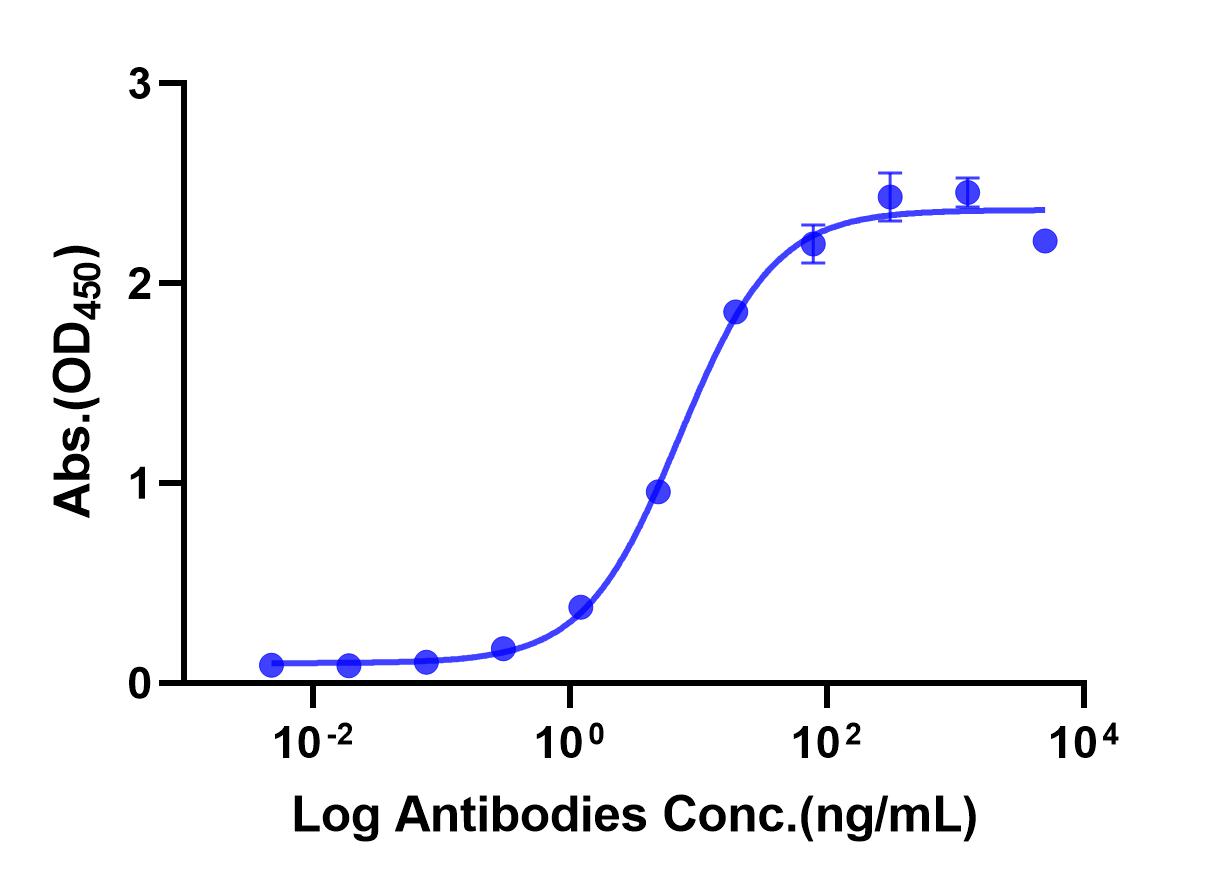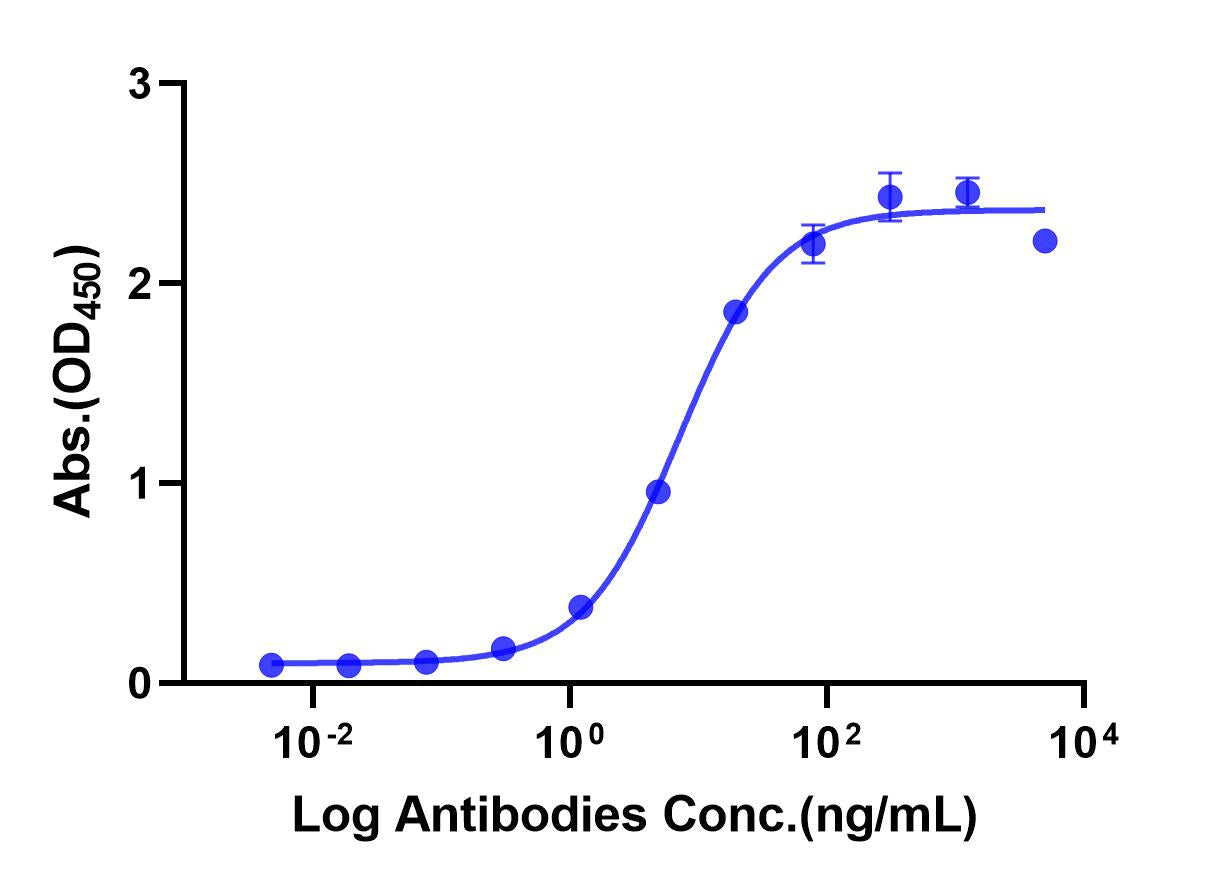

Immobilized Carbonic Anhydrase IX/CA9 His Tag Protein, Human(UA010533) can bind Girentuximab. The EC50 for this effect is 7.148 ng/mL.
Anti-Human CA9 Monoclonal Antibody (Girentuximab)
Anti-Human CA9 Monoclonal Antibody (Girentuximab)
Price:
Regular price
$0 USD
Regular price
Sale price
$0 USD
Unit price
per
For shipping services or bulk orders, you may request a quotation.
Secure checkout with

View full details
Product Details
Product Details
Product Specification
| Host | Human |
| Antigen | CA9 |
| Synonyms | Carbonic anhydrase 9; Carbonate dehydratase IX; Carbonic anhydrase IX (CA-IX; CAIX); Membrane antigen MN; P54/58N; Renal cell carcinoma-associated antigen G250 (RCC-associated antigen G250); pMW1; G250; MN |
| Location | Nucleus, Cell membrane |
| Accession | Q16790 |
| Clone Number | S-5168 |
| Antibody Type | Recombinant mAb |
| Isotype | IgG1 |
| Application | Blocking of CA9 signaling functional assays |
| Reactivity | Hu |
| Purification | Protein A |
| Concentration | 5 mg/ml |
| Purity | >95% (Determined by SDS-PAGE) |
| Endotoxin | <1EU/mg |
| Conjugation | Unconjugated |
| Physical Appearance | Liquid |
| Storage Buffer | PBS pH7.4, containing no preservative |
| Stability & Storage | 2 to 8 °C for 2 weeks under sterile conditions; |
Background
CA9, also known as carbonic anhydrase IX, is a transmembrane glycoprotein anchored on the cell surface and belongs to the α-carbonic anhydrase family. It has limited expression in normal tissues but is significantly upregulated in various solid tumors due to the hypoxic microenvironment, making it a prominent biomarker and therapeutic target in oncology. Its core function is to efficiently catalyze the reversible hydration of carbon dioxide to generate bicarbonate and protons, thereby precisely regulating the acid–base balance of tumor cells—maintaining a relatively alkaline intracellular environment to support survival and proliferation while creating an acidic extracellular microenvironment. This "pH adaptation switch" promotes extracellular matrix degradation, cell migration, and invasion, paving the way for tumor metastasis. Structurally, CA9 consists of a unique N-terminal proteoglycan-like domain (involved in cell adhesion regulation), a catalytically active extracellular domain containing a zinc ion in its active site that retains high activity even under acidic conditions, a transmembrane region, and a short intracellular tail that can be phosphorylated. Its expression is tightly regulated by the hypoxia-inducible factor HIF-1α, and it serves as a marker of poor prognosis and therapeutic resistance in various cancers, including renal cell carcinoma, cervical cancer, and breast cancer. Given its tumor-specific expression and key pro-tumorigenic functions, targeting CA9 has become a highly promising anticancer strategy, with related small-molecule inhibitors and monoclonal antibody therapies actively under development and in clinical trials.
Picture
Picture
ELISA