SV2A Recombinant Rabbit mAb (S-3732-3)
SV2A Recombinant Rabbit mAb (S-3732-3)
Price:
Regular price
$100 USD
Regular price
Sale price
$100 USD
Unit price
per
For shipping services or bulk orders, you may request a quotation.
Secure checkout with

View full details
Product Details
Product Details
Product Specification
| Host | Rabbit |
| Antigen | SV2A |
| Synonyms | Synaptic vesicle glycoprotein 2A; Synaptic vesicle protein 2; Synaptic vesicle protein 2AAlternative nameCalcium regulator SV2A; Kiaa0736; Sv2; Sv2a |
| Immunogen | Recombinant Protein |
| Location | Synapse |
| Accession | Q9JIS5 |
| Clone Number | S-3732-3 |
| Antibody Type | Recombinant mAb |
| Isotype | IgG |
| Application | WB, IHC-P |
| Reactivity | Ms |
| Positive Sample | Mouse hippocampus, mouse brain, rat hippocampus, rat brain |
| Purification | Protein A |
| Concentration | 0.5 mg/ml |
| Conjugation | Unconjugated |
| Physical Appearance | Liquid |
| Storage Buffer | PBS, 40% Glycerol, 0.05% BSA, 0.02% sodium azide |
| Stability & Storage | 12 months from date of receipt / reconstitution, -20 °C as supplied |
Dilution
| application | dilution | species |
| WB | 1:1000-1:2000 | Ms |
| IHC-P | 1:2000 | Ms |
Background
SV2A (synaptic vesicle glycoprotein 2A) is a twelve-transmembrane glycoprotein specifically localized to synaptic vesicle membranes and is the most widely distributed member of the SV2 protein family, being most tightly coupled to neurotransmitter release. It plays a central role in action potential-driven rapid synchronous neurotransmitter release by modulating the exocytosis kinetics of synaptic vesicles, particularly influencing the opening and closing rates of calcium-triggered vesicle fusion pores. Dysfunction of SV2A disrupts synaptic plasticity and neural network homeostasis. In clinical treatment, SV2A is a high-affinity target for the antiepileptic drugs levetiracetam and brivaracetam; binding of these drugs to the protein regulates synaptic vesicle cycling and inhibits abnormal high-frequency discharges. Additionally, SV2A has also been identified as a receptor for botulinum neurotoxin types B, D, F, and G, as well as for tetanus toxin, mediating the entry and toxic effects of these toxins at nerve terminals. In neurodegenerative disease research, SV2A density is commonly used as a biomarker for synaptic density; PET tracers (e.g., UCB-J) enable imaging to monitor synaptic loss in Alzheimer's disease and Parkinson's disease. Therefore, SV2A is not only a key protein for maintaining normal brain function but also an important target for the treatment and diagnosis of various diseases.
Picture
Picture
Western Blot
WB result of SV2A Recombinant Rabbit mAb
Primary antibody: SV2A Recombinant Rabbit mAb at 1/1000 dilution
Lane 1: Mouse hippocampus lysate 5 µg
Lane 2: mouse brain lysate 5 µg
Secondary antibody: Goat Anti-Rabbit IgG, (H+L), HRP conjugated at 1/10000 dilution
Predicted MW: 83 kDa
Observed MW: >100 kDa
WB result of SV2A Recombinant Rabbit mAb
Primary antibody: SV2A Recombinant Rabbit mAb at 1/1000 dilution
Lane 1: rat hippocampus lysate 5 µg
Lane 2: rat brain lysate 5 µg
Secondary antibody: Goat Anti-Rabbit IgG, (H+L), HRP conjugated at 1/10000 dilution
Predicted MW: 83 kDa
Observed MW: >100 kDa
This blot was developed with high sensitivity substrate
Immunohistochemistry
IHC shows positive staining in paraffin-embedded mouse cerebral cortex. Anti-SV2A antibody was used at 1/2000 dilution, followed by a HRP Polymer for Rabbit IgG (ready to use). Counterstained with hematoxylin. Heat mediated antigen retrieval with Tris/EDTA buffer pH9.0 was performed before commencing with IHC staining protocol.
IHC shows positive staining in paraffin-embedded mouse pancreas. Anti-SV2A antibody was used at 1/2000 dilution, followed by a HRP Polymer for Rabbit IgG (ready to use). Counterstained with hematoxylin. Heat mediated antigen retrieval with Tris/EDTA buffer pH9.0 was performed before commencing with IHC staining protocol.
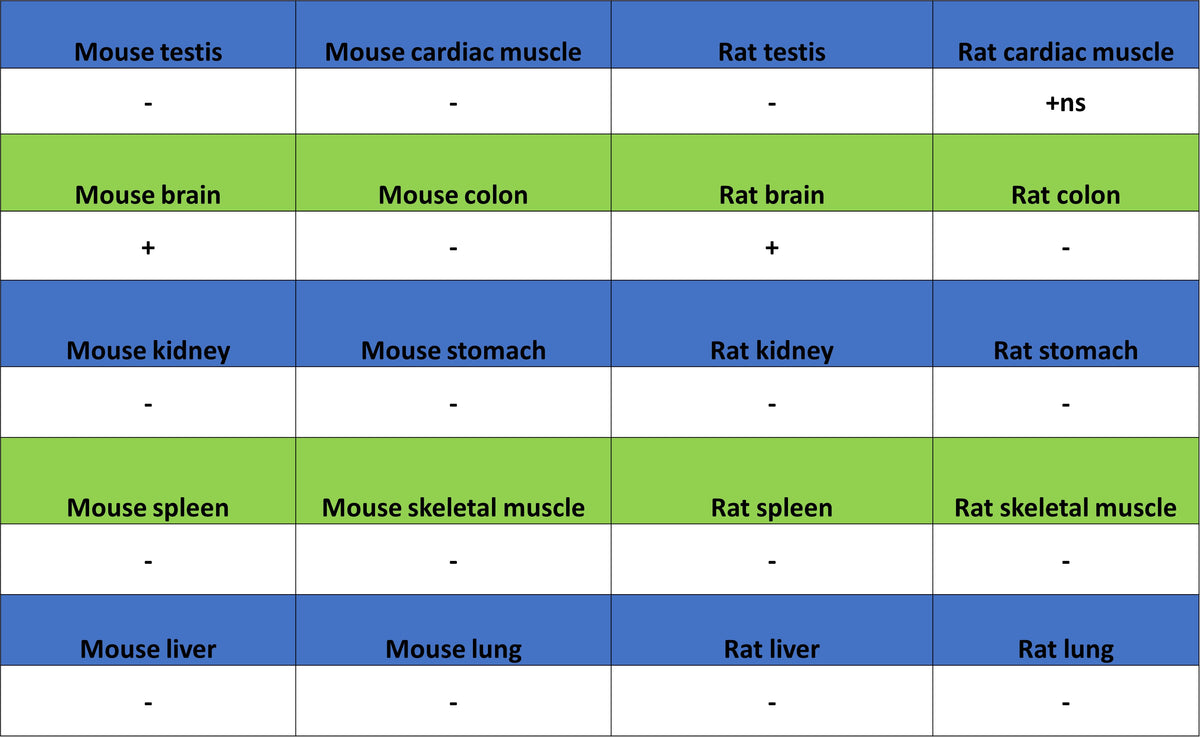
Negative control: IHC shows negative staining in paraffin-embedded mouse cardiac muscle. Anti-SV2A antibody was used at 1/2000 dilution, followed by a HRP Polymer for Rabbit IgG (ready to use). Counterstained with hematoxylin. Heat mediated antigen retrieval with Tris/EDTA buffer pH9.0 was performed before commencing with IHC staining protocol.