IHC shows positive staining in paraffin-embedded human kidney. Anti-SLC5A1 antibody was used at 1/2000 dilution, followed by a HRP Polymer for Rabbit IgG (ready to use). Counterstained with hematoxylin. Heat mediated antigen retrieval with Tris/EDTA buffer pH9.0 was performed before commencing with IHC staining protocol.
SLC5A1/SGLT1 Recombinant Rabbit mAb (S-4122-30)
SLC5A1/SGLT1 Recombinant Rabbit mAb (S-4122-30)
Price:
Regular price
$100 USD
Regular price
Sale price
$100 USD
Unit price
per
For shipping services or bulk orders, you may request a quotation.
Secure checkout with

View full details
Product Details
Product Details
Product Specification
| Host | Rabbit |
| Antigen | SLC5A1/SGLT1 |
| Synonyms | Sodium/glucose cotransporter 1; High affinity sodium-glucose cotransporter; Solute carrier family 5 member 1; NAGT; SGLT1 s |
| Immunogen | Recombinant Protein |
| Location | Cell membrane |
| Accession | P13866 |
| Clone Number | S-4122-30 |
| Antibody Type | Recombinant mAb |
| Isotype | IgG |
| Application | IHC-P |
| Reactivity | Hu, Ms, Rt |
| Purification | Protein A |
| Concentration | 0.5 mg/ml |
| Conjugation | Unconjugated |
| Physical Appearance | Liquid |
| Storage Buffer | PBS, 40% Glycerol, 0.05% BSA, 0.02% sodium azide |
| Stability & Storage | 12 months from date of receipt / reconstitution, -20 °C as supplied |
Dilution
| application | dilution | species |
| IHC-P | 1:500-1:2000 | Hu, Ms, Rt |
Background
SLC5A1 (Solute Carrier Family 5 Member 1, also known as SGLT1) is a sodium-dependent glucose transporter primarily expressed on the brush border membrane of small intestinal villus epithelial cells and the S3 segment of the renal proximal tubule, responsible for mediating efficient absorption of dietary glucose and galactose as well as glucose reabsorption in the renal tubules. The structural features of this protein include 14 transmembrane α-helices, with both the C-terminus and N-terminus located on the extracellular side, forming a unique core structure to facilitate the cotransport of sodium ions and substrates. The functional mechanism relies on the high extracellular sodium concentration (maintained by the Na⁺/K⁺-ATPase): first binding one sodium ion, then binding one glucose or galactose molecule, followed by a conformational change that transports both sodium and sugar into the cell. Unlike the low-affinity, high-capacity SGLT2, SLC5A1 exhibits high-affinity but relatively low-capacity transport characteristics, enabling efficient uptake even when intestinal glucose concentrations are low, while also performing final recovery of small amounts of glucose not completely reabsorbed by SGLT2 in the renal tubules, ensuring that urinary glucose is nearly zero. Clinical genetic studies have revealed that loss-of-function mutations in the SLC5A1 gene cause glucose-galactose malabsorption syndrome, an autosomal recessive disorder in which patients develop severe diarrhea, dehydration, and acidosis after consuming dairy products or glucose-containing foods. However, symptoms can be completely controlled by eliminating glucose and galactose from the diet (substituting with fructose). Furthermore, due to the role of SLC5A1 in intestinal sodium absorption and blood glucose regulation, it has recently become a potential target for the development of anti-obesity and type 2 diabetes medications, as inhibiting this transporter can reduce intestinal carbohydrate absorption and modulate energy balance.
Picture
Picture
Immunohistochemistry
Negative control: IHC shows negative staining in paraffin-embedded human cerebral cortex. Anti-SLC5A1 antibody was used at 1/2000 dilution, followed by a HRP Polymer for Rabbit IgG (ready to use). Counterstained with hematoxylin. Heat mediated antigen retrieval with Tris/EDTA buffer pH9.0 was performed before commencing with IHC staining protocol.
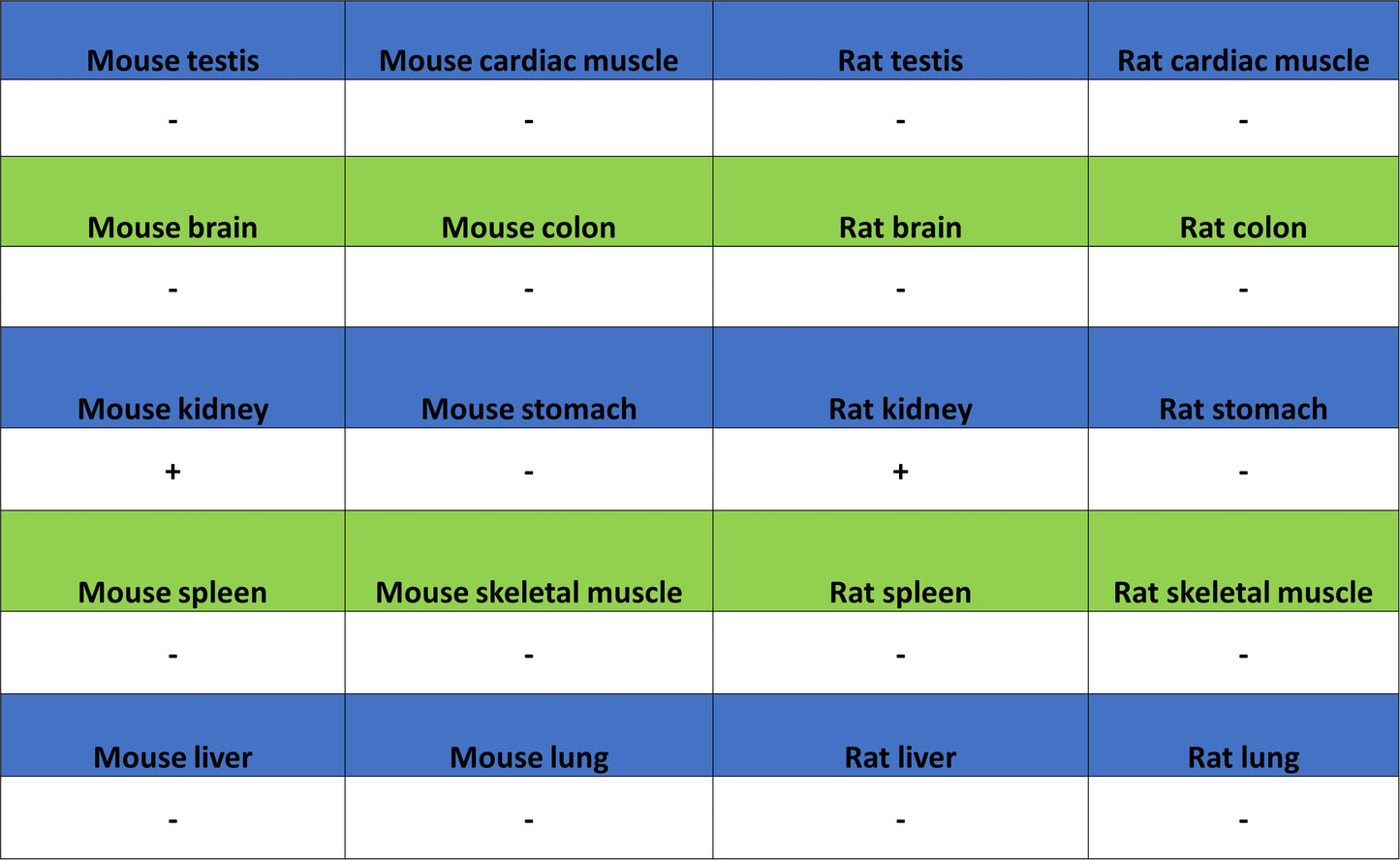
IHC shows positive staining in paraffin-embedded mouse kidney. Anti-SLC5A1 antibody was used at 1/500 dilution, followed by a HRP Polymer for Rabbit IgG (ready to use). Counterstained with hematoxylin. Heat mediated antigen retrieval with Tris/EDTA buffer pH9.0 was performed before commencing with IHC staining protocol.
Negative control: IHC shows negative staining in paraffin-embedded mouse spleen. Anti-SLC5A1 antibody was used at 1/500 dilution, followed by a HRP Polymer for Rabbit IgG (ready to use). Counterstained with hematoxylin. Heat mediated antigen retrieval with Tris/EDTA buffer pH9.0 was performed before commencing with IHC staining protocol.
IHC shows positive staining in paraffin-embedded rat kidney. Anti-SLC5A1 antibody was used at 1/500 dilution, followed by a HRP Polymer for Rabbit IgG (ready to use). Counterstained with hematoxylin. Heat mediated antigen retrieval with Tris/EDTA buffer pH9.0 was performed before commencing with IHC staining protocol.