1μg (R: reducing condition, N:non-reducing condition).
Prolactin R/PRLR His&Fc Tag Protein, Human
Prolactin R/PRLR His&Fc Tag Protein, Human
Price:
Regular price
$215 USD
Regular price
Sale price
$215 USD
Unit price
per
For shipping services or bulk orders, you may request a quotation.
Secure checkout with

View full details
Product Details
Product Details
Product Specification
| Species | Human |
| Synonyms | Prolactin receptor, PRL-R |
| Accession | P16471 |
| Amino Acid Sequence | Gln25-Asp234 with His Tag&hIgG1 Fc Tag at the C-Terminus |
| Expression System | HEK293 |
| Molecular Weight | 60-70kDa (Reducing) |
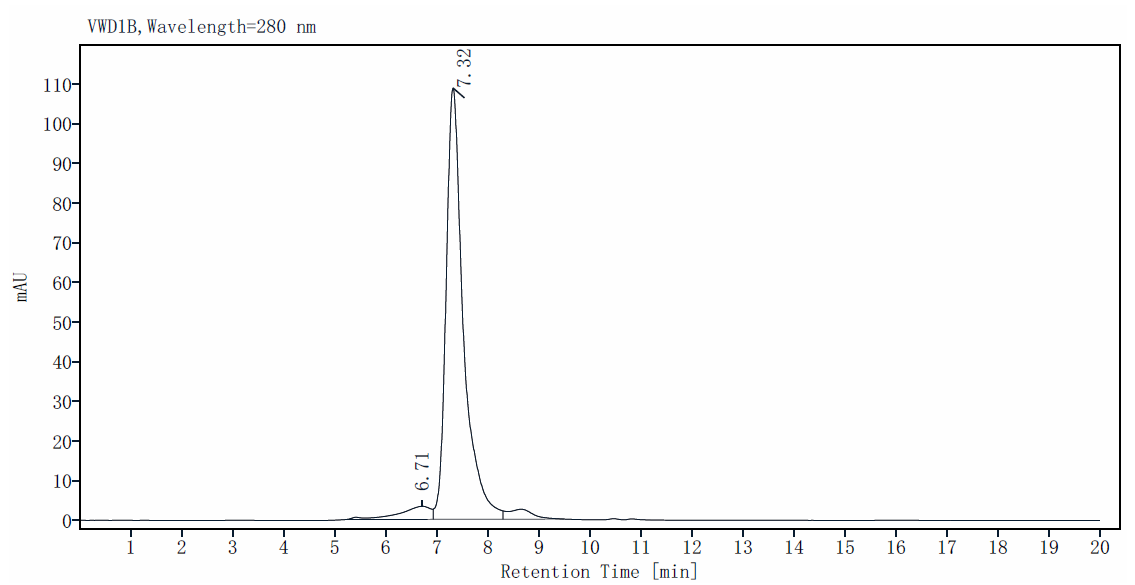
| Purity | >95% by SDS-PAGE,> 90% by HPLC |
| Conjugation | Unconjugated |
| Tag | His Tag, Human IgG1 Fc |
| Physical Appearance | Lyophilized powder |
| Storage Buffer | PBS, pH7.4, 5% trehalose |
| Reconstitution | Reconstitute at 0.1-1 mg/ml according to the size in ultrapure water after rapid centrifugation. |
| Stability & Storage | · 12 months from date of receipt, lyophilized powder stored at -20 to -80℃. |
| Reference | 1.Bernard V, Young J, Chanson P, Binart N. New insights in prolactin: pathological implications. Nat Rev Endocrinol. 2015 May;11(5):265-75. |
Background
Prolactin (PRL) is a polypeptide hormone secreted by the anterior pituitary gland, and its receptor PRLR belongs to the class I cytokine receptor superfamily, existing in multiple membrane-bound isoforms including the long form (L-PRLR) and short form (S-PRLR). Upon binding to PRLR, PRL primarily activates downstream gene expression through the JAK2-STAT signaling pathway, regulating mammary gland development and lactation, ovarian function maintenance, steroidogenesis, and metabolic homeostasis, while also exerting extensive paracrine and autocrine effects in immune cells and adipocytes. Clinically, aberrant PRL/PRLR signaling is closely associated with prolactinomas, infertility, metabolic disorders, and various malignancies; PRLR gene variants have been confirmed to contribute to pituitary tumorigenesis, and PRLR-targeted antagonists and small-molecule inhibitors are emerging as novel therapeutic strategies in oncology, highlighting the significant translational value of this pathway from basic research to clinical application.
Picture
Picture
SDS-PAGE
SEC-HPLC
The purity of Prolactin R/PRLR His&Fc Tag Protein, Human is more than 90% determined by SEC-HPLC.
ELISA
Immobilized Human GH Protein, His Tag(Cat. No. S0A8004) at 2.0μg/mL (100μL/well) can bind Prolactin R/PRLR His&Fc Tag Protein, Human (Cat. No. UA016090) with EC50 of 1.35-2.66 ng/mL.