WB result of PLCγ2 Recombinant Rabbit mAb
Primary antibody: PLCγ2 Recombinant Rabbit mAb at 1/1000 dilution
Lane 1: 22Rv1 whole cell lysate 20 µg
Lane 2: Ramos whole cell lysate 20 µg
Lane 3: Raji whole cell lysate 20 µg
Negative control: 22Rv1 whole cell lysate
Secondary antibody: Goat Anti- rabbit IgG, (H+L), HRP conjugated at 1/10000 dilution
Predicted MW: 148 kDa
Observed MW: 148 kDa
PLCγ2 Recombinant Rabbit mAb (S-2749-14)
PLCγ2 Recombinant Rabbit mAb (S-2749-14)
Price:
Regular price
$100 USD
Regular price
Sale price
$100 USD
Unit price
per
For shipping services or bulk orders, you may request a quotation.
Secure checkout with

View full details
Product Details
Product Details
Product Specification
| Host | Rabbit |
| Antigen | PLCγ2 |
| Synonyms | 1-phosphatidylinositol 4,5-bisphosphate phosphodiesterase gamma-2; Phosphoinositide phospholipase C-gamma-2; Phospholipase C-IV (PLC-IV); Phospholipase C-gamma-2 (PLC-gamma-2); PLCG2 |
| Immunogen | Synthetic Peptide |
| Accession | P16885 |
| Clone Number | S-2749-14 |
| Antibody Type | Recombinant mAb |
| Isotype | IgG |
| Application | WB, IHC-P, ICC |
| Reactivity | Hu, Ms, Rt |
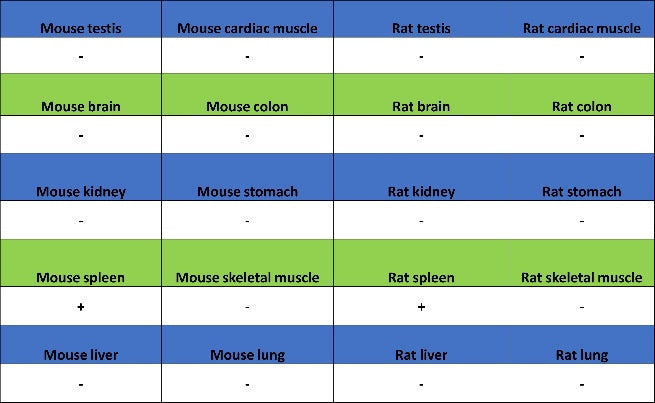
| Positive Sample | Ramos, Raji, A20, mouse spleen, rat spleen |
| Purification | Protein A |
| Concentration | 0.5 mg/ml |
| Conjugation | Unconjugated |
| Physical Appearance | Liquid |
| Storage Buffer | PBS, 40% Glycerol, 0.05% BSA, 0.03% Proclin 300 |
| Stability & Storage | 12 months from date of receipt / reconstitution, -20 °C as supplied |
Dilution
| application | dilution | species |
| WB | 1:1000-1:2000 | Hu, Ms, Rt |
| IHC-P | 1:500 | Hu, Ms, Rt |
| ICC | 1:500 | Hu |
Background
PLCγ2 (Phospholipase C gamma-2) is a 1,565-residue signaling enzyme that harbors an N-terminal SH2-SH3-SH2 cassette, a split PH domain, tandem EF hands, a catalytic Y-domain TIM barrel, and a C-terminal tail containing two phosphorylatable tyrosines (Y753/Y759); upon recruitment to phosphorylated ITAM-bearing adaptors (e.g., DAP12, FcRγ) or receptor tyrosine kinases, Syk/BTK family kinases trans-phosphorylate these tyrosines, triggering allosteric relief of an auto-inhibited conformation that enables the lipase to hydrolyze PIP2 into IP3 and DAG, thereby mobilizing Ca²⁺ and activating PKC, while simultaneously serving as a scaffold for assembling signalosomes that drive cytoskeletal remodeling, ROS generation and transcriptional programs essential for osteoclastogenesis, B-cell development, platelet aggregation, and innate immune responses; gain-of-function mutations (e.g., S707F, R665W) produce constitutive PIP2 cleavage and cause immune-dysregulatory diseases such as PLAID, APLAID and cold urticaria, whereas loss-of-function variants underlie antibody deficiency and osteopetrosis, making PLCγ2 a druggable node in inflammation, autoimmunity, and hematologic malignancies.
Picture
Picture
Western Blot
WB result of PLCγ2 Recombinant Rabbit mAb
Primary antibody: PLCγ2 Recombinant Rabbit mAb at 1/1000 dilution
Lane 1: A20 whole cell lysate 20 µg
Lane 2: mouse spleen lysate 20 µg
Secondary antibody: Goat Anti- rabbit IgG, (H+L), HRP conjugated at 1/10000 dilution
Predicted MW: 148 kDa
Observed MW: 148 kDa
WB result of PLCγ2 Recombinant Rabbit mAb
Primary antibody: PLCγ2 Recombinant Rabbit mAb at 1/1000 dilution
Lane 1: rat spleen lysate 20 µg
Secondary antibody: Goat Anti- rabbit IgG, (H+L), HRP conjugated at 1/10000 dilution
Predicted MW: 148 kDa
Observed MW: 148 kDa
Immunohistochemistry
IHC shows positive staining in paraffin-embedded human tonsil. Anti-PLCγ2 antibody was used at 1/500 dilution, followed by a HRP Polymer for Mouse & Rabbit IgG (ready to use). Counterstained with hematoxylin. Heat mediated antigen retrieval with Tris/EDTA buffer pH9.0 was performed before commencing with IHC staining protocol.
IHC shows positive staining in paraffin-embedded human cervical squamous cell carcinoma. Anti-PLCγ2 antibody was used at 1/500 dilution, followed by a HRP Polymer for Mouse & Rabbit IgG (ready to use). Counterstained with hematoxylin. Heat mediated antigen retrieval with Tris/EDTA buffer pH9.0 was performed before commencing with IHC staining protocol.
IHC shows positive staining in paraffin-embedded human colon cancer. Anti-PLCγ2 antibody was used at 1/500 dilution, followed by a HRP Polymer for Mouse & Rabbit IgG (ready to use). Counterstained with hematoxylin. Heat mediated antigen retrieval with Tris/EDTA buffer pH9.0 was performed before commencing with IHC staining protocol.
IHC shows positive staining in paraffin-embedded human lung squamous cell carcinoma. Anti-PLCγ2 antibody was used at 1/500 dilution, followed by a HRP Polymer for Mouse & Rabbit IgG (ready to use). Counterstained with hematoxylin. Heat mediated antigen retrieval with Tris/EDTA buffer pH9.0 was performed before commencing with IHC staining protocol.
IHC shows positive staining in paraffin-embedded mouse spleen. Anti-PLCγ2 antibody was used at 1/500 dilution, followed by a HRP Polymer for Mouse & Rabbit IgG (ready to use). Counterstained with hematoxylin. Heat mediated antigen retrieval with Tris/EDTA buffer pH9.0 was performed before commencing with IHC staining protocol.
IHC shows positive staining in paraffin-embedded rat spleen. Anti-PLCγ2 antibody was used at 1/500 dilution, followed by a HRP Polymer for Mouse & Rabbit IgG (ready to use). Counterstained with hematoxylin. Heat mediated antigen retrieval with Tris/EDTA buffer pH9.0 was performed before commencing with IHC staining protocol.
Immunocytochemistry
ICC shows positive staining in Ramos cells (top panel) and negative staining in 22Rv1 cells (below panel). Anti- PLCγ2 antibody was used at 1/100 dilution (Green) and incubated overnight at 4°C. Goat polyclonal Antibody to Rabbit IgG - H&L (Alexa Fluor® 488) was used as secondary antibody at 1/1000 dilution. The cells were fixed with 4% PFA and permeabilized with 0.1% PBS-Triton X-100. Nuclei were counterstained with DAPI (Blue). Counterstain with tubulin (Red).