WB result of Phospho-Vimentin (Ser39) Rabbit Polyclonal Antibody
Primary antibody: Phospho-Vimentin (Ser39) Rabbit Polyclonal Antibody at 1/1000 dilution
Lane 1: PANC-1 whole cell lysate 20 μg
Secondary antibody: Goat Anti-Rabbit IgG (H+L), HRP conjugated at 1/10000 dilution
Predicted MW: 54 kDa
Observed MW: 57 kDa
Phospho-Vimentin (Ser39) Rabbit Polyclonal Antibody
Phospho-Vimentin (Ser39) Rabbit Polyclonal Antibody
Price:
Regular price
$100 USD
Regular price
Sale price
$100 USD
Unit price
per
For shipping services or bulk orders, you may request a quotation.
Secure checkout with

View full details
Product Details
Product Details
Product Specification
| Host | Rabbit |
| Antigen | Phospho-Vimentin (Ser39) |
| Synonyms | Vimentin; VIM |
| Immunogen | Synthetic Peptide |
| Location | Cytoplasm, Cytoskeleton, Nucleus, Cell membrane |
| Accession | P08670 |
| Antibody Type | Polyclonal antibody |
| Isotype | IgG |
| Application | WB, IHC-P |
| Reactivity | Hu |
| Positive Sample | PANC-1, HeLa treated with Calyculin A 100ng/mL for 30min |
| Predicted Reactivity | Bv, AfGrMk, Cz, Dg, Pg, Sh |
| Purification | Immunogen Affinity |
| Concentration | 0.5 mg/ml |
| Conjugation | Unconjugated |
| Physical Appearance | Liquid |
| Storage Buffer | PBS, 40% Glycerol, 0.05% BSA, 0.02% sodium azide |
| Stability & Storage | 12 months from date of receipt / reconstitution, -20 °C as supplied |
Dilution
| application | dilution | species |
| WB | 1:1000 | Hu |
| IHC-P | 1:250 | Hu |
Background
Phospho-Vimentin (Ser39) is a phosphorylated modification of the vimentin intermediate filament protein at serine 39, a key post-translational modification that plays a central role in regulating cytoskeletal dynamics and structural remodeling. Vimentin is the predominant type III intermediate filament protein in mesenchymal cells, and the Ser39 site within its head domain is a hotspot for phosphorylation regulation; phosphorylation at this site induces conformational changes and weakens filament-filament interactions, thereby promoting filament disassembly or reorganization—a dynamic process essential for mitosis, cell migration, and cellular response to mechanical stress. At the level of signal regulation, phosphorylation at this site is primarily mediated by AKT1 kinase; studies have shown that activated pAKT1 can directly phosphorylate vimentin at Ser39, thereby enhancing cell migration and survival. Additionally, CAMK2 has also been reported to phosphorylate this site to maintain vimentin structural regulation. In terms of pathophysiological significance, dysregulation of Phospho-Vimentin (Ser39) is closely associated with various diseases: in cancer, elevated phosphorylation levels can promote epithelial-mesenchymal transition and tumor metastasis, correlating with poor prognosis; in infectious diseases, Treponema pallidum infection activates the pAKT1/pSer39-vimentin signaling pathway, leading to intracellular vimentin rearrangement and fibronectin matrix depolymerization, which disrupts the microvascular endothelial barrier and promotes pathogen dissemination. Therefore, Phospho-Vimentin (Ser39) not only serves as an important molecular marker for studying cytoskeletal remodeling and signal integration, but also represents a potential therapeutic target for interventions in tumor metastasis and infectious diseases.
Picture
Picture
Western Blot
WB result of Phospho-Vimentin (Ser39) Rabbit Polyclonal Antibody
Primary antibody: Phospho-Vimentin (Ser39) Rabbit Polyclonal Antibody at 1/1000 dilution
Lane 1: untreated HeLa whole cell lysate 20 μg
Lane 2: HeLa treated with Calyculin A 100ng/mL for 30min whole cell lysate 20 μg
Secondary antibody: Goat Anti-Rabbit IgG (H+L), HRP conjugated at 1/10000 dilution
Predicted MW: 54 kDa
Observed MW: 57 kDa
Immunohistochemistry
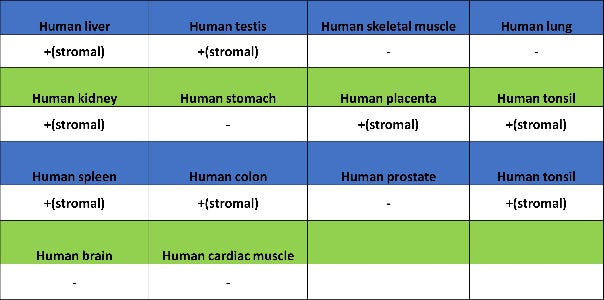
IHC shows positive staining in paraffin-embedded human spleen. Anti-Phospho-Vimentin (Ser39) antibody was used at 1/250 dilution, followed by a HRP Polymer for Rabbit IgG (ready to use). Counterstained with hematoxylin. Heat mediated antigen retrieval with Tris/EDTA buffer pH9.0 was performed before commencing with IHC staining protocol.
IHC shows positive staining in paraffin-embedded human hepatocellular carcinoma. Anti-Phospho-Vimentin (Ser39) antibody was used at 1/250 dilution, followed by a HRP Polymer for Rabbit IgG (ready to use). Counterstained with hematoxylin. Heat mediated antigen retrieval with Tris/EDTA buffer pH9.0 was performed before commencing with IHC staining protocol.
IHC shows positive staining in paraffin-embedded human ovarian cancer. Anti-Phospho-Vimentin (Ser39) antibody was used at 1/250 dilution, followed by a HRP Polymer for Rabbit IgG (ready to use). Counterstained with hematoxylin. Heat mediated antigen retrieval with Tris/EDTA buffer pH9.0 was performed before commencing with IHC staining protocol.
IHC shows positive staining in paraffin-embedded human kidney. Anti-Phospho-Vimentin (Ser39) antibody was used at 1/250 dilution, followed by a HRP Polymer for Rabbit IgG (ready to use). Counterstained with hematoxylin. Heat mediated antigen retrieval with Tris/EDTA buffer pH9.0 was performed before commencing with IHC staining protocol.
IHC shows positive staining in paraffin-embedded human placenta. Anti-Phospho-Vimentin (Ser39) antibody was used at 1/250 dilution, followed by a HRP Polymer for Rabbit IgG (ready to use). Counterstained with hematoxylin. Heat mediated antigen retrieval with Tris/EDTA buffer pH9.0 was performed before commencing with IHC staining protocol.
IHC shows positive staining in paraffin-embedded human bladder cancer. Anti-Phospho-Vimentin (Ser39) antibody was used at 1/250 dilution, followed by a HRP Polymer for Rabbit IgG (ready to use). Counterstained with hematoxylin. Heat mediated antigen retrieval with Tris/EDTA buffer pH9.0 was performed before commencing with IHC staining protocol.