WB result of Phospho-ATM (S1981) Recombinant Rabbit mAb
Blocking/Diluting buffer and concentration: 5% NFDM/TBST
Primary antibody: Phospho-ATM (S1981) Recombinant Rabbit mAb at 1/1000 dilution
Lane 1: untreated HCT 116 whole cell lysate 20 µg
Lane 2: HCT 116 treated with 10 µM Neocarzinostatin for 1 hour whole cell lysate 20 µg
Secondary antibody: Goat Anti- rabbit IgG, (H+L), HRP conjugated at 1/10000 dilution
Predicted MW: 350 kDa
Observed MW: 350 kDa
This blot was developed with high sensitivity substrate
Phospho-ATM (Ser1981) Recombinant Rabbit mAb (S-3396)
Phospho-ATM (Ser1981) Recombinant Rabbit mAb (S-3396)
Price:
Regular price
$100 USD
Regular price
Sale price
$100 USD
Unit price
per
For shipping services or bulk orders, you may request a quotation.
Secure checkout with

View full details
Product Details
Product Details
Product Specification
| Host | Rabbit |
| Antigen | ATM |
| Synonyms | Serine-protein kinase ATM; Ataxia telangiectasia mutated (A-T mutated) |
| Location | Nucleus |
| Accession | Q13315 |
| Clone Number | S-3396 |
| Antibody Type | Recombinant mAb |
| Isotype | IgG |
| Application | WB, IHC-P |
| Reactivity | Hu |
| Positive Sample | Neocarzinostatin treated HCT 116 |
| Purification | Protein A |
| Concentration | 0.5 mg/ml |
| Conjugation | Unconjugated |
| Physical Appearance | Liquid |
| Storage Buffer | PBS, 40% Glycerol, 0.05% BSA, 0.03% Proclin 300 |
| Stability & Storage | 12 months from date of receipt / reconstitution, -20 °C as supplied |
Dilution
| application | dilution | species |
| WB | 1:500-1:1000 | Hu |
| IHC-P | 1:250 | Hu |
Background
Phospho-ATM (Ser1981) refers to the specific activated form of the Ataxia-Telangiectasia Mutated protein, phosphorylated at its serine 1981 residue. ATM is a key PI3K-related kinase that plays a central role in cellular signaling in response to DNA double-strand break damage. The Ser1981 site is located within the kinase domain of ATM. Its autophosphorylation is a hallmark early molecular event for ATM activation following DNA damage: when DNA double-strand breaks occur, ATM rapidly undergoes dimer dissociation and autophosphorylates the Ser1981 site, converting it into an active monomeric form. This phosphorylation event is crucial for the full activation of ATM kinase activity, enabling it to phosphorylate a series of critical downstream substrates (such as p53, CHK2, H2AX, etc.), thereby initiating key cellular responses including cell cycle checkpoint arrest, DNA repair, or apoptosis. Consequently, detecting Phospho-ATM (Ser1981) levels is widely used as a reliable biomarker for DNA damage response activation, holding significant application value in research areas such as tumor radiotherapy, genome stability assessment, and studies related to diseases like Ataxia-Telangiectasia.
Picture
Picture
Western Blot
Immunohistochemistry
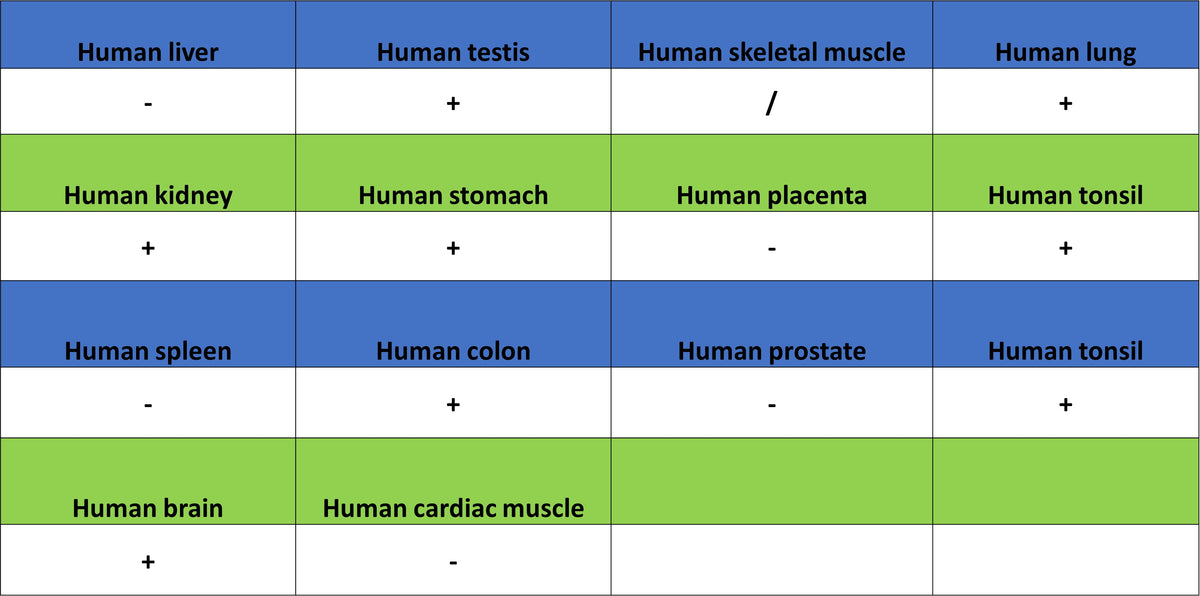
IHC shows positive staining in paraffin-embedded human tonsil. Anti- Phospho-ATM (S1981) antibody was used at 1/250 dilution, followed by a HRP Polymer for Mouse & Rabbit IgG (ready to use). Counterstained with hematoxylin. Heat mediated antigen retrieval with Tris/EDTA buffer pH9.0 was performed before commencing with IHC staining protocol.
IHC shows positive staining in paraffin-embedded human colon cancer. Anti- Phospho-ATM (S1981) antibody was used at 1/250 dilution, followed by a HRP Polymer for Mouse & Rabbit IgG (ready to use). Counterstained with hematoxylin. Heat mediated antigen retrieval with Tris/EDTA buffer pH9.0 was performed before commencing with IHC staining protocol.
IHC shows positive staining in paraffin-embedded human breast cancer. Anti- Phospho-ATM (S1981) antibody was used at 1/250 dilution, followed by a HRP Polymer for Mouse & Rabbit IgG (ready to use). Counterstained with hematoxylin. Heat mediated antigen retrieval with Tris/EDTA buffer pH9.0 was performed before commencing with IHC staining protocol.