WB result of pan SCN Recombinant Rabbit mAb
Primary antibody: pan SCN Recombinant Rabbit mAb at 1/1000 dilution
Lane 1: mouse heart lysate 20 µg
Lane 2: mouse hippocampus lysate 20 µg
Lane 3: mouse brain lysate 20 µg
Negative control: mouse heart lysate
Secondary antibody: Goat Anti- rabbit IgG, (H+L), HRP conjugated at 1/10000 dilution
Predicted MW: 228 kDa
Observed MW: 350 kDa
pan SCN Recombinant Rabbit mAb (S-5038)
pan SCN Recombinant Rabbit mAb (S-5038)
Price:
Regular price
$100 USD
Regular price
Sale price
$100 USD
Unit price
per
For shipping services or bulk orders, you may request a quotation.
Secure checkout with

View full details
Product Details
Product Details
Product Specification
| Host | Rabbit |
| Antigen | SCN |
| Synonyms | Sodium channel protein type 2 subunit alpha; HBSC II; Sodium channel protein brain II subunit alpha; Sodium channel protein type II subunit alpha; Voltage-gated sodium channel subunit alpha Nav1.2; SCN2A; HBA; NAC2; SCN2A1; SCN2A2; Sodium channel protein type 1 subunit alpha; Sodium channel protein brain I subunit alpha; Sodium channel protein type I subunit alpha; Voltage-gated sodium channel subunit alpha Nav1.1; SCN1A; NAC1; SCN1; Sodium channel protein type 3 subunit alpha; Sodium channel protein brain III subunit alpha; Sodium channel protein type III subunit alpha; Voltage-gated sodium channel subtype III; Voltage-gated sodium channel subunit alpha Nav1.3; SCN3A; KIAA1356; NAC3; Sodium channel protein type 9 subunit alpha; Neuroendocrine sodium channel (hNE-Na); Peripheral sodium channel 1 (PN1); Sodium channel protein type IX subunit alpha; Voltage-gated sodium channel subunit alpha Nav1.7; SCN9A; NENA |
| Location | Cell membrane |
| Accession | Q99250、 P35498、 Q9NY46、 Q15858 |
| Clone Number | S-5038 |
| Antibody Type | Recombinant mAb |
| Isotype | IgG |
| Application | WB, IHC-P, IF |
| Reactivity | Hu, Ms, Rt |
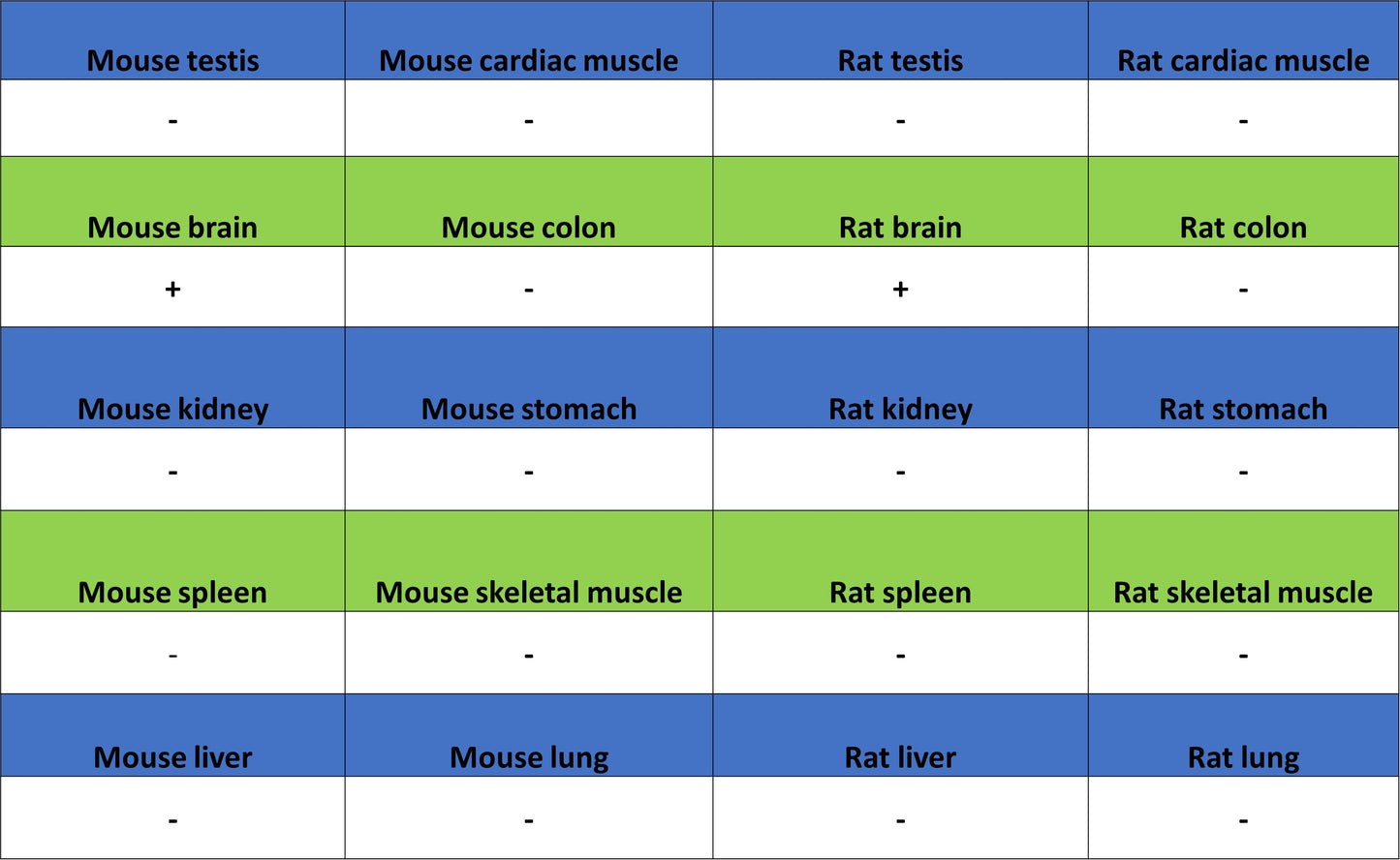
| Positive Sample | mouse hippocampus, mouse brain, rat hippocampus, rat brain |
| Purification | Protein A |
| Concentration | 0.5 mg/ml |
| Conjugation | Unconjugated |
| Physical Appearance | Liquid |
| Storage Buffer | PBS, 40% Glycerol, 0.05% BSA, 0.03% Proclin 300 |
| Stability & Storage | 12 months from date of receipt / reconstitution, -20 °C as supplied |
Dilution
| application | dilution | species |
| WB | 1:1000-1:2000 | Ms, Rt |
| IHC-P | 1:250-1:500 | Hu, Ms, Rt |
| IF | 1:500 | Ms, Rt |
Background
The α subunits of voltage-gated sodium channels are encoded by the SCN gene family (including SCN1A to SCN11A), and constitute the core pore-forming component of these channels. These α subunits share a highly conserved structure, typically consisting of four homologous domains (I-IV) that assemble to form a central pore. Each domain contains six transmembrane helices (S1-S6), with the S4 segment—rich in positively charged amino acid residues—acting as the voltage sensor to detect changes in membrane potential. Upon membrane depolarization, the outward movement of the S4 segment triggers rapid channel activation and opening, allowing a sodium influx that generates the upstroke of the action potential. The channel then rapidly inactivates within milliseconds. The distribution and function of different SCN family members are highly specialized: SCN1A, SCN2A, and SCN3A are predominantly expressed in neurons, where mutations in SCN1A are closely associated with Dravet syndrome (a severe epileptic encephalopathy); SCN4A is mainly found in skeletal muscle, where its mutations can lead to hyperkalemic or hypokalemic periodic paralysis; SCN5A is the primary sodium channel α subunit in cardiomyocytes, playing a critical role in the upstroke (phase 0) of the cardiac action potential and impulse conduction, with pathogenic mutations causing various inherited arrhythmias such as Brugada syndrome and long QT syndrome (type 3). Additionally, SCN9A, SCN10A, and SCN11A are primarily expressed in peripheral sensory neurons and are involved in pain perception. Gain-of-function mutations in SCN9A can cause primary erythermalgia (a painful syndrome), while loss-of-function mutations lead to congenital insensitivity to pain. Because these channels are fundamental to electrical signaling, they serve as important targets for antiepileptic drugs, local anesthetics, and antiarrhythmic agents; consequently, genetic variants in family members can readily lead to severe neurological, muscular, or cardiac disorders.
Picture
Picture
Western Blot
WB result of pan SCN Recombinant Rabbit mAb
Primary antibody: pan SCN Recombinant Rabbit mAb at 1/1000 dilution
Lane 1: rat heart lysate 20 µg
Lane 2: rat hippocampus lysate 20 µg
Lane 3: rat brain lysate 20 µg
Negative control: rat heart lysate
Secondary antibody: Goat Anti- rabbit IgG, (H+L), HRP conjugated at 1/10000 dilution
Predicted MW: 228 kDa
Observed MW: 350 kDa
Immunohistochemistry
IHC shows positive staining in paraffin-embedded human brain. Anti-pan SCN antibody was used at 1/250 dilution, followed by a HRP Polymer for Rabbit IgG (ready to use). Counterstained with hematoxylin. Heat mediated antigen retrieval with Tris/EDTA buffer pH9.0 was performed before commencing with IHC staining protocol.
IHC shows positive staining in paraffin-embedded human colon. Anti-pan SCN antibody was used at 1/250 dilution, followed by a HRP Polymer for Rabbit IgG (ready to use). Counterstained with hematoxylin. Heat mediated antigen retrieval with Tris/EDTA buffer pH9.0 was performed before commencing with IHC staining protocol.
IHC shows positive staining in paraffin-embedded human colon cancer. Anti-pan SCN antibody was used at 1/250 dilution, followed by a HRP Polymer for Rabbit IgG (ready to use). Counterstained with hematoxylin. Heat mediated antigen retrieval with Tris/EDTA buffer pH9.0 was performed before commencing with IHC staining protocol.
Negative control: IHC shows negative staining in paraffin-embedded human lung cancer. Anti-pan SCN antibody was used at 1/250 dilution, followed by a HRP Polymer for Rabbit IgG (ready to use). Counterstained with hematoxylin. Heat mediated antigen retrieval with Tris/EDTA buffer pH9.0 was performed before commencing with IHC staining protocol.
Negative control: IHC shows negative staining in paraffin-embedded human heart. Anti-pan SCN antibody was used at 1/250 dilution, followed by a HRP Polymer for Rabbit IgG (ready to use). Counterstained with hematoxylin. Heat mediated antigen retrieval with Tris/EDTA buffer pH9.0 was performed before commencing with IHC staining protocol.
IHC shows positive staining in paraffin-embedded mouse brain. Anti-pan SCN antibody was used at 1/500 dilution, followed by a HRP Polymer for Rabbit IgG (ready to use). Counterstained with hematoxylin. Heat mediated antigen retrieval with Tris/EDTA buffer pH9.0 was performed before commencing with IHC staining protocol.
Negative control: IHC shows negative staining in paraffin-embedded mouse kidney. Anti-pan SCN antibody was used at 1/500 dilution, followed by a HRP Polymer for Rabbit IgG (ready to use). Counterstained with hematoxylin. Heat mediated antigen retrieval with Tris/EDTA buffer pH9.0 was performed before commencing with IHC staining protocol.
IHC shows positive staining in paraffin-embedded rat brain. Anti-pan SCN antibody was used at 1/500 dilution, followed by a HRP Polymer for Rabbit IgG (ready to use). Counterstained with hematoxylin. Heat mediated antigen retrieval with Tris/EDTA buffer pH9.0 was performed before commencing with IHC staining protocol.
Negative control: IHC shows negative staining in paraffin-embedded rat testis. Anti-pan SCN antibody was used at 1/500 dilution, followed by a HRP Polymer for Rabbit IgG (ready to use). Counterstained with hematoxylin. Heat mediated antigen retrieval with Tris/EDTA buffer pH9.0 was performed before commencing with IHC staining protocol.
Immunofluorescence
IF shows positive staining in paraffin-embedded mouse cerebellum. Anti-pan SCN antibody was used at 1/500 dilution (Green) and incubated overnight at 4°C. Goat polyclonal Antibody to Rabbit IgG - H&L (Alexa Fluor® 488) was used as secondary antibody at 1/1000 dilution. Counterstained with DAPI (Blue). Heat mediated antigen retrieval with EDTA buffer pH9.0 was performed before commencing with IF staining protocol.
IF shows positive staining in paraffin-embedded mouse brain. Anti-pan SCN antibody was used at 1/500 dilution (Green) and incubated overnight at 4°C. Goat polyclonal Antibody to Rabbit IgG - H&L (Alexa Fluor® 488) was used as secondary antibody at 1/1000 dilution. Counterstained with DAPI (Blue). Heat mediated antigen retrieval with EDTA buffer pH9.0 was performed before commencing with IF staining protocol.
Negative control: IF shows negative staining in paraffin-embedded mouse cardiac muscle. Anti-pan SCN antibody was used at 1/500 dilution and incubated overnight at 4°C. Goat polyclonal Antibody to Rabbit IgG - H&L (Alexa Fluor® 488) was used as secondary antibody at 1/1000 dilution. Counterstained with DAPI (Blue). Heat mediated antigen retrieval with EDTA buffer pH9.0 was performed before commencing with IF staining protocol.
IF shows positive staining in paraffin-embedded rat cerebellum. Anti-pan SCN antibody was used at 1/500 dilution (Green) and incubated overnight at 4°C. Goat polyclonal Antibody to Rabbit IgG - H&L (Alexa Fluor® 488) was used as secondary antibody at 1/1000 dilution. Counterstained with DAPI (Blue). Heat mediated antigen retrieval with EDTA buffer pH9.0 was performed before commencing with IF staining protocol.
IF shows positive staining in paraffin-embedded rat brain. Anti-pan SCN antibody was used at 1/500 dilution (Green) and incubated overnight at 4°C. Goat polyclonal Antibody to Rabbit IgG - H&L (Alexa Fluor® 488) was used as secondary antibody at 1/1000 dilution. Counterstained with DAPI (Blue). Heat mediated antigen retrieval with EDTA buffer pH9.0 was performed before commencing with IF staining protocol.
Negative control: IF shows negative staining in paraffin-embedded rat cardiac muscle. Anti-pan SCN antibody was used at 1/500 dilution and incubated overnight at 4°C. Goat polyclonal Antibody to Rabbit IgG - H&L (Alexa Fluor® 488) was used as secondary antibody at 1/1000 dilution. Counterstained with DAPI (Blue). Heat mediated antigen retrieval with EDTA buffer pH9.0 was performed before commencing with IF staining protocol.