2μg (R: reducing condition, N: non-reducing condition).
P53(Y220C) His Tag Protein, Human
P53(Y220C) His Tag Protein, Human
Price:
Regular price
$360 USD
Regular price
Sale price
$360 USD
Unit price
per
For shipping services or bulk orders, you may request a quotation.
Secure checkout with

View full details
Product Details
Product Details
Product Specification
| Species | Human |
| Synonyms | TP53, P53, Phosphoprotein p53, Tumor suppressor p53 |
| Accession | P04637 |
| Amino Acid Sequence | S94-T312, Y220C with His Tag at the N-Terminus |
| Expression System | E.coli |
| Molecular Weight | 25-35kDa (Reducing) |
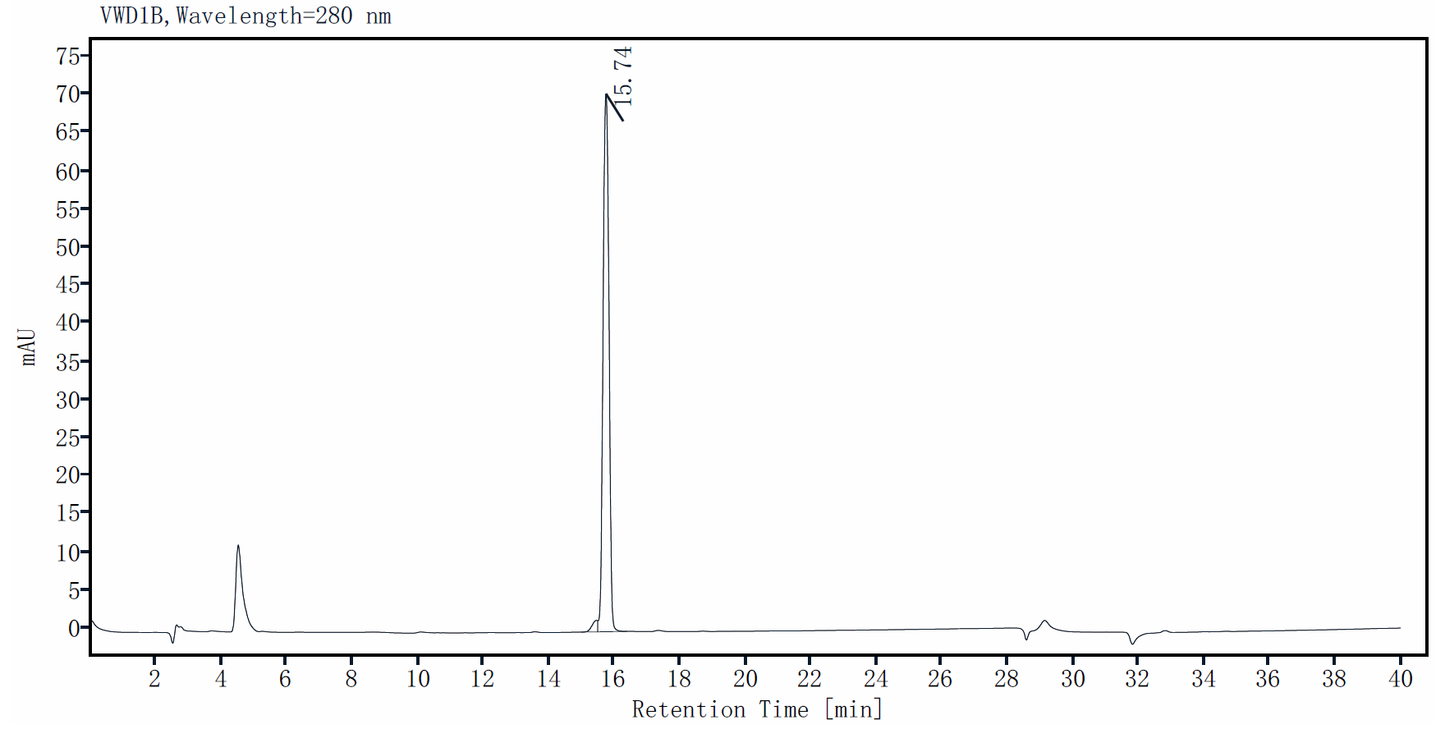
| Purity | >95% by SDS-PAGE & HPLC |
| Conjugation | Unconjugated |
| Tag | His Tag |
| Physical Appearance | Liquid |
| Storage Buffer | 50mM Tris, 150mM NaCl, pH7.5, 1mM DTT, 10%Glycerol |
| Stability & Storage | Stable for 12 months upon stored at -80℃ from the date of receipt. And avoid repeated freeze-thaws cycles. |
| Reference | 1. Restoration of the Tumor Suppressor Function of Y220C-Mutant p53 by Rezatapopt, a Small-Molecule Reactivator. Cancer Discovery, 15(6), 1159-1179.2. Tornesello, M.L. (2025). TP53 mutations in cancer: Molecular features and therapeutic opportunities. International Journal of Molecular Medicine, 55(1), 5. |
Background
P53-Y220C is one of the most representative conformational mutants of the TP53 gene, resulting from a substitution of tyrosine to cysteine at position 220. This mutation is located on the surface of the DNA-binding domain (DBD) and does not directly participate in DNA contact. The Y220C mutation creates a surface crevice or “pocket” within the protein core, severely disrupting the thermodynamic stability of the p53 protein. This causes it to undergo conformational changes and aggregate at physiological temperatures, leading to a loss of DNA-binding ability and transcriptional activation function.
In contrast to many other types of mutations, the unique crevice created by the Y220C mutation provides an excellent “druggable” target for the development of small-molecule “chaperone” drugs. These small molecules can precisely bind to this crevice, acting like “glue” to stabilize the folded conformation of the p53 protein, thereby restoring its tumor suppressor function. Consequently, P53-Y220C has become one of the most intensively studied and advanced mutation targets in the field of p53-targeted therapeutics.
Picture
Picture
SDS-PAGE
RP-HPLC
The purity of P53(Y220C) His Tag Protein, Human is more than 95% determined by RP-HPLC.