2μg (R: reducing condition, N: non-reducing condition).
P53 His Tag Protein, Human
P53 His Tag Protein, Human
Price:
Regular price
$360 USD
Regular price
Sale price
$360 USD
Unit price
per
For shipping services or bulk orders, you may request a quotation.
Secure checkout with

View full details
Product Details
Product Details
Product Specification
| Species | Human |
| Synonyms | TP53, P53, Phosphoprotein p53, Tumor suppressor p53 |
| Accession | P04637 |
| Amino Acid Sequence | S94-T312 with His Tag at the N-Terminus |
| Expression System | E.coli |
| Molecular Weight | 25-35kDa (Reducing) |
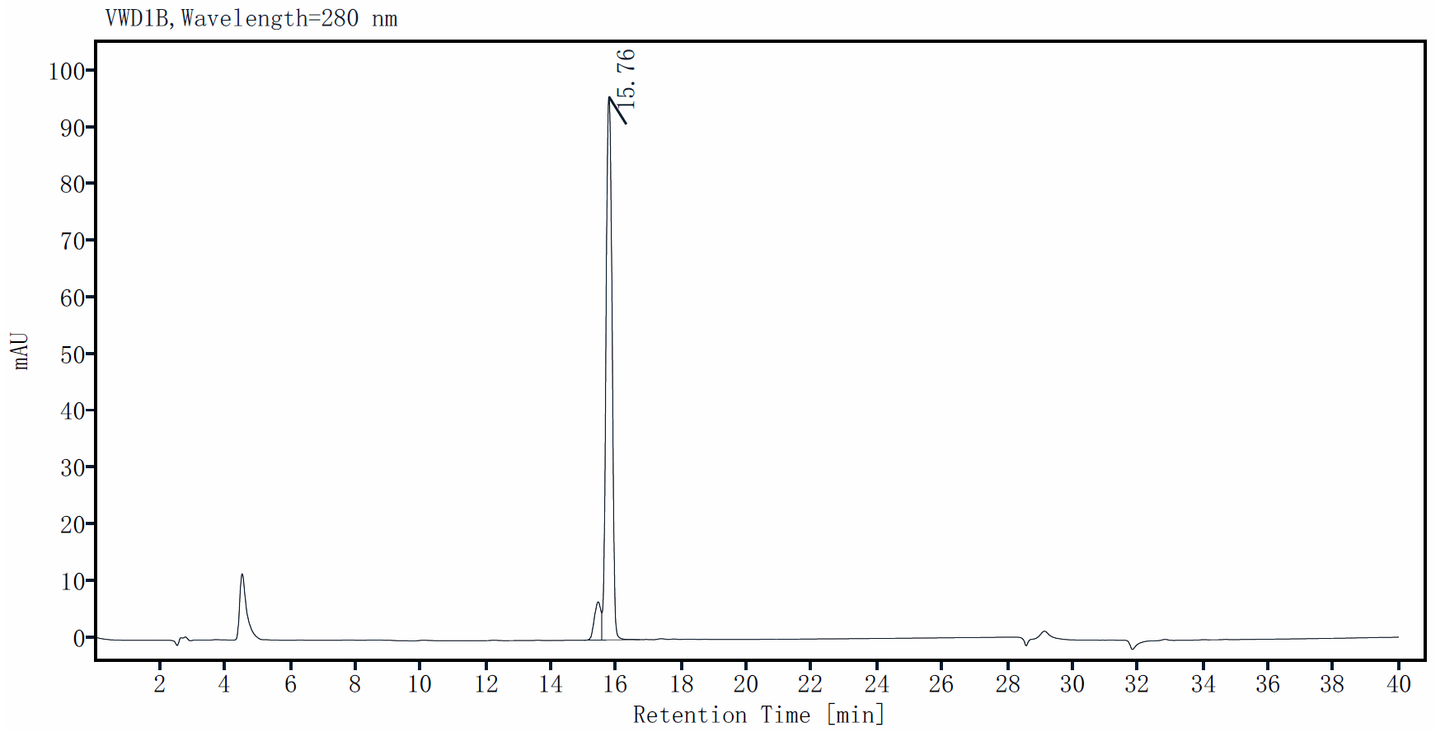
| Purity | >95% by SDS-PAGE,>90% by HPLC |
| Conjugation | Unconjugated |
| Tag | His Tag |
| Physical Appearance | Liquid |
| Storage Buffer | 50mM Tris, 150mM NaCl, pH7.5, 1mM DTT, 10%Glycerol |
| Stability & Storage | Stable for 12 months upon stored at -80℃ from the date of receipt. And avoid repeated freeze-thaws cycles. |
| Reference | 1. Boutelle, A.M., & Attardi, L.D. (2021). p53 and Tumor Suppression: It Takes a Network. Trends in Cell Biology, 31(4), 298-310. |
Background
P53, widely known as the “guardian of the genome,” is a critical tumor suppressor protein encoded by the TP53 gene. It functions as a sequence-specific transcription factor that is activated in response to various cellular stress signals, including DNA damage, oxidative stress, and oncogene activation. The full-length P53 protein consists of 393 amino acids and comprises several functional domains. The N-terminal region contains the transactivation domain (TAD) and the MDM2 binding site, which are central to the regulation of P53 activity. The central DNA-binding domain (DBD) is the core region through which P53 exerts its transcription factor function, and mutations in this domain are associated with over 85% of TP53-mutant cancers. The C-terminal region contains the tetramerization domain (TET) and nuclear localization signals (NLS), ensuring proper assembly and nuclear import of the P53 protein.
Under normal conditions, P53 activity is tightly kept at low levels by its negative regulator MDM2. Upon cellular stress, such as DNA damage or oncogene activation, the P53 protein becomes stabilized and activated. It binds to specific DNA sequences in the promoter regions of its downstream target genes, regulating the expression of hundreds of genes, ultimately leading to cell cycle arrest, DNA repair, or apoptosis. Additionally, P53 is involved in regulating cellular metabolism, autophagy, and immune responses.
Picture
Picture
SDS-PAGE
RP-HPLC
The purity of P53 His Tag Protein, Human is more than 90% determined by RP-HPLC.