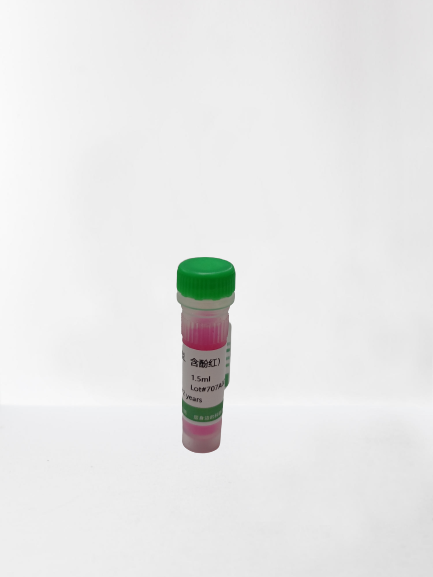
HC OrganoGel with Phenol red
HC OrganoGel with Phenol red
Price:
Regular price
$803 USD
Regular price
Sale price
$803 USD
Unit price
per
For shipping services or bulk orders, you may request a quotation.
Secure checkout with

View full details
Product Details
Product Details
Product Specification
| Usage | See the operating manual for details. |
| Description | The basement membrane is a layer of matrix membrane on the basal surface of epithelial cells in animals. OrganoGel is a matrix gel formed from basement membrane components extracted from mouse tumor tissue. The main components of the matrix glue are: laminin, collagen IV, heparan sulfate proteoglycans (Kleinman et al. 1986). At the same time, the matrix glue also contains a variety of growth factors, such as epidermal growth factor EFG, platelet-derived growth factor PDGF, nerve growth factor NGF, basic fibroblast growth factor FGF-2, B-type transforming growth factor TGF-beta and insulin-like growth factor ILGF (Vukicevic et al. 1992). Product Characteristics: This product is liquid at 4°C, but gels when heated to 37°C. After the matrix gum has set, it is placed back at 4° C. overnight and the matrix gum can be liquefied again. |
| Source | mouse tumor basement membrane components |
| General Notes | This matrix begins to solidify at temperatures above 10°C, so it is best to handle the matrix on ice. During organoid passage, in order to avoid enzymes affecting the organoids, the matrix gel can be slowly blown with 4°C pre-cooled basal medium to release the organoids from the matrix gel. |
| Storage Temp. | It is recommended that users repackage the product according to a single dose after the first thaw and store it in a refrigerator at -80°C. It has a shelf life of 2 years. |
| Applications | Higher protein concentrations mean higher matrix stiffness and scaffold integrity. Suitable for in vivo cell delivery applications, can improve cell implantation effect and promote solid tumor formation. |
Picture
Picture
Immunohistochemistry