Flow cytometric analysis of C57BL/6 mouse splenocytes labeled Mouse NKR-P1C antibody at 1/100 dilution (0.5 μg) / (right panel) compared with a Rabbit IgG Isotype Control / (left panel). Goat Anti- Rabbit IgG Alexa Fluor® 488 was used as the secondary antibody. Then cells were stained with CD49b – APC antibody separately. Flow cytometry and data analysis were performed using Agilent NovoCyte Quanteon and FlowJo™ software.
NKR-P1C Recombinant Rabbit mAb (S-4706)
NKR-P1C Recombinant Rabbit mAb (S-4706)
Price:
Regular price
$100 USD
Regular price
Sale price
$100 USD
Unit price
per
For shipping services or bulk orders, you may request a quotation.
Secure checkout with

View full details
Product Details
Product Details
Product Specification
| Host | Rabbit |
| Antigen | NKR-P1C |
| Synonyms | Killer cell lectin-like receptor subfamily B member 1C; CD161 antigen-like family member C; Lymphocyte antigen 55c (Ly-55c); NK1.1; NKR-P1.9; Natural killer cell surface protein P1-40 (NKR-P1 40); CD161c; Ly55c; Nkrp1c; Klrb1c |
| Accession | P27814 |
| Clone Number | S-4706 |
| Antibody Type | Recombinant mAb |
| Isotype | IgG |
| Application | IHC-P, ICC, FCM |
| Reactivity | Ms |
| Positive Sample | mouse splenocytes |
| Purification | Protein A |
| Concentration | 0.5 mg/ml |
| Conjugation | Unconjugated |
| Physical Appearance | Liquid |
| Storage Buffer | PBS, 40% Glycerol, 0.05% BSA, 0.03% Proclin 300 |
| Stability & Storage | 12 months from date of receipt / reconstitution, -20 °C as supplied |
Dilution
| application | dilution | species |
| IHC-P | 1:100 | Ms |
| ICC | 1:500 | Ms |
| FCM | 1:100 | Ms |
Background
NKR-P1C, also known as NK1.1 or CD161c, is a type II transmembrane protein primarily expressed on the surface of natural killer (NK) cells in mice, belonging to the C-type lectin-like receptor family. As an activating receptor, it plays a central role: upon cross-linking by its ligand (such as the virus-encoded decoy molecule m12), it recruits the tyrosine kinase p56lck, initiating downstream signaling cascades that induce calcium influx, thereby enhancing NK cell cytotoxicity and stimulating the production of interferon-gamma (IFN-γ). Notably, due to its encoding by a specific gene, the expression of NKR-P1C is strain-specific; it is commonly found in mice such as C57BL/6 but is naturally absent in strains like BALB/c, making it a key phenotypic marker for identifying NK cells in these specific mouse strains.
Picture
Picture
FC
Immunohistochemistry
IHC shows positive staining in paraffin-embedded mouse spleen. Anti-NKR-P1C antibody was used at 1/100 dilution, followed by a HRP Polymer for Rabbit IgG (ready to use). Counterstained with hematoxylin. Heat mediated antigen retrieval with Tris/EDTA buffer pH9.0 was performed before commencing with IHC staining protocol.
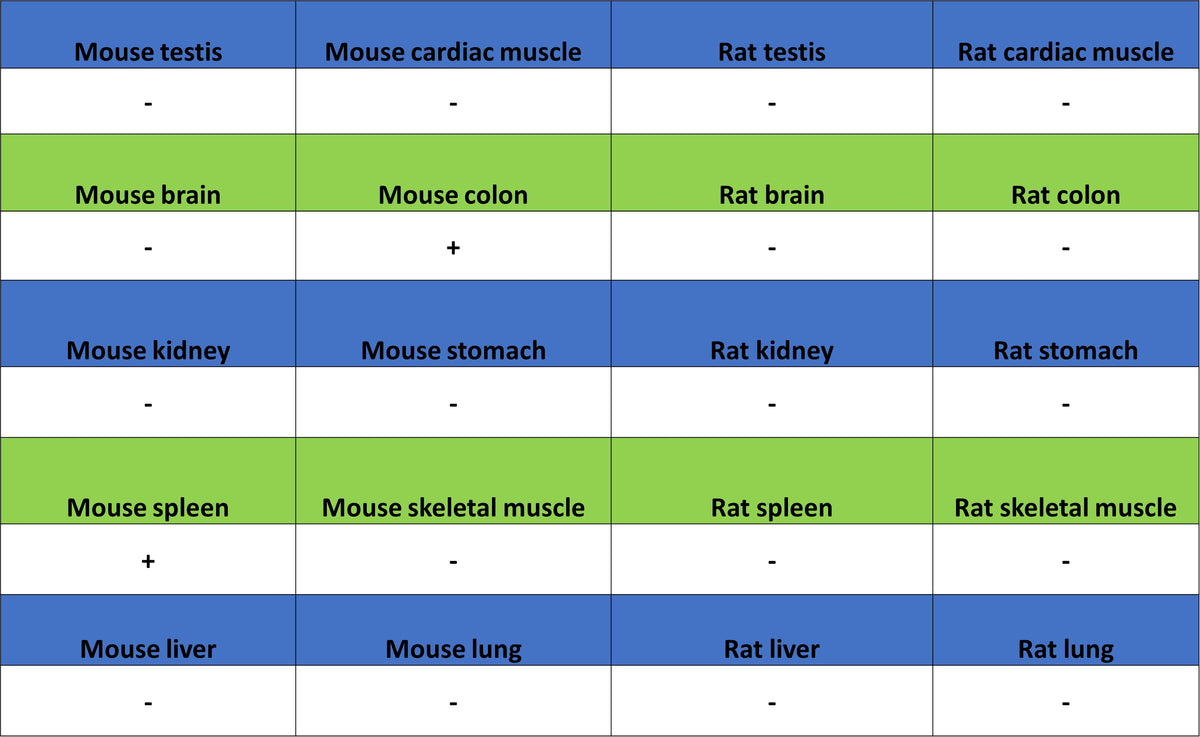
IHC shows positive staining in paraffin-embedded mouse colon. Anti-NKR-P1C antibody was used at 1/100 dilution, followed by a HRP Polymer for Rabbit IgG (ready to use). Counterstained with hematoxylin. Heat mediated antigen retrieval with Tris/EDTA buffer pH9.0 was performed before commencing with IHC staining protocol.
Immunocytochemistry
ICC shows positive staining in mouse splenocytes. Anti-NKR-P1C antibody was used at 1/500 dilution (Green) and incubated overnight at 4°C. Goat polyclonal Antibody to Rabbit IgG - H&L (Alexa Fluor® 488) was used as secondary antibody at 1/1000 dilution. The cells were fixed with 4% PFA and permeabilized with 0.1% PBS-Triton X-100. Nuclei were counterstained with DAPI (Blue). Counterstain with tubulin (Red).