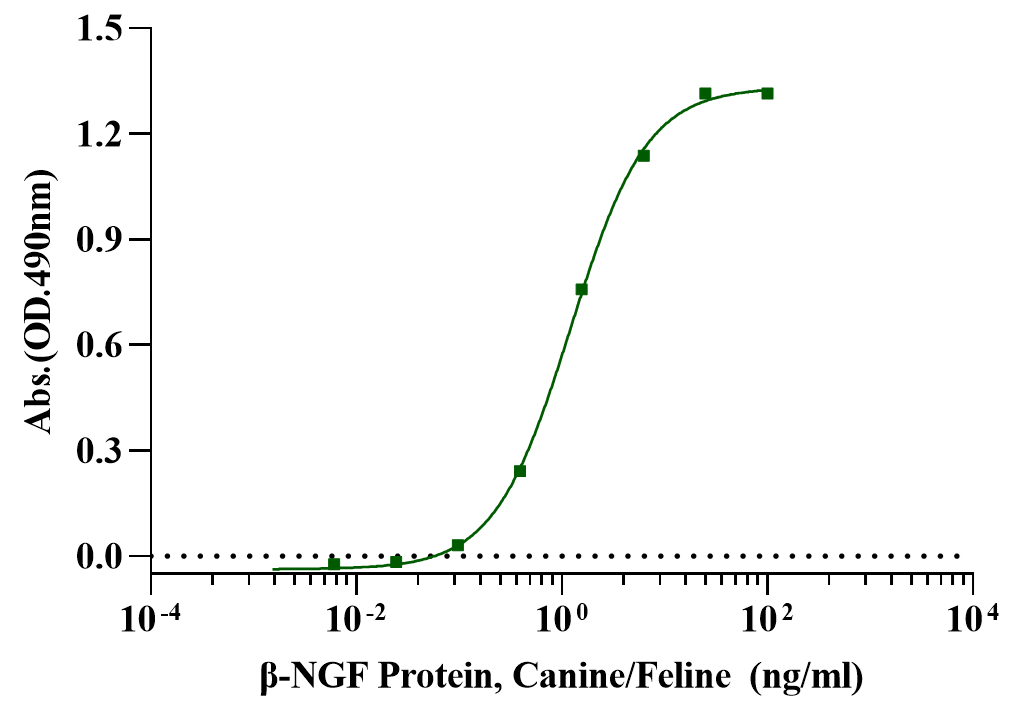
Measured in a cell proliferation assay using TF‑1 human erythroleukemic cells. The EC50 for this effect is 1.1-1.4 ng/ml.
β-NGF Protein, Canine/Feline
β-NGF Protein, Canine/Feline
Price:
Regular price
$135 USD
Regular price
Sale price
$135 USD
Unit price
per
For shipping services or bulk orders, you may request a quotation.
Secure checkout with

View full details
Product Details
Product Details
Product Specification
| Species | Canine, Feline |
| Synonyms | Beta-nerve growth factor, Beta-NGF |
| Accession | A0A8I3PYI3 |
| Amino Acid Sequence | Ser122-Gly241 |
| Expression System | E.coli |
| Molecular Weight | 12-13 kDa (Non-Reducing) |
| Purity | >95% by SDS-PAGE. |
| Endotoxin | <0.1EU/μg |
| Conjugation | Unconjugated |
| Tag | No Tag |
| Physical Appearance | Lyophilized Powder |
| Storage Buffer | PBS, pH7.4 |
| Reconstitution | Reconstitute at 0.1-1 mg/ml according to the size in ultrapure water after rapid centrifugation. |
| Stability & Storage | ·12 months from date of receipt, lyophilized powder stored at -20 to -80℃. |
| Reference | Animals (Basel). 2025 Nov 8;15(22):3243. |
Background
β-NGF in dogs and cats shares the fundamental structure of a homodimeric neurotrophin essential for the development, maintenance, and survival of sensory and sympathetic neurons. NGF serves as a critical signaling molecule for pain and inflammation in veterinary species. In pathological conditions, NGF is widely implicated in peripheral and central sensitization mechanisms, significantly contributing to the genesis and maintenance of chronic pain.
β-NGF represents a critical therapeutic target in veterinary medicine, with species-specific anti-NGF monoclonal antibodies (bedinvetmab for dogs, frunevetmab for cats) representing the first major class of biologics approved for chronic pain management in companion animals. The development of these therapeutics exemplifies successful translational medicine, leveraging naturally occurring OA in dogs and cats as models for human disease while addressing unmet needs in veterinary pain management. The distinct safety profiles between species highlight the importance of species-specific antibody development and ongoing pharmacovigilance monitoring.
Picture
Picture
Bioactivity
SDS-PAGE
2μg (R: reducing condition, N: non-reducing condition).