WB result of MMP9 Recombinant Rabbit mAb
Primary antibody: MMP9 Recombinant Rabbit mAb at 1/1000 dilution
Lane 1: untreated A549 whole cell lysate 20 µg
Lane 2: A549 starve overnight, then treated with 100 ng/ml TPA for 24 hours, together with 1 µg/ml BFA for last 3 hours whole cell lysate 20 µg
Secondary antibody: Goat Anti- rabbit IgG, (H+L), HRP conjugated at 1/10000 dilution
Predicted MW: 78 kDa
Observed MW: 78, 100 kDa
MMP9 Recombinant Rabbit mAb (S-3915-36)
MMP9 Recombinant Rabbit mAb (S-3915-36)
Price:
Regular price
$100 USD
Regular price
Sale price
$100 USD
Unit price
per
For shipping services or bulk orders, you may request a quotation.
Secure checkout with

View full details
Product Details
Product Details
Product Specification
| Host | Rabbit |
| Antigen | MMP9 |
| Synonyms | Matrix metalloproteinase-9; 92 kDa gelatinase; 92 kDa type IV collagenase; Gelatinase B (GELB); CLG4B |
| Immunogen | Synthetic Peptide |
| Location | Secreted |
| Accession | P14780 |
| Clone Number | S-3915-36 |
| Antibody Type | Recombinant mAb |
| Isotype | IgG |
| Application | WB, IHC-P |
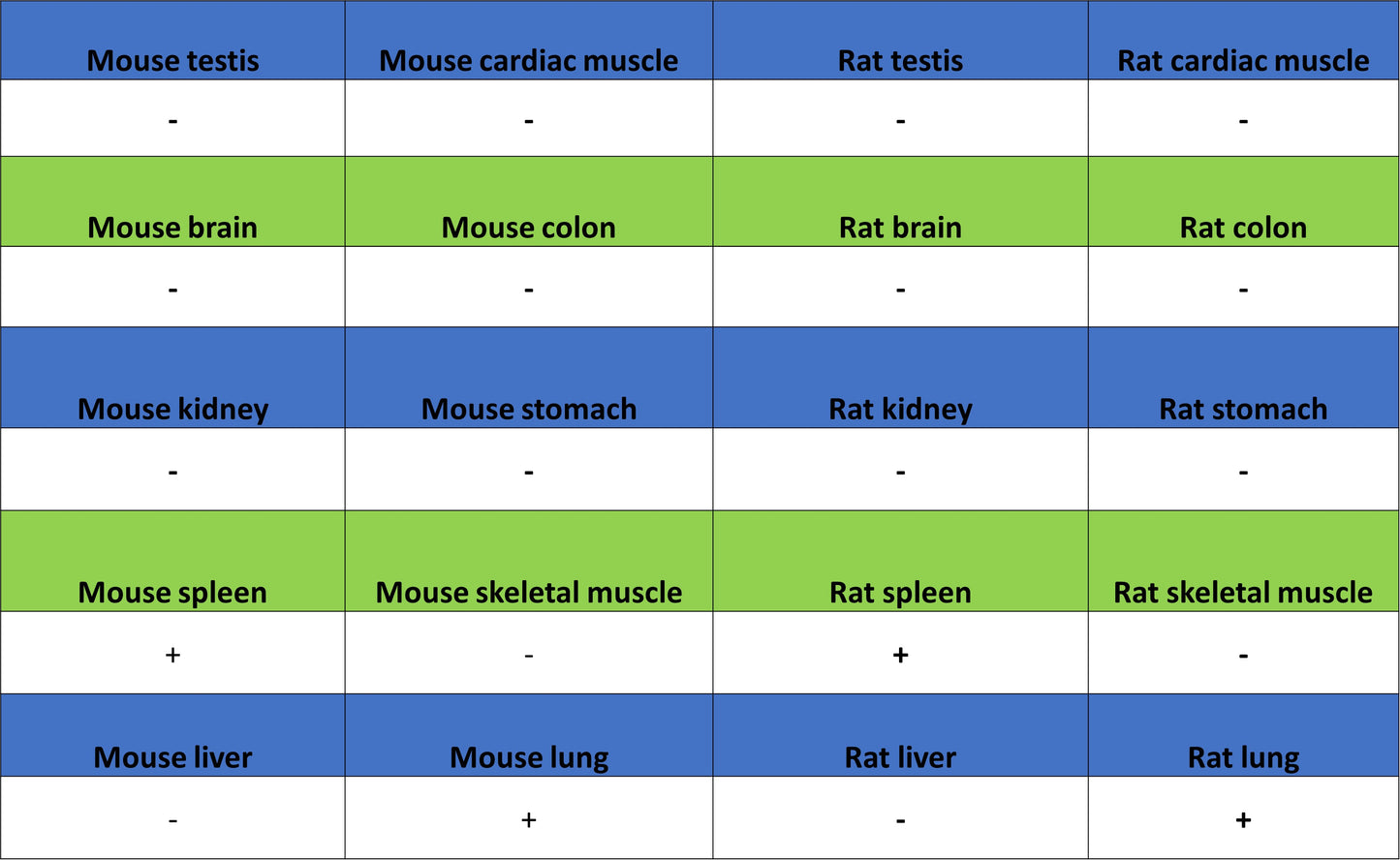
| Reactivity | Hu, Ms, Rt |
| Positive Sample | A549 (starved overnight, then treated with 100 ng/ml TPA for 24 hours, together with 1 µg/ml BFA for last 3 hours), mouse spleen, mouse lung, mouse bone marrow, rat spleen, rat lung |
| Purification | Protein A |
| Concentration | 0.25 mg/ml |
| Conjugation | Unconjugated |
| Physical Appearance | Liquid |
| Storage Buffer | PBS, 40% Glycerol, 0.05% BSA, 0.03% Proclin 300 |
| Stability & Storage | 12 months from date of receipt / reconstitution, -20 °C as supplied |
Dilution
| application | dilution | species |
| WB | 1:500-1:1000 | Hu, Ms, Rt |
| IHC-P | 1:2000 | Hu, Ms, Rt |
Background
Matrix metalloproteinase-9 (MMP-9), also known as gelatinase B, is a zinc-dependent endopeptidase belonging to the matrix metalloproteinase family that plays a pivotal role in the degradation and remodeling of the extracellular matrix (ECM), particularly by cleaving type IV and V collagens, gelatin, elastin, and various non-matrix proteins such as cytokines and growth factors. Synthesized primarily by neutrophils, macrophages, fibroblasts, and epithelial cells as an inactive zymogen (pro-MMP-9), it requires proteolytic activation to exert its enzymatic function, a process tightly regulated by tissue inhibitors of metalloproteinases (TIMPs) to prevent excessive tissue destruction. Under physiological conditions, MMP-9 is essential for normal processes including embryonic development, wound healing, angiogenesis, and immune cell migration; however, its dysregulated overexpression is strongly implicated in numerous pathological states, such as tumor invasion and metastasis where it facilitates cancer cell penetration through basement membranes, as well as in inflammatory diseases like rheumatoid arthritis, multiple sclerosis, and cardiovascular disorders where it contributes to plaque instability and tissue damage, making it a significant biomarker and a potential therapeutic target in clinical research.
Picture
Picture
Western Blot
WB result of MMP9 Recombinant Rabbit mAb
Primary antibody: MMP9 Recombinant Rabbit mAb at 1/1000 dilution
Lane 1: mouse liver lysate 20 µg
Lane 2: mouse spleen lysate 20 µg
Lane 3: mouse lung lysate 20 µg
Lane 4: mouse bone marrow lysate 20 µg
Secondary antibody: Goat Anti- rabbit IgG, (H+L), HRP conjugated at 1/10000 dilution
Predicted MW: 78 kDa
Observed MW: 78, 110 kDa
WB result of MMP9 Recombinant Rabbit mAb
Primary antibody: MMP9 Recombinant Rabbit mAb at 1/1000 dilution
Lane 1: rat spleen lysate 20 µg
Lane 2: rat lung lysate 20 µg
Secondary antibody: Goat Anti- rabbit IgG, (H+L), HRP conjugated at 1/10000 dilution
Predicted MW: 78 kDa
Observed MW: 78, 110 kDa
Immunohistochemistry
IHC shows positive staining in paraffin-embedded human spleen. Anti-MMP9 antibody was used at 1/2000 dilution, followed by a HRP Polymer for Rabbit IgG (ready to use). Counterstained with hematoxylin. Heat mediated antigen retrieval with Tris/EDTA buffer pH9.0 was performed before commencing with IHC staining protocol.
IHC shows positive staining in paraffin-embedded human tonsil. Anti-MMP9 antibody was used at 1/2000 dilution, followed by a HRP Polymer for Rabbit IgG (ready to use). Counterstained with hematoxylin. Heat mediated antigen retrieval with Tris/EDTA buffer pH9.0 was performed before commencing with IHC staining protocol.
IHC shows positive staining in paraffin-embedded human skeletal muscle. Anti-MMP9 antibody was used at 1/2000 dilution, followed by a HRP Polymer for Rabbit IgG (ready to use). Counterstained with hematoxylin. Heat mediated antigen retrieval with Tris/EDTA buffer pH9.0 was performed before commencing with IHC staining protocol.
IHC shows positive staining in paraffin-embedded mouse spleen. Anti-MMP9 antibody was used at 1/2000 dilution, followed by a HRP Polymer for Rabbit IgG (ready to use). Counterstained with hematoxylin. Heat mediated antigen retrieval with Tris/EDTA buffer pH9.0 was performed before commencing with IHC staining protocol.
IHC shows positive staining in paraffin-embedded mouse lung. Anti-MMP9 antibody was used at 1/2000 dilution, followed by a HRP Polymer for Rabbit IgG (ready to use). Counterstained with hematoxylin. Heat mediated antigen retrieval with Tris/EDTA buffer pH9.0 was performed before commencing with IHC staining protocol.
IHC shows positive staining in paraffin-embedded rat spleen. Anti-MMP9 antibody was used at 1/2000 dilution, followed by a HRP Polymer for Rabbit IgG (ready to use). Counterstained with hematoxylin. Heat mediated antigen retrieval with Tris/EDTA buffer pH9.0 was performed before commencing with IHC staining protocol.
IHC shows positive staining in paraffin-embedded rat lung. Anti-MMP9 antibody was used at 1/2000 dilution, followed by a HRP Polymer for Rabbit IgG (ready to use). Counterstained with hematoxylin. Heat mediated antigen retrieval with Tris/EDTA buffer pH9.0 was performed before commencing with IHC staining protocol.