WB result of Lymphocyte antigen 75/CD205 Recombinant Rabbit mAb
Primary antibody: Lymphocyte antigen 75/CD205 Recombinant Rabbit mAb at 1/1000 dilution
Lane 1: HepG2 whole cell lysate 20 µg
Lane 2: THP-1 whole cell lysate 20 µg
Lane 3: Daudi whole cell lysate 20 µg
Negative control: HepG2 whole cell lysate
Secondary antibody: Goat Anti- rabbit IgG, (H+L), HRP conjugated at 1/10000 dilution
Predicted MW: 198 kDa
Observed MW: 280 kDa
Lymphocyte antigen 75/CD205 Recombinant Rabbit mAb (S-2707-25)
Lymphocyte antigen 75/CD205 Recombinant Rabbit mAb (S-2707-25)
Price:
Regular price
$100 USD
Regular price
Sale price
$100 USD
Unit price
per
For shipping services or bulk orders, you may request a quotation.
Secure checkout with

View full details
Product Details
Product Details
Product Specification
| Host | Rabbit |
| Antigen | CD205 |
| Synonyms | Lymphocyte antigen 75; Ly-75; C-type lectin domain family 13 member B; DEC-205; gp200-MR6; CLEC13B; LY75 |
| Immunogen | Recombinant Protein |
| Location | Membrane |
| Accession | O60449 |
| Clone Number | S-2707-25 |
| Antibody Type | Recombinant mAb |
| Isotype | IgG |
| Application | WB, IHC-P |
| Reactivity | Hu |
| Positive Sample | THP-1, Daudi |
| Purification | Protein A |
| Concentration | 0.5 mg/ml |
| Conjugation | Unconjugated |
| Physical Appearance | Liquid |
| Storage Buffer | PBS, 40% Glycerol, 0.05% BSA, 0.03% Proclin 300 |
| Stability & Storage | 12 months from date of receipt / reconstitution, -20 °C as supplied |
Dilution
| application | dilution | species |
| WB | 1:1000 | Hu |
| IHC-P | 1:1000 | Hu |
Background
CD205, also known as DEC205 or LY75, is a ~205 kDa type I transmembrane glycoprotein belonging to the macrophage mannose receptor family of C-type lectins; it contains an N-terminal cysteine-rich domain, a fibronectin type II repeat, ten tandem C-type lectin-like carbohydrate-recognition domains, a single transmembrane segment and a short cytoplasmic tail harboring the tyrosine-based “FERN” and “DIEEV” endosomal sorting motifs that drive constitutive clathrin-mediated internalization and recycling to late endosomes/MHC class II compartments. Predominantly expressed on CD8α⁺ dendritic cells, thymic epithelial cells and certain B subsets, CD205 functions as a pattern-recognition receptor that binds apoptotic/necrotic cells, selected glycoproteins and CpG-rich nucleic acids, enabling efficient capture, processing and cross-presentation of antigens for initiation of CD8⁺ T-cell immunity; this property has made it a premier target for receptor-directed vaccination strategies in which antigens are fused to anti-CD205 antibodies to elicit potent, antigen-specific tolerance or protective responses. In addition, CD205 participates in peripheral T-cell deletion, central tolerance through negative selection in the thymus, and has been implicated in autoimmune diseases, tumor immunosurveillance and metastasis, with its expression levels correlating with prognosis in several cancers, thereby serving as both a biomarker and a therapeutic gateway in immunotherapy.
Picture
Picture
Western Blot
Immunohistochemistry
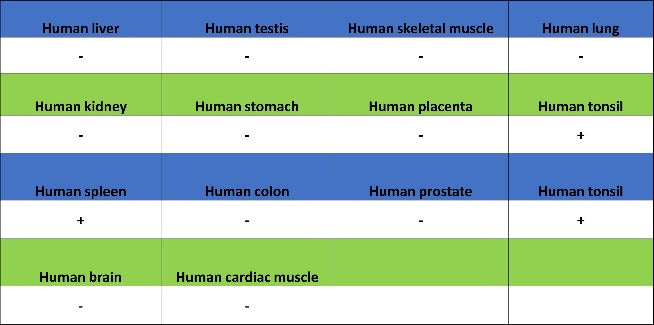
IHC shows positive staining in paraffin-embedded human tonsil. Anti-Lymphocyte antigen 75/CD205 antibody was used at 1/1000 dilution, followed by a HRP Polymer for Mouse & Rabbit IgG (ready to use). Counterstained with hematoxylin. Heat mediated antigen retrieval with Tris/EDTA buffer pH9.0 was performed before commencing with IHC staining protocol.
IHC shows positive staining in paraffin-embedded human spleen. Anti-Lymphocyte antigen 75/CD205 antibody was used at 1/1000 dilution, followed by a HRP Polymer for Mouse & Rabbit IgG (ready to use). Counterstained with hematoxylin. Heat mediated antigen retrieval with Tris/EDTA buffer pH9.0 was performed before commencing with IHC staining protocol.
IHC shows positive staining in paraffin-embedded human lung squamous cell carcinoma. Anti-Lymphocyte antigen 75/CD205 antibody was used at 1/1000 dilution, followed by a HRP Polymer for Mouse & Rabbit IgG (ready to use). Counterstained with hematoxylin. Heat mediated antigen retrieval with Tris/EDTA buffer pH9.0 was performed before commencing with IHC staining protocol.