WB result of LMO4 Recombinant Rat mAb
Primary antibody: LMO4 Recombinant Rat mAb at 1/1000 dilution
Lane 1: HeLa whole cell lysate 20 μg
Lane 2: Jurkat whole cell lysate 20 μg
Lane 3: T-47D whole cell lysate 20 μg
Secondary antibody: Goat Anti-Rat IgG (H+L), HRP conjugated at 1/10000 dilution
Predicted MW: 18 kDa
Observed MW: 19 kDa
This blot was developed with high sensitivity substrate
LMO4 Recombinant Rat mAb (S-5963)
LMO4 Recombinant Rat mAb (S-5963)
Price:
Regular price
$100 USD
Regular price
Sale price
$100 USD
Unit price
per
For shipping services or bulk orders, you may request a quotation.
Secure checkout with

View full details
Product Details
Product Details
Product Specification
| Host | Rat |
| Antigen | LMO4 |
| Synonyms | LIM domain transcription factor LMO4; Breast tumor autoantigen; LIM domain only protein 4 (LMO-4) |
| Location | Nucleus |
| Accession | P61968 |
| Clone Number | S-5963 |
| Antibody Type | Rat mAb |
| Isotype | IgG2a |
| Application | WB, IHC-P |
| Reactivity | Hu, Ms, Rt |
| Positive Sample | HeLa, Jurkat, T-47D, NIH/3T3 |
| Purification | Protein G |
| Concentration | 2 mg/ml |
| Conjugation | Unconjugated |
| Physical Appearance | Liquid |
| Storage Buffer | PBS, 40% Glycerol, 0.05% BSA, 0.02% sodium azide |
| Stability & Storage | 12 months from date of receipt / reconstitution, -20 °C as supplied |
Dilution
| application | dilution | species |
| WB | 1:1000 | Hu, Ms |
| IHC-P | 1:1000 | Ms, Rt |
Background
LMO4 (LIM Domain Only 4) is a small nuclear protein encoded by the LMO4 gene, belonging to the LIM-only protein family. Its protein structure lacks a DNA-binding domain but instead contains two tandem LIM domains that mediate its interactions with various transcription factors and chromatin remodeling complexes, enabling it to function as a transcriptional adaptor or scaffold molecule involved in regulating gene expression. During physiological development, LMO4 plays critical roles at multiple stages of embryogenesis, particularly being indispensable for mammary epithelial cell proliferation and differentiation, nervous system development (including cerebral cortex formation and synaptic plasticity), and skeletal development. However, aberrant expression of LMO4 is closely associated with various human diseases: it is commonly overexpressed in multiple cancers such as breast cancer, lung cancer, and oral squamous cell carcinoma, where it regulates genes related to cell cycle and epithelial-mesenchymal transition (EMT) through interactions with transcriptional complexes such as core-binding factors (CBF), thereby promoting tumor proliferation and metastasis. Additionally, LMO4 has also been identified as having potential roles in neuropsychiatric disorders through genetic association studies on schizophrenia, Alzheimer's disease, and others, positioning it as a research hotspot at the intersection of cancer and neurological diseases.
Picture
Picture
Western Blot
WB result of LMO4 Recombinant Rat mAb
Primary antibody: LMO4 Recombinant Rat mAb at 1/1000 dilution
Lane 1: NIH/3T3 whole cell lysate 20 μg
Lane 2: Mouse embryo lysate 20 μg
Secondary antibody: Goat Anti-Rat IgG (H+L), HRP conjugated at 1/10000 dilution
Predicted MW: 18 kDa
Observed MW: 19 kDa
This blot was developed with high sensitivity substrate
Immunohistochemistry
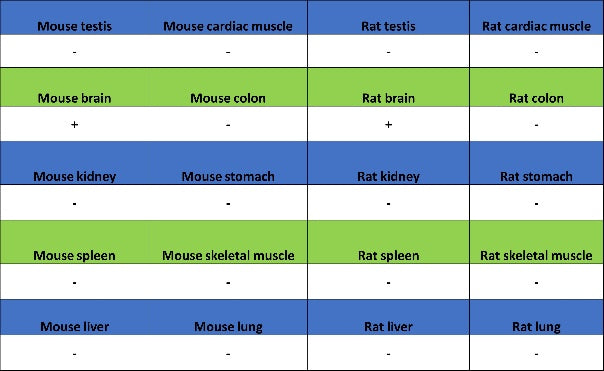
IHC shows positive staining in paraffin-embedded mouse brain. Anti-LMO4 antibody was used at 1/1000 dilution, followed by a HRP Polymer for rat IgG (ready to use). Counterstained with hematoxylin. Heat mediated antigen retrieval with Tris/EDTA buffer pH9.0 was performed before commencing with IHC staining protocol.
IHC shows positive staining in paraffin-embedded mouse hippocampus. Anti-LMO4 antibody was used at 1/1000 dilution, followed by a HRP Polymer for rat IgG (ready to use). Counterstained with hematoxylin. Heat mediated antigen retrieval with Tris/EDTA buffer pH9.0 was performed before commencing with IHC staining protocol.
IHC shows positive staining in paraffin-embedded rat hippocampus. Anti-LMO4 antibody was used at 1/1000 dilution, followed by a HRP Polymer for rat IgG (ready to use). Counterstained with hematoxylin. Heat mediated antigen retrieval with Tris/EDTA buffer pH9.0 was performed before commencing with IHC staining protocol.