Measured in a cell proliferation assay using Hacat cells.
KGF/FGF-7 Protein, Human
KGF/FGF-7 Protein, Human
Price:
Regular price
$130 USD
Regular price
Sale price
$130 USD
Unit price
per
For shipping services or bulk orders, you may request a quotation.
Secure checkout with

View full details
Product Details
Product Details
Product Specification
| Species | Human |
| Synonyms | Fibroblast growth factor 7, FGF-7, Heparin-binding growth factor 7 (HBGF-7), Keratinocyte growth factor |
| Accession | P21781 |
| Amino Acid Sequence | Cys32-Thr194 |
| Expression System | CHO |
| Molecular Weight | 24-32 kDa (Reducing) |
| Purity | >95% by SDS-PAGE & HPLC. |
| Endotoxin | <0.1EU/μg |
| Conjugation | Unconjugated |
| Tag | No Tag |
| Physical Appearance | Lyophilized Powder |
| Storage Buffer | PBS, pH7.4 |
| Reconstitution | Reconstitute at 0.1-1 mg/ml according to the size in ultrapure water after rapid centrifugation. |
| Stability & Storage | ·12 months from date of receipt, lyophilized powder stored at -20 to -80℃. |
| Reference | Am J Transplant. 2021 Sep;21(9):2950-2963. |
Background
Human fibroblast growth factor 7 (FGF-7) is also known as keratinocyte growth factor (KGF). It is a secreted, heparin-binding glycoprotein of 194 amino acids that belongs to the FGF family. FGF-7 is produced exclusively by mesenchymal cells and acts in a paracrine manner on epithelial cells expressing the splice variant FGFR2-IIIb. Upon ligand binding, the receptor dimerizes and initiates downstream signaling through the MAPK/ERK, PI3K/AKT and PLCγ pathways, leading to proliferation, migration, differentiation and survival of epithelial cells. Expression of FGF-7 is strongly up-regulated after skin, lung, kidney or gastrointestinal injury by inflammatory cytokines such as IL-1 and TNF-α, making it a key mediator of wound healing and tissue repair.
Picture
Picture
Bioactivity
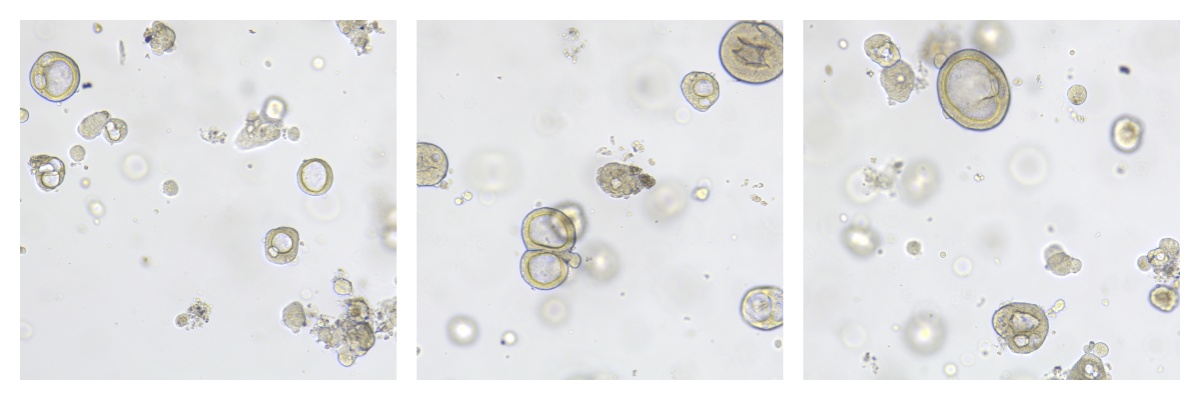
KGF/FGF-7 Protein, Human (Cat#UA040561) maintains lung cancer organoid growth well during multiple passages and long-term culture processes.
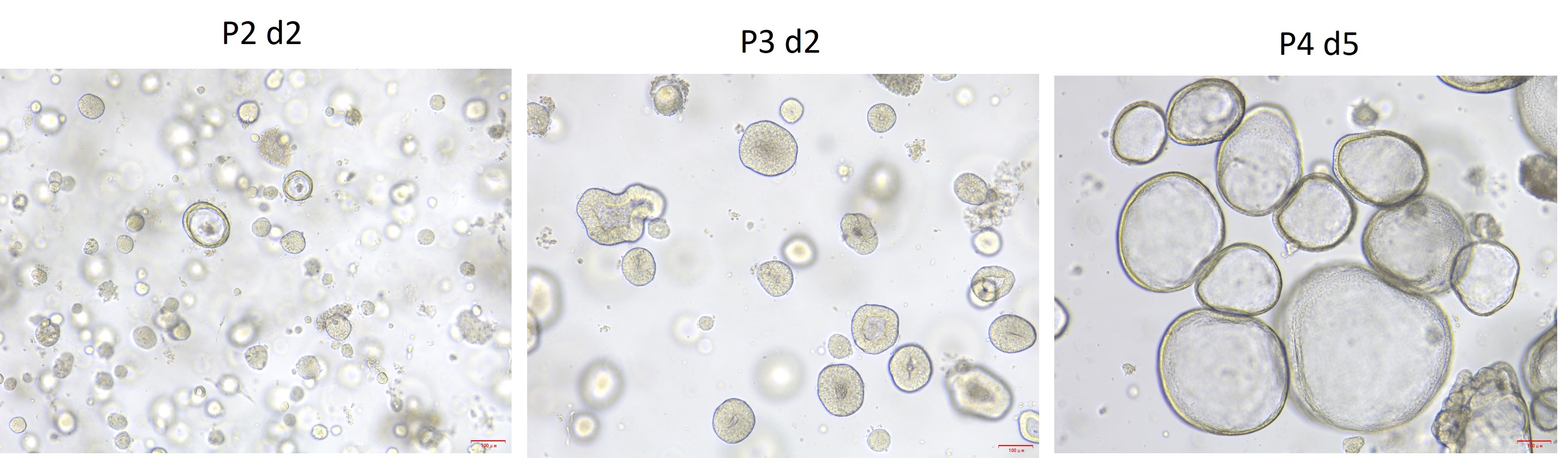
KGF/FGF-7 Protein, Human (Cat#UA040561) maintains bud tip progenitor organoid growth well during multiple passages and long-term culture processes.
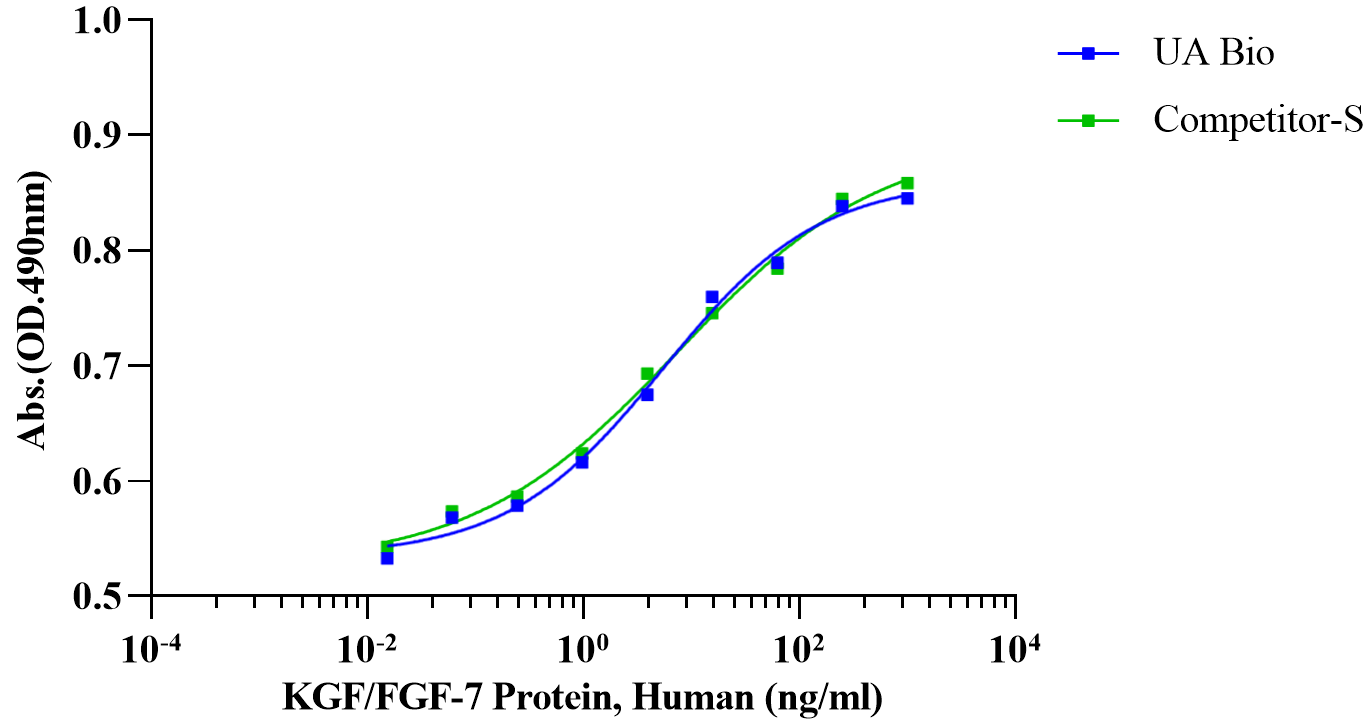
Determined by a cell proliferation assay using 4MBr-5 cells. The expected EC50 for this effect is 3.6-8.7ng/ml.
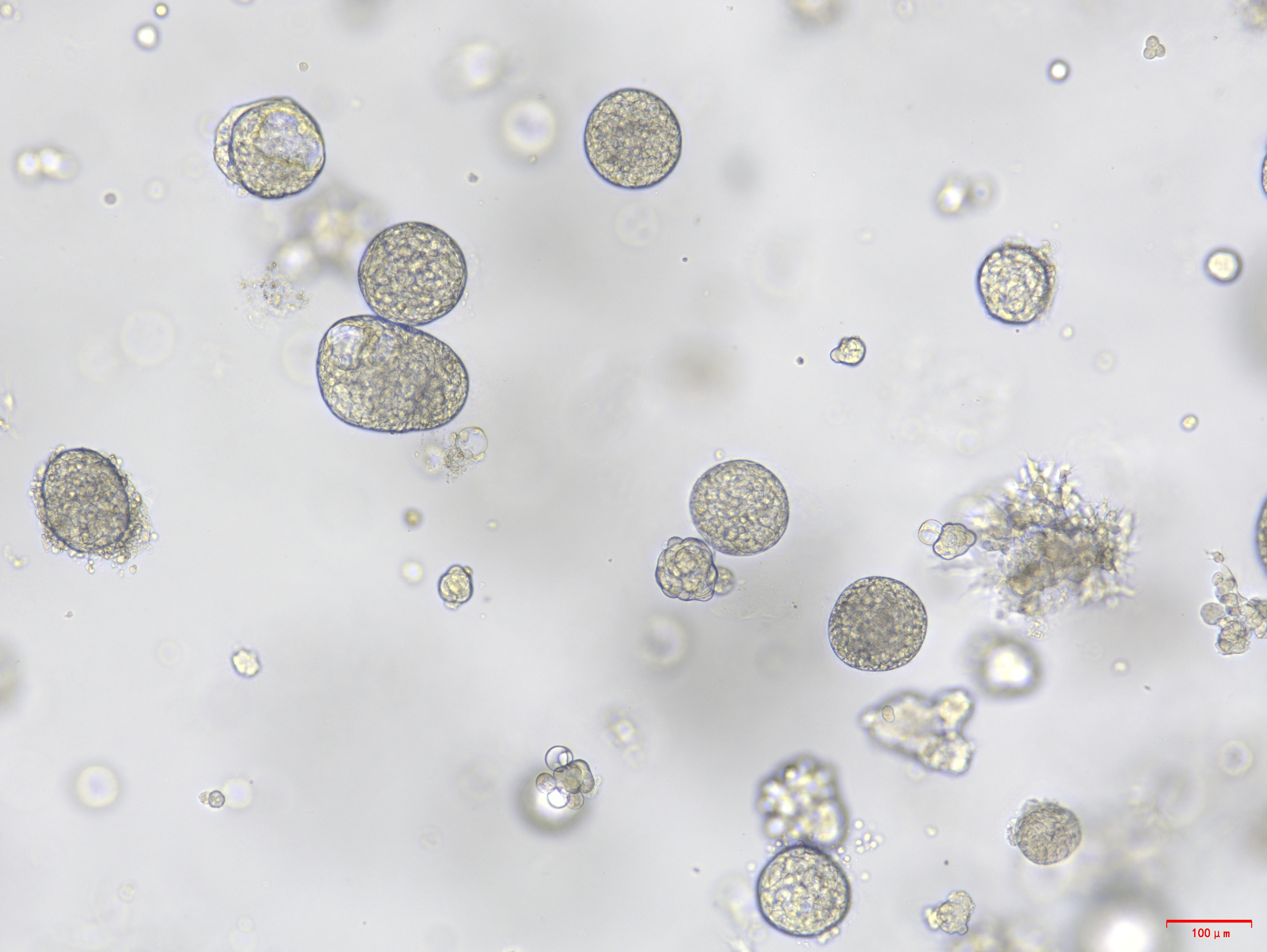
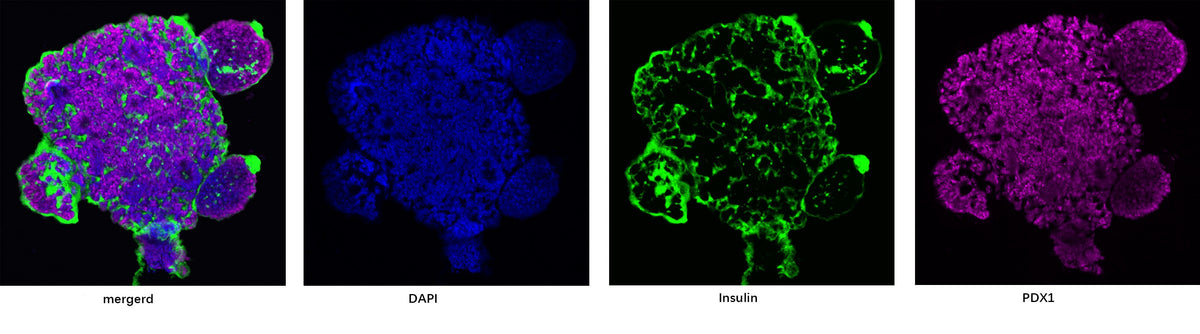
iPSC‑derived islet organoids were cultured in medium containing Activin (UA040418), EGF (UA040575), and FGF‑7 (UA040561).
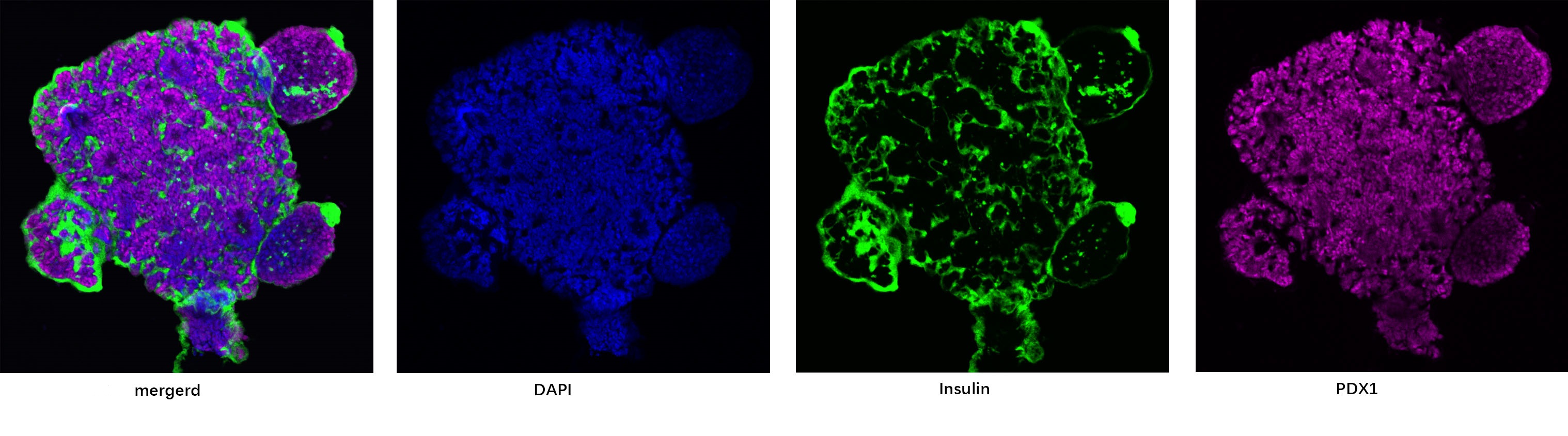
Immunofluorescence staining showed co‑localization of PDX1 (purple, nuclear positive) and insulin (green, cytoplasmic granular) in iPSC‑derived pancreatic islet organoids, confirming successful differentiation into functional beta‑like cells.
SDS-PAGE
2μg (R: reducing condition, N: non-reducing condition).
SEC-HPLC
>95% as determined by SEC-HPLC.