


M2
IL-10 Protein, Mouse
IL-10 Protein, Mouse
Price:
Regular price
$175 USD
Regular price
Sale price
$175 USD
Unit price
per
For shipping services or bulk orders, you may request a quotation.
Secure checkout with

View full details
Product Details
Product Details
Product Specification
| Species | Mouse |
| Synonyms | Interleukin-10, IL-10, Cytokine synthesis inhibitory factor (CSIF) |
| Accession | P18893 |
| Amino Acid Sequence | Ser19-Ser178 |
| Expression System | HEK293 |
| Molecular Weight | 14-18 kDa (Reducing) |
| Purity | >95% by SDS-PAGE. |
| Endotoxin | <0.1EU/μg |
| Conjugation | Unconjugated |
| Tag | No Tag |
| Physical Appearance | Lyophilized powder |
| Storage Buffer | PBS, pH7.4 |
| Reconstitution | Reconstitute at 0.1-1 mg/ml according to the size in ultrapure water after rapid centrifugation. |
| Stability & Storage | ·12 months from date of receipt, lyophilized powder stored at -20 to -80℃. |
| Reference | Nat Nanotechnol. 2025 Oct;20(10):1526-1538. |
Background
Interleukin-10 (IL-10) is a key immunoregulatory cytokine critical for maintaining immune homeostasis and preventing pathological inflammation in mice. Produced by diverse immune cells including T cells, B cells, macrophages, dendritic cells, and innate lymphoid cells (ILCs), IL-10 exerts its pleiotropic effects primarily through the IL-10 receptor complex (IL-10R) and downstream JAK-STAT3 signaling. Mouse models have been instrumental in defining IL‑10's non‑redundant functions: global IL‑10 knockout (IL‑10^(−/−)) mice develop spontaneous, microbiota‑dependent colitis, establishing IL‑10 as a central guardian of intestinal immune homeostasis. Conversely, transgenic and conditional knockout mice have revealed cell‑type‑specific contributions of IL‑10 in regulating inflammation in the lungs, brain, and joint tissues.
Major applications of mouse IL‑10 include: (1) inflammatory bowel disease (IBD) research, where IL‑10^(−/−) mice serve as a widely accepted model for Crohn's disease, enabling preclinical evaluation of microbiota‑based and immune‑modulating therapies; (2) cancer immunotherapy, where engineered IL‑10 expression—such as IL‑10‑mRNA nanoparticles—promotes cytotoxic T cell infiltration and synergizes with immune checkpoint blockade to achieve durable antitumor immunity; (3) autoimmune and inflammatory disease studies, including rheumatoid arthritis, multiple sclerosis, and osteoarthritis, where IL‑10 signaling limits tissue damage and suppresses pathogenic immune responses; and (4) neuroinflammation research, using IL‑10 knockout mice to elucidate microglial resolution mechanisms in the central nervous system.
Picture
Picture
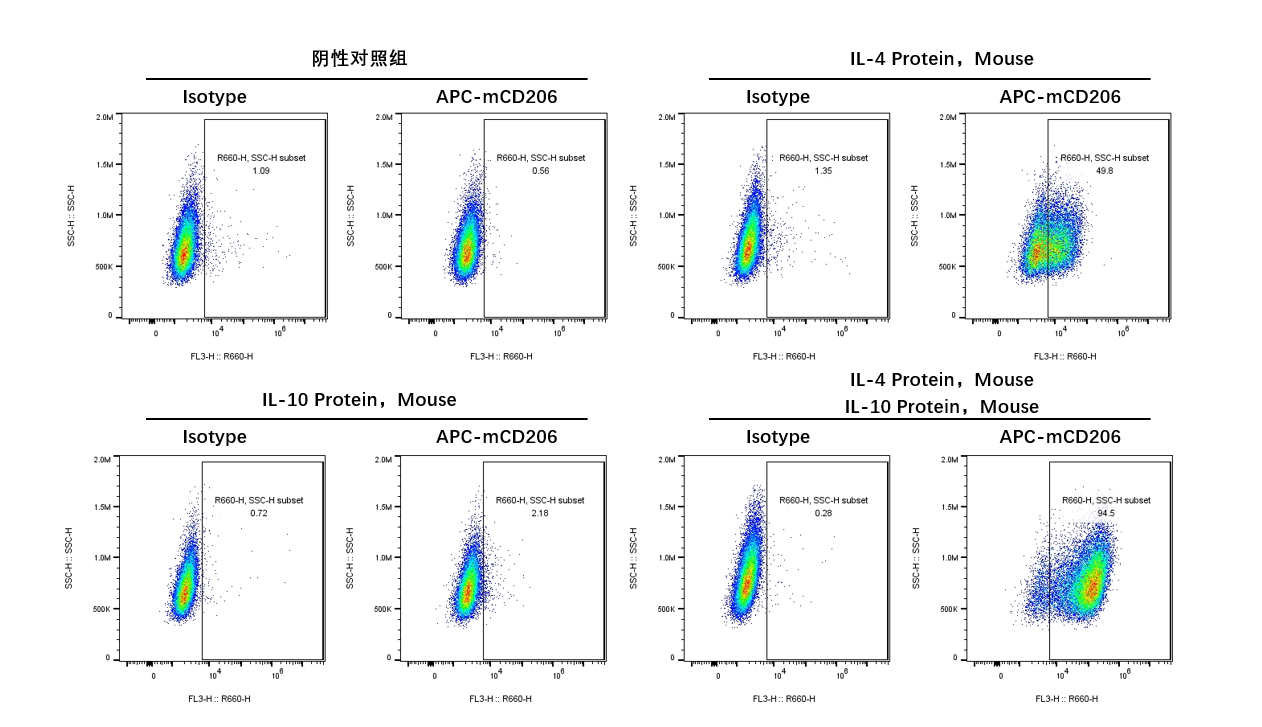
FC
Bioactivity
Measured in a cell proliferation assay using murine MC/9 cells. The EC50 this effect is 0.25-0.44 ng/ml.
SDS-PAGE
2μg (R: reducing condition, N: non-reducing condition).


