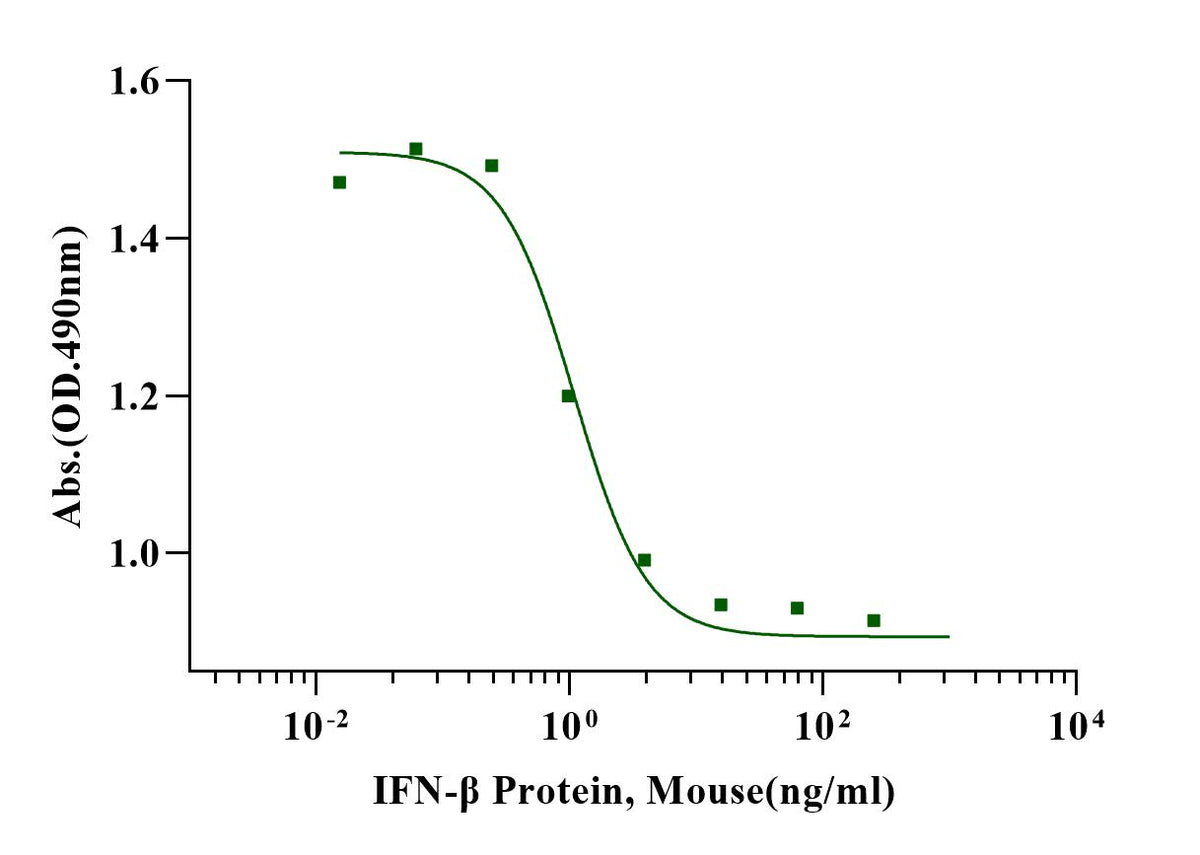
Measured in a cytotoxicity assay using human TF-1 cells. The EC50 for this effect is less than 2ng/ml.
IFN-β Protein, Mouse
IFN-β Protein, Mouse
Price:
Regular price
$160 USD
Regular price
Sale price
$160 USD
Unit price
per
For shipping services or bulk orders, you may request a quotation.
Secure checkout with

View full details
Product Details
Product Details
Product Specification
| Species | Mouse |
| Synonyms | Interferon beta; IFN-beta; |
| Accession | P01575 |
| Amino Acid Sequence | Ile22-Asn182 |
| Expression System | E.coli |
| Molecular Weight | 14 kDa (Reducing) |
| Purity | >95% by SDS-PAGE. |
| Endotoxin | <0.1EU/μg |
| Conjugation | Unconjugated |
| Tag | No Tag |
| Physical Appearance | Lyophilized Powder |
| Storage Buffer | 20mM PB, 150mM NaCl, pH7.0 |
| Reconstitution | Reconstitute at 0.1-1 mg/ml according to the size in ultrapure water after rapid centrifugation. |
| Stability & Storage | ·12 months from date of receipt, lyophilized powder stored at -20 to -80℃. |
| Reference | Science. 2013 Apr 12;340(6129):207-11. |
Background
Interferon-beta (IFN-β) is a type I interferon cytokine that plays a crucial role in the innate immune response to viral infections and other pathogens. In mice, IFN-β is primarily produced by various cell types, including fibroblasts, dendritic cells, and macrophages, in response to viral RNA or DNA. IFN-β signals through the IFNAR1 and IFNAR2 receptor complex, leading to the activation of the JAK-STAT signaling pathway and the induction of interferon-stimulated genes (ISGs). IFN-β is known for its antiviral properties, as it inhibits viral replication and spread by inducing an antiviral state in infected cells. Additionally, IFN-β modulates immune responses by enhancing antigen presentation, promoting T cell activation, and regulating inflammatory cytokine production.
Picture
Picture
Bioactivity
SDS-PAGE
2μg (R: reducing condition, N: non-reducing condition).