Gla-type Osteocalcin/Carboxylated Osteocalcin Recombinant Rabbit mAb (SDT-254-3)
Gla-type Osteocalcin/Carboxylated Osteocalcin Recombinant Rabbit mAb (SDT-254-3)

Product Details
Product Details
Product Specification
| Host | Rabbit |
| Antigen | Gla-type Osteocalcin/Carboxylated Osteocalcin |
| Synonyms | Bone Gla protein (BGP), Carboxylated-type of osteocalcin, Gla-OC |
| Immunogen | Synthetic Peptide |
| Accession | P02818 |
| Clone Number | SDT-254-3 |
| Antibody Type | Recombinant mAb |
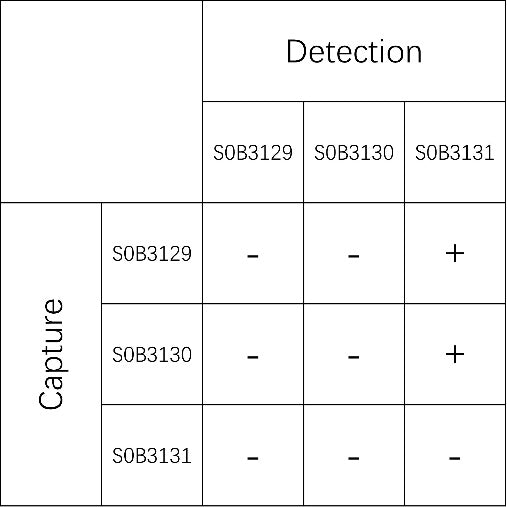
| Application | CLIA, Sandwich ELISA |
| Reactivity | Hu |
| Cross Reactivity | Only recognize Gla-type Osteocalcin, does not recognize total Osteocalcin |
| Purification | Protein A |
| Concentration | 2 mg/ml |
| Purity | >95% by HPLC |
| Conjugation | Unconjugated |
| Physical Appearance | Liquid |
| Storage Buffer | PBS pH7.4, 0.03% Proclin 300 |
| Stability & Storage | 12 months from date of receipt / reconstitution, 2 to 8 °C as supplied |
Dilution
| application | dilution | species |
| Sandwich ELISA | N/A |
Background
Osteocalcin (OC), also known as bone γ-carboxylglutamic acid protein, is a vitamin K-dependent Ca2+binding protein of molecular weight 5,900. It carries three carboxylated glutamic acid residues (Gla) at positions 17, 21, and 24 which are known to mediate strong binding of OC to hydroxyapatite. OC constitutes about 15% of the non-collagenous bone matrix proteins and is produced exclusively in osteoblasts and its dental counterpart, the odontoblast. Because of this tissue-specific expression, the level of OC could be considered as an indicator of the overall activity of cells operating in bone formation. Thus it could be suggested that when there is increasedbone formation, the serum OC concentration will also be increased. Indeed, in clinical studies there is indication that aberrant levels of circulating OC reflect the occurrence of bone diseases. Measurements of OC in serum samples are usually performed by competition immunoassays, however, these methods cannot distinguish between carboxylated and decarboxylated types of OC. This monoclonal antibody is highly reactive to the carboxylated-type of osteocalcin (Gla-OC) and less reactive to the decarboxylated form (Glu-OC), thus enabling a selective quantification ofGla-OC in biological fluids. The vitamin K-dependent calcium-binding properties of plasma proteins are usually dependent on the Gla residues. Calcium binding is generally necessary for biological activities such as activation of the blood coagulation cascade. In OC, the Gla residues are indeed necessary for the formation of a high affinity mineral-protein complex. Thus, it is likely that Gla-OC is the active form, and that measurements of Gla-OC by this antibody may provide better leads of clinicalinformation than do the conventional assays that cannot differentiate between active and inactive forms of OC.
Picture
Picture
Paired Recommendations