IHC shows positive staining in paraffin-embedded human kidney. Anti-GDF3 antibody was used at 1/250 dilution, followed by a HRP Polymer for Mouse & Rabbit IgG (ready to use). Counterstained with hematoxylin. Heat mediated antigen retrieval with Tris/EDTA buffer pH9.0 was performed before commencing with IHC staining protocol.
GDF3 Recombinant Rabbit mAb (S-3049-3)
GDF3 Recombinant Rabbit mAb (S-3049-3)
Price:
Regular price
$100 USD
Regular price
Sale price
$100 USD
Unit price
per
For shipping services or bulk orders, you may request a quotation.
Secure checkout with

View full details
Product Details
Product Details
Product Specification
| Host | Rabbit |
| Antigen | GDF3 |
| Synonyms | Growth/differentiation factor 3; GDF-3 |
| Immunogen | Synthetic Peptide |
| Location | Cytoplasm, Secreted |
| Accession | Q9NR23 |
| Clone Number | S-3049-3 |
| Antibody Type | Recombinant mAb |
| Isotype | IgG |
| Application | IHC-P |
| Reactivity | Hu, Ms |
| Purification | Protein A |
| Concentration | 0.5 mg/ml |
| Conjugation | Unconjugated |
| Physical Appearance | Liquid |
| Storage Buffer | PBS, 40% Glycerol, 0.05% BSA, 0.03% Proclin 300 |
| Stability & Storage | 12 months from date of receipt / reconstitution, -20 °C as supplied |
Dilution
| application | dilution | species |
| IHC-P | 1:100-1:250 | Hu, Ms |
Background
GDF3 (growth differentiation factor 3) is a secreted, cysteine-knot-containing ligand of the TGF-β superfamily that acts as a context-dependent morphogen during early embryogenesis, axial patterning, and cartilage formation by binding specific type I/II receptor serine kinases to activate SMAD2/3 or SMAD1/5/8 signaling cascades, thereby regulating target genes that control cell fate, proliferation, and extracellular-matrix production; pathogenic missense variants (e.g., R84C, R84L, R266C) disrupt its biosynthesis, secretion, or receptor engagement and are strongly linked to congenital skeletal malformations such as Klippel-Feil syndrome and scoliosis, while in adipose tissue its expression is acutely up-regulated by cold exposure, suggesting a newly recognized role in adaptive thermogenesis.
Picture
Picture
Immunohistochemistry
Negative control: IHC shows negative staining in paraffin-embedded human cerebral cortex. Anti-GDF3 antibody was used at 1/250 dilution, followed by a HRP Polymer for Mouse & Rabbit IgG (ready to use). Counterstained with hematoxylin. Heat mediated antigen retrieval with Tris/EDTA buffer pH9.0 was performed before commencing with IHC staining protocol.
IHC shows positive staining in paraffin-embedded human prostatic cancer. Anti-GDF3 antibody was used at 1/250 dilution, followed by a HRP Polymer for Mouse & Rabbit IgG (ready to use). Counterstained with hematoxylin. Heat mediated antigen retrieval with Tris/EDTA buffer pH9.0 was performed before commencing with IHC staining protocol.
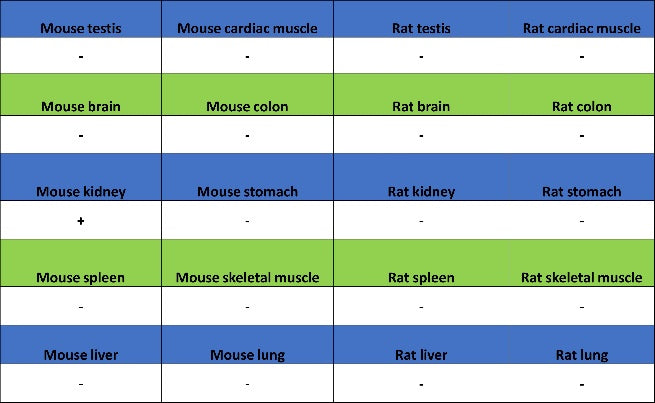
IHC shows positive staining in paraffin-embedded mouse kidney. Anti-GDF3 antibody was used at 1/100 dilution, followed by a HRP Polymer for Mouse & Rabbit IgG (ready to use). Counterstained with hematoxylin. Heat mediated antigen retrieval with Tris/EDTA buffer pH9.0 was performed before commencing with IHC staining protocol.
Negative control: IHC shows negative staining in paraffin-embedded mouse liver. Anti-GDF3 antibody was used at 1/100 dilution, followed by a HRP Polymer for Mouse & Rabbit IgG (ready to use). Counterstained with hematoxylin. Heat mediated antigen retrieval with Tris/EDTA buffer pH9.0 was performed before commencing with IHC staining protocol.