FGFR4 Recombinant Rabbit mAb (SDT-1216-238)
FGFR4 Recombinant Rabbit mAb (SDT-1216-238)

Product Details
Product Details
Product Specification
| Host | Rabbit |
| Antigen | FGFR4 |
| Synonyms | Fibroblast growth factor receptor 4; CD334; JTK2; TKF |
| Immunogen | Recombinant Protein |
| Location | Secreted, Endosome, Cell membrane, Endoplasmic reticulum |
| Accession | P22455 |
| Clone Number | SDT-1216-238 |
| Application | Sandwich ELISA |
| Reactivity | Hu |
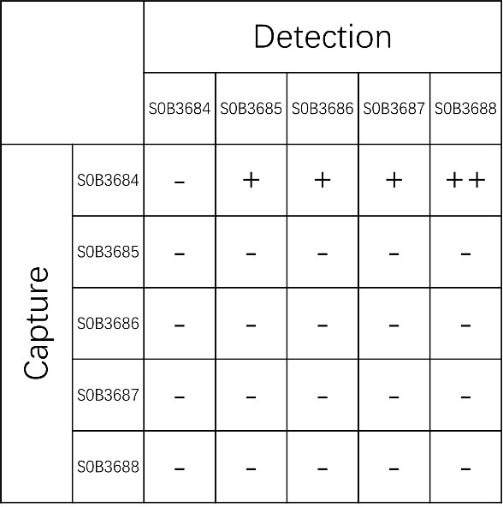
| Cross Reactivity | No cross-reactivity against FGF21, FGFR1, FGFR3 |
| Concentration | 2 mg/ml |
| Physical Appearance | Liquid |
| Storage Buffer | PBS pH7.4, 0.03% Proclin 300 |
| Stability & Storage | 12 months from date of receipt, 2 to 8 °C as supplied |
Background
FGFR4 is a member of the fibroblast growth factor receptor family, where amino acid sequence is highly conserved between members and throughout evolution. FGFR family members differ from one another in their ligand affinities and tissue distribution. A full-length representative protein would consist of an extracellular region, composed of three immunoglobulin-like domains, a single hydrophobic membrane-spanning segment and a cytoplasmic tyrosine kinase domain. The extracellular portion of the protein interacts with fibroblast growth factors, setting in motion a cascade of downstream signals, ultimately influencing mitogenesis and differentiation. FGFR4 is linked to certain cancers including hepatocellular carcinoma and colorectal cancer notable in cell lines like HCT116 and others. Overexpression or mutations in FGFR4 can drive tumor progression promoting uncontrolled growth and metastasis. FGFR4's relation to other key proteins such as FRAF and 19h3 highlights its role in pathogenesis making it a potential target for therapeutic interventions.
Picture
Picture
Paired Recommendations