IHC shows positive staining in paraffin-embedded human colon. Anti-CLEC9A antibody was used at 1/2000 dilution, followed by a HRP Polymer for Mouse & Rabbit IgG (ready to use). Counterstained with hematoxylin. Heat mediated antigen retrieval with Tris/EDTA buffer pH9.0 was performed before commencing with IHC staining protocol.
CLEC9A Recombinant Rabbit mAb (S-1904-154)
CLEC9A Recombinant Rabbit mAb (S-1904-154)
Price:
Regular price
$100 USD
Regular price
Sale price
$100 USD
Unit price
per
For shipping services or bulk orders, you may request a quotation.
Secure checkout with

View full details
Product Details
Product Details
Product Specification
| Host | Rabbit |
| Antigen | CLEC9A |
| Synonyms | C-type lectin domain family 9 member A; CD370 |
| Immunogen | Synthetic Peptide |
| Location | Membrane |
| Accession | Q6UXN8 |
| Clone Number | S-1904-154 |
| Antibody Type | Recombinant mAb |
| Isotype | IgG |
| Application | IHC-P, IF |
| Reactivity | Hu |
| Purification | Protein A |
| Concentration | 0.5 mg/ml |
| Conjugation | Unconjugated |
| Physical Appearance | Liquid |
| Storage Buffer | PBS, 40% Glycerol, 0.05% BSA, 0.03% Proclin 300 |
| Stability & Storage | 12 months from date of receipt / reconstitution, -20 °C as supplied |
Dilution
| application | dilution | species |
| IHC-P | 1:2000 | Hu |
| IF | 1:100 | Hu |
Background
CLEC9A (C-type lectin domain family 9 member A), also known as DNGR-1 (Dendritic Cell NK Lectin Group Receptor-1), is a type V C-type lectin-like receptor predominantly expressed on the surface of conventional dendritic cells (cDCs), specifically the CD8α+ subset in mice and CD141+ DCs in humans, as well as plasmacytoid dendritic cells (pDCs). This single-pass transmembrane protein features a C-terminal hemITAM-like signaling motif in its cytoplasmic tail, which enables SYK kinase recruitment and downstream signaling upon ligand engagement. CLEC9A functions as a specialized damage-associated molecular pattern (DAMP) receptor that recognizes filamentous actin (F-actin) exposed by necrotic cells but hidden in viable cells, thereby allowing dendritic cells to detect cell death and initiate immune responses. Upon binding to its ligand, CLEC9A triggers internalization of dead cell material into specialized endosomal compartments, facilitating efficient cross-presentation of necrotic cell-associated antigens to CD8+ T cells and thereby bridging innate recognition of cell injury with adaptive cytotoxic immunity. This unique capability makes CLEC9A crucial for anti-tumor immunity, viral clearance, and tissue homeostasis, while also serving as a promising therapeutic target for vaccine development and cancer immunotherapy through antibody-mediated targeting and adjuvant delivery systems.
Picture
Picture
Immunohistochemistry
IHC shows positive staining in paraffin-embedded human kidney. Anti-CLEC9A antibody was used at 1/2000 dilution, followed by a HRP Polymer for Mouse & Rabbit IgG (ready to use). Counterstained with hematoxylin. Heat mediated antigen retrieval with Tris/EDTA buffer pH9.0 was performed before commencing with IHC staining protocol.
IHC shows positive staining in paraffin-embedded human spleen. Anti-CLEC9A antibody was used at 1/2000 dilution, followed by a HRP Polymer for Mouse & Rabbit IgG (ready to use). Counterstained with hematoxylin. Heat mediated antigen retrieval with Tris/EDTA buffer pH9.0 was performed before commencing with IHC staining protocol.
IHC shows positive staining in paraffin-embedded human thymus. Anti-CLEC9A antibody was used at 1/2000 dilution, followed by a HRP Polymer for Mouse & Rabbit IgG (ready to use). Counterstained with hematoxylin. Heat mediated antigen retrieval with Tris/EDTA buffer pH9.0 was performed before commencing with IHC staining protocol.
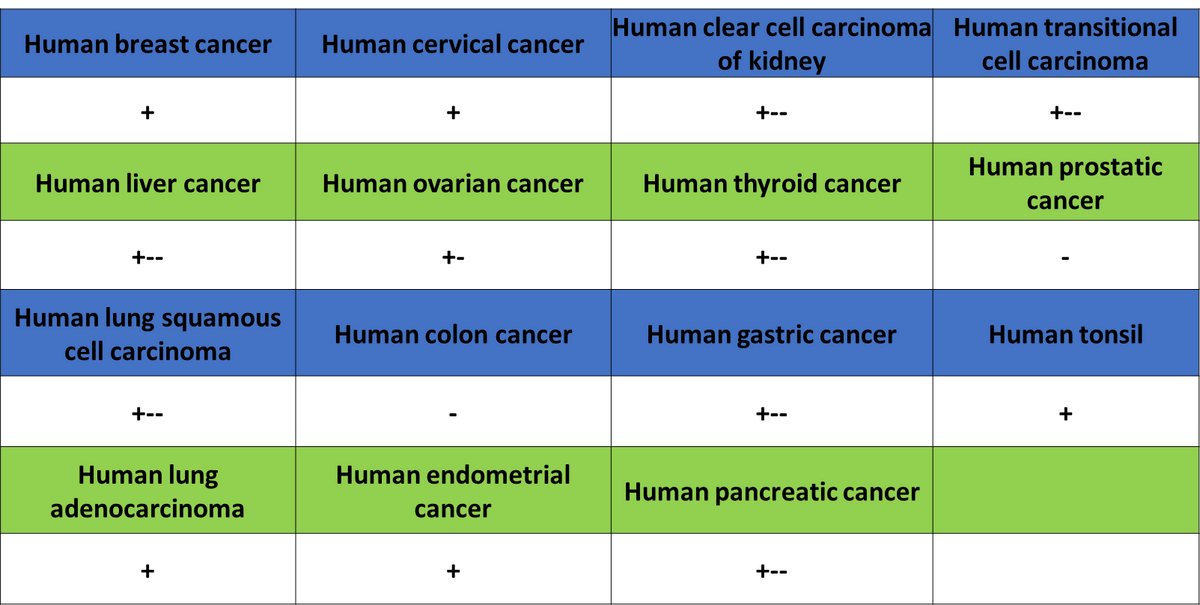
IHC shows positive staining in paraffin-embedded human tonsil. Anti-CLEC9A antibody was used at 1/2000 dilution, followed by a HRP Polymer for Mouse & Rabbit IgG (ready to use). Counterstained with hematoxylin. Heat mediated antigen retrieval with Tris/EDTA buffer pH9.0 was performed before commencing with IHC staining protocol.
IHC shows positive staining in paraffin-embedded human breast cancer. Anti-CLEC9A antibody was used at 1/2000 dilution, followed by a HRP Polymer for Mouse & Rabbit IgG (ready to use). Counterstained with hematoxylin. Heat mediated antigen retrieval with Tris/EDTA buffer pH9.0 was performed before commencing with IHC staining protocol.
IHC shows positive staining in paraffin-embedded human cervical squamous cell carcinoma. Anti-CLEC9A antibody was used at 1/2000 dilution, followed by a HRP Polymer for Mouse & Rabbit IgG (ready to use). Counterstained with hematoxylin. Heat mediated antigen retrieval with Tris/EDTA buffer pH9.0 was performed before commencing with IHC staining protocol.
Immunofluorescence
IF shows positive staining in paraffin-embedded human tonsil. Anti-CLEC9A antibody was used at 1/100 dilution (Green) and incubated overnight at 4°C. Goat polyclonal Antibody to Rabbit IgG - H&L (Alexa Fluor® 488) was used as secondary antibody at 1/1000 dilution. Counterstained with DAPI (Blue). Heat mediated antigen retrieval with EDTA buffer pH9.0 was performed before commencing with IF staining protocol.