WB result of CD206 Recombinant Rabbit mAb
Primary antibody: CD206 Recombinant Rabbit mAb at 1/1000 dilution
Lane 1: untreated THP-1 whole cell lysate 20 µg
Lane 2: THP-1 treated with 100 ng/ml PMA for 24 hours, then treated with 20 ng/ml IL-4 and 20 ng/ml IL-13 for 72 hours, then treated with 300 ng/ml Brefeldin A for last 4 hours whole cell lysate 20 µg
Secondary antibody: Goat Anti- rabbit IgG, (H+L), HRP conjugated at 1/10000 dilution
Predicted MW: 165 kDa
Observed MW: 220 kDa
This blot was developed with high sensitivity substrate
CD206 Recombinant Rabbit mAb (S-3477-27)
CD206 Recombinant Rabbit mAb (S-3477-27)
Price:
Regular price
$100 USD
Regular price
Sale price
$100 USD
Unit price
per
For shipping services or bulk orders, you may request a quotation.
Secure checkout with

View full details
Product Details
Product Details
Product Specification
| Host | Rabbit |
| Antigen | CD206 |
| Synonyms | Macrophage mannose receptor 1; MMR; Mrc1 |
| Immunogen | Synthetic Peptide |
| Location | Endosome, Cell membrane |
| Accession | Q61830 |
| Clone Number | S-3477-27 |
| Antibody Type | Recombinant mAb |
| Isotype | IgG |
| Application | WB, IHC-P, IF |
| Reactivity | Hu, Ms, Rt |
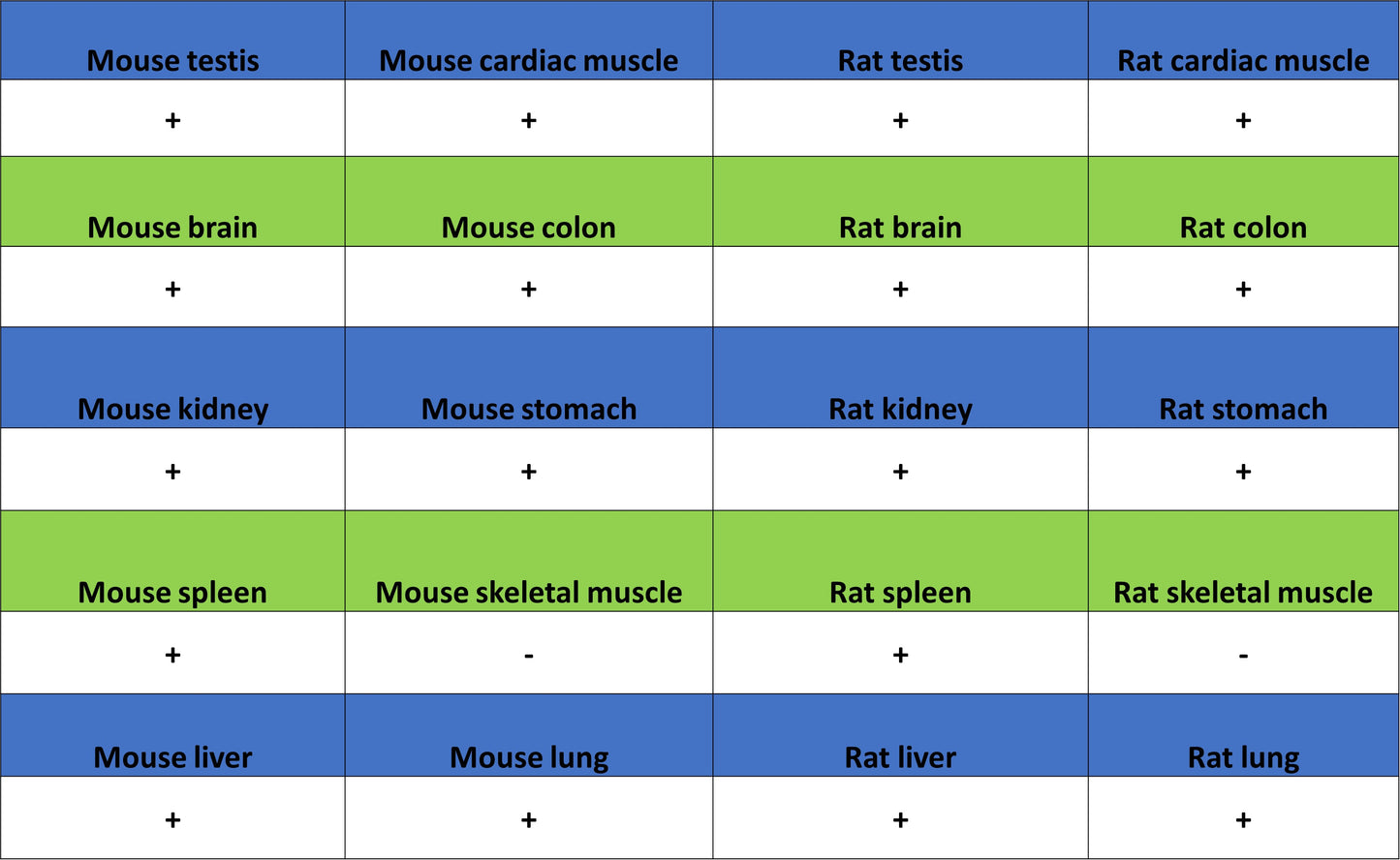
| Positive Sample | PMA, IL-4 and Brefeldin A treated THP-1, mouse liver, mouse lung, mouse spleen, rat liver, rat lung, rat spleen |
| Purification | Protein A |
| Concentration | 0.5 mg/ml |
| Conjugation | Unconjugated |
| Physical Appearance | Liquid |
| Storage Buffer | PBS, 40% Glycerol, 0.05% BSA, 0.03% Proclin 300 |
| Stability & Storage | 12 months from date of receipt / reconstitution, -20 °C as supplied |
Dilution
| application | dilution | species |
| WB | 1:1000 | Hu, Ms, Rt |
| IHC-P | 1:2000-1:5000 | Hu, Ms, Rt |
| IF | 1:2000 | Hu, Ms |
Background
CD206, also known as the mannose receptor (MR) or mannose receptor C type 1 (MRC1), is a transmembrane glycoprotein that belongs to the C-type lectin family. It is predominantly expressed by tissue macrophages, dendritic cells, and certain lymphatic or liver endothelial cells. CD206 recognizes and mediates endocytosis of pathogens by binding to glycoproteins terminated with mannose. This receptor serves as a homeostatic receptor by binding and scavenging unwanted high mannose N-linked glycoproteins as well as pituitary hormones from the circulation. In addition, CD206 is a marker for the M2 phenotype of macrophages, which are involved in immunosuppression, tissue remodeling, and Th2 effector responses. Its expression is regulated by various cytokines and is considered a marker of an M2-like macrophage phenotype.
Picture
Picture
Western Blot
WB result of CD206 Recombinant Rabbit mAb
Primary antibody: CD206 Recombinant Rabbit mAb at 1/1000 dilution
Lane 1: mouse brain lysate 20 µg
Lane 2: mouse liver lysate 20 µg
Lane 3: mouse lung lysate 20 µg
Lane 4: mouse spleen lysate 20 µg
Low expression control: mouse brain lysate
Secondary antibody: Goat Anti- rabbit IgG, (H+L), HRP conjugated at 1/10000 dilution
Predicted MW: 165 kDa
Observed MW: 220 kDa
WB result of CD206 Recombinant Rabbit mAb
Primary antibody: CD206 Recombinant Rabbit mAb at 1/1000 dilution
Lane 1: rat brain lysate 20 µg
Lane 2: rat liver lysate 20 µg
Lane 3: rat lung lysate 20 µg
Lane 4: rat spleen lysate 20 µg
Low expression control: rat brain lysate
Secondary antibody: Goat Anti- rabbit IgG, (H+L), HRP conjugated at 1/10000 dilution
Predicted MW: 165 kDa
Observed MW: 220 kDa
Immunohistochemistry
IHC shows positive staining in paraffin-embedded human spleen. Anti-CD206 antibody was used at 1/5000 dilution, followed by a HRP Polymer for Mouse & Rabbit IgG (ready to use). Counterstained with hematoxylin. Heat mediated antigen retrieval with Tris/EDTA buffer pH9.0 was performed before commencing with IHC staining protocol.
IHC shows positive staining in paraffin-embedded human placenta. Anti-CD206 antibody was used at 1/5000 dilution, followed by a HRP Polymer for Mouse & Rabbit IgG (ready to use). Counterstained with hematoxylin. Heat mediated antigen retrieval with Tris/EDTA buffer pH9.0 was performed before commencing with IHC staining protocol.
IHC shows positive staining in paraffin-embedded human liver. Anti-CD206 antibody was used at 1/5000 dilution, followed by a HRP Polymer for Mouse & Rabbit IgG (ready to use). Counterstained with hematoxylin. Heat mediated antigen retrieval with Tris/EDTA buffer pH9.0 was performed before commencing with IHC staining protocol.
IHC shows positive staining in paraffin-embedded human endometrial cancer. Anti-CD206 antibody was used at 1/5000 dilution, followed by a HRP Polymer for Mouse & Rabbit IgG (ready to use). Counterstained with hematoxylin. Heat mediated antigen retrieval with Tris/EDTA buffer pH9.0 was performed before commencing with IHC staining protocol.
IHC shows positive staining in paraffin-embedded mouse colon. Anti-CD206 antibody was used at 1/2000 dilution, followed by a HRP Polymer for Mouse & Rabbit IgG (ready to use). Counterstained with hematoxylin. Heat mediated antigen retrieval with Tris/EDTA buffer pH9.0 was performed before commencing with IHC staining protocol.
IHC shows positive staining in paraffin-embedded mouse liver. Anti-CD206 antibody was used at 1/2000 dilution, followed by a HRP Polymer for Mouse & Rabbit IgG (ready to use). Counterstained with hematoxylin. Heat mediated antigen retrieval with Tris/EDTA buffer pH9.0 was performed before commencing with IHC staining protocol.
IHC shows positive staining in paraffin-embedded rat lung. Anti-CD206 antibody was used at 1/2000 dilution, followed by a HRP Polymer for Mouse & Rabbit IgG (ready to use). Counterstained with hematoxylin. Heat mediated antigen retrieval with Tris/EDTA buffer pH9.0 was performed before commencing with IHC staining protocol.
IHC shows positive staining in paraffin-embedded rat liver. Anti-CD206 antibody was used at 1/2000 dilution, followed by a HRP Polymer for Mouse & Rabbit IgG (ready to use). Counterstained with hematoxylin. Heat mediated antigen retrieval with Tris/EDTA buffer pH9.0 was performed before commencing with IHC staining protocol.
Immunofluorescence
IF shows positive staining in paraffin-embedded human spleen. Anti-CD206 antibody was used at 1/2000 dilution (Green) and incubated overnight at 4°C. Goat polyclonal Antibody to Rabbit IgG - H&L (Alexa Fluor® 488) was used as secondary antibody at 1/1000 dilution. Counterstained with DAPI (Blue). Heat mediated antigen retrieval with EDTA buffer pH9.0 was performed before commencing with IF staining protocol.
Negative control: IF shows negative staining in paraffin-embedded human brain. Anti-CD206 antibody was used at 1/2000 dilution and incubated overnight at 4°C. Goat polyclonal Antibody to Rabbit IgG - H&L (Alexa Fluor® 488) was used as secondary antibody at 1/1000 dilution. Counterstained with DAPI (Blue). Heat mediated antigen retrieval with EDTA buffer pH9.0 was performed before commencing with IF staining protocol.
IF shows positive staining in paraffin-embedded mouse spleen. Anti-CD206 antibody was used at 1/2000 dilution (Green) and incubated overnight at 4°C. Goat polyclonal Antibody to Rabbit IgG - H&L (Alexa Fluor® 488) was used as secondary antibody at 1/1000 dilution. Counterstained with DAPI (Blue). Heat mediated antigen retrieval with EDTA buffer pH9.0 was performed before commencing with IF staining protocol.
Negative control: IF shows negative staining in paraffin-embedded mouse brain. Anti-CD206 antibody was used at 1/2000 dilution and incubated overnight at 4°C. Goat polyclonal Antibody to Rabbit IgG - H&L (Alexa Fluor® 488) was used as secondary antibody at 1/1000 dilution. Counterstained with DAPI (Blue). Heat mediated antigen retrieval with EDTA buffer pH9.0 was performed before commencing with IF staining protocol.