WB result of CD134 Recombinant Rabbit mAb
Primary antibody: CD134 Recombinant Rabbit mAb at 1/1000 dilution
Lane 1: untreated mouse splenocytes whole cell lysate 20 µg
Lane 2: mouse splenocytes treated with 2.5 μg/ml concanavalin A for 72 hours whole cell lysate 20 µg
Secondary antibody: Goat Anti- rabbit IgG, (H+L), HRP conjugated at 1/10000 dilution
Predicted MW: 30 kDa
Observed MW: 47 kDa
CD134 Recombinant Rabbit mAb (S-4797)
CD134 Recombinant Rabbit mAb (S-4797)
Price:
Regular price
$100 USD
Regular price
Sale price
$100 USD
Unit price
per
For shipping services or bulk orders, you may request a quotation.
Secure checkout with

View full details
Product Details
Product Details
Product Specification
| Host | Rabbit |
| Antigen | CD134 |
| Synonyms | Tumor necrosis factor receptor superfamily member 4; OX40 antigen; OX40L receptor; Ox40; Txgp1; Tnfrsf4 |
| Location | Membrane |
| Accession | P47741 |
| Clone Number | S-4797 |
| Antibody Type | Recombinant mAb |
| Isotype | IgG |
| Application | WB, IHC-P |
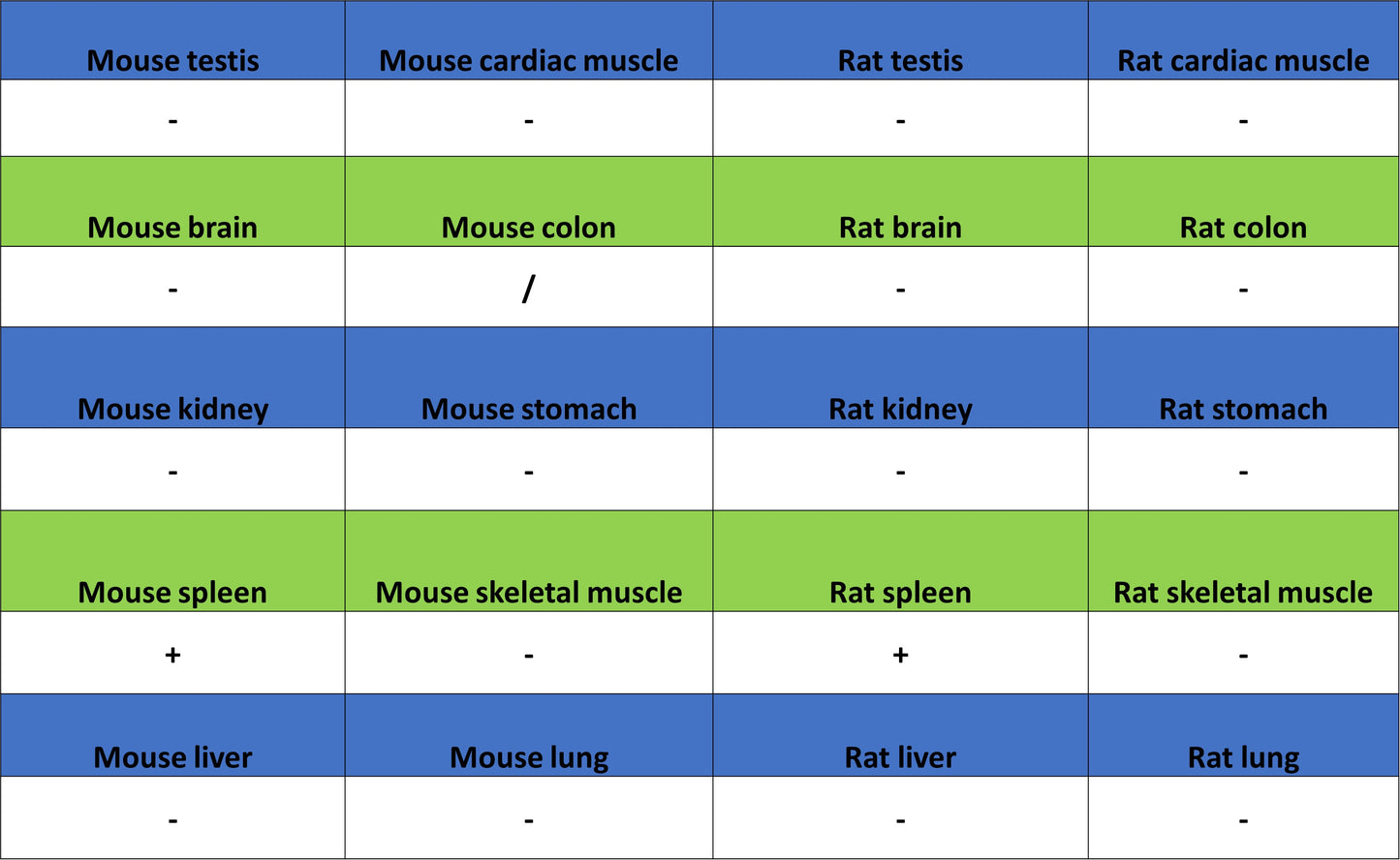
| Reactivity | Ms, Rt |
| Positive Sample | mouse splenocytes treated with 2.5 μg/ml concanavalin A for 72 hours, mouse spleen, rat spleen |
| Purification | Protein A |
| Concentration | 0.5 mg/ml |
| Conjugation | Unconjugated |
| Physical Appearance | Liquid |
| Storage Buffer | PBS, 40% Glycerol, 0.05% BSA, 0.03% Proclin 300 |
| Stability & Storage | 12 months from date of receipt / reconstitution, -20 °C as supplied |
Dilution
| application | dilution | species |
| WB | 1:1000 | Ms, Rt |
| IHC-P | 1:100 | Ms, Rt |
Background
CD134, also known as OX40 or TNFRSF4, is a costimulatory molecule belonging to the tumor necrosis factor receptor (TNFR) superfamily that is primarily expressed on the surface of activated CD4+ and CD8+ T cells, playing a pivotal role in regulating adaptive immune responses by binding to its ligand, OX40L (CD252), which is typically found on antigen-presenting cells such as dendritic cells, B cells, and macrophages. This interaction delivers a critical secondary signal that enhances T cell proliferation, survival, and cytokine production, particularly by upregulating anti-apoptotic proteins like Bcl-2 and Bcl-xL, thereby preventing activation-induced cell death and promoting the formation of long-lived memory T cells. Due to its significant influence on sustaining T cell activity, CD134 has emerged as a major target in cancer immunotherapy, where agonistic antibodies are designed to boost anti-tumor immunity, while blocking antibodies are explored for treating autoimmune diseases by dampening excessive immune responses, highlighting its dual potential in both enhancing and suppressing immune pathways depending on the clinical context.
Picture
Picture
Western Blot
WB result of CD134 Recombinant Rabbit mAb
Primary antibody: CD134 Recombinant Rabbit mAb at 1/1000 dilution
Lane 1: mouse brain lysate 20 µg
Lane 2: mouse spleen lysate 20 µg
Negative control: mouse brain lysate
Secondary antibody: Goat Anti- rabbit IgG, (H+L), HRP conjugated at 1/10000 dilution
Predicted MW: 30 kDa
Observed MW: 47 kDa
WB result of CD134 Recombinant Rabbit mAb
Primary antibody: CD134 Recombinant Rabbit mAb at 1/1000 dilution
Lane 1: rat spleen lysate 20 µg
Secondary antibody: Goat Anti- rabbit IgG, (H+L), HRP conjugated at 1/10000 dilution
Predicted MW: 30 kDa
Observed MW: 47 kDa
Immunohistochemistry
IHC shows positive staining in paraffin-embedded mouse spleen. Anti-CD134 antibody was used at 1/100 dilution, followed by a HRP Polymer for Rabbit IgG (ready to use). Counterstained with hematoxylin. Heat mediated antigen retrieval with Tris/EDTA buffer pH9.0 was performed before commencing with IHC staining protocol.
IHC shows positive staining in paraffin-embedded rat spleen. Anti-CD134 antibody was used at 1/100 dilution, followed by a HRP Polymer for Rabbit IgG (ready to use). Counterstained with hematoxylin. Heat mediated antigen retrieval with Tris/EDTA buffer pH9.0 was performed before commencing with IHC staining protocol.