WB result of CCL21 Recombinant Rabbit mAb
Primary antibody: CCL21 Recombinant Rabbit mAb at 1/1000 dilution
Lane 1: mouse spleen lysate 20 µg
Lane 2: mouse thymus lysate 20 µg
Secondary antibody: Goat Anti- rabbit IgG, (H+L), HRP conjugated at 1/10000 dilution
Predicted MW: 15 kDa
Observed MW: 16 kDa
CCL21 Recombinant Rabbit mAb (S-3198-156)
CCL21 Recombinant Rabbit mAb (S-3198-156)
Price:
Regular price
$100 USD
Regular price
Sale price
$100 USD
Unit price
per
For shipping services or bulk orders, you may request a quotation.
Secure checkout with

View full details
Product Details
Product Details
Product Specification
| Host | Rabbit |
| Antigen | CCL21 |
| Synonyms | C-C motif chemokine 21a; 6Ckine; Beta-chemokine exodus-2; Small-inducible cytokine A21a; Thymus-derived chemotactic agent 4 (TCA4); Ccl21a; Scya21; Scya21a |
| Immunogen | Recombinant Protein |
| Location | Secreted |
| Accession | P84444 |
| Clone Number | S-3198-156 |
| Antibody Type | Recombinant mAb |
| Isotype | IgG |
| Application | WB, IHC-P |
| Reactivity | Ms, Rt |
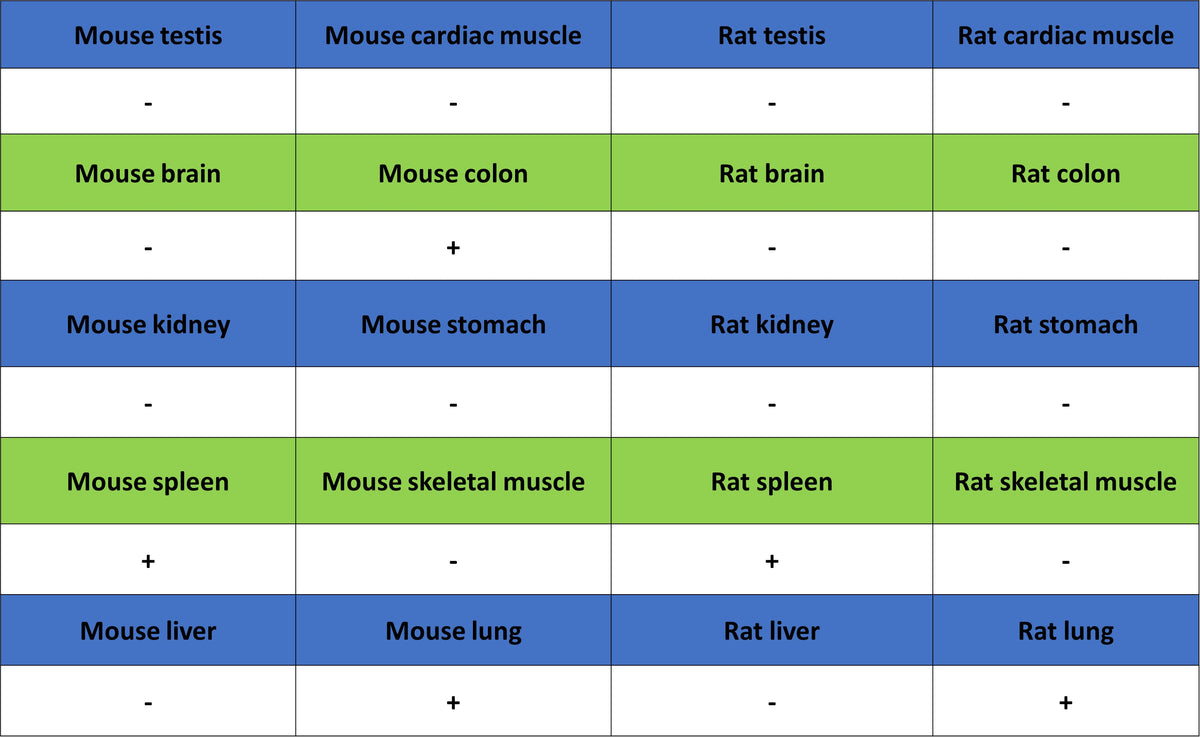
| Positive Sample | mouse spleen, mouse thymus, mouse lung, rat spleen, rat thymus |
| Purification | Protein A |
| Concentration | 0.5 mg/ml |
| Conjugation | Unconjugated |
| Physical Appearance | Liquid |
| Storage Buffer | PBS, 40% Glycerol, 0.05% BSA, 0.03% Proclin 300 |
| Stability & Storage | 12 months from date of receipt / reconstitution, -20 °C as supplied |
Dilution
| application | dilution | species |
| WB | 1:1000 | Ms, Rt |
| IHC-P | 1:500 | Ms, Rt |
Background
CCL21 (also known as secondary lymphoid tissue chemokine SLC or Exodus-2) is a CC-type chemokine of approximately 12.2 kDa consisting of 111 amino acids, encoded by the CCL21 gene on chromosome 9p13.3. Its structure is highly distinctive: although it contains a conserved chemokine domain (including the N-loop and third β-strand) and exists as a monomer, it differs from most family members by possessing six cysteines (two more than typical CC chemokines) and an exceptionally long, unstructured carboxyl-terminal tail. This C-terminal region, while not involved in canonical chemokine folding, facilitates CCL21 anchoring to the surface of lymphatic endothelial cells via glycosaminoglycan binding. Under physiological conditions, CCL21 is predominantly expressed by endothelial cells of secondary lymphoid organs such as lymph nodes, spleen, and appendix. It binds via tyrosine 12 (Y12) in its N-loop and the third β-strand to the N-terminus of the G protein-coupled receptor CCR7 with a dissociation constant of approximately 150 μM, activating downstream signaling pathways including JAK/STAT. This interaction exerts potent chemotactic effects on CCR7⁺ cells (e.g., naïve T cells and dendritic cells), driving their homing to lymphoid organs and establishing immune microenvironments. In the oncological context, however, the CCL21/CCR7 axis exhibits a pronounced double-edged sword effect: various solid tumors—including melanoma and breast cancer—hijack this homing mechanism to actively metastasize to the lymphatic system. Moreover, aberrant CCL21 expression within the primary tumor microenvironment recruits immunosuppressive cells and constructs pro-tumor lymphoid niches, directly correlating with poor prognosis in patients.
Picture
Picture
Western Blot
WB result of CCL21 Recombinant Rabbit mAb
Primary antibody: CCL21 Recombinant Rabbit mAb at 1/1000 dilution
Lane 1: rat spleen lysate 20 µg
Lane 2: rat thymus lysate 20 µg
Secondary antibody: Goat Anti- rabbit IgG, (H+L), HRP conjugated at 1/10000 dilution
Predicted MW: 15 kDa
Observed MW: 16 kDa
Immunohistochemistry
IHC shows positive staining in paraffin-embedded mouse lung. Anti-CCL21 antibody was used at 1/500 dilution, followed by a HRP Polymer for Mouse & Rabbit IgG (ready to use). Counterstained with hematoxylin. Heat mediated antigen retrieval with Tris/EDTA buffer pH9.0 was performed before commencing with IHC staining protocol.
IHC shows positive staining in paraffin-embedded mouse spleen. Anti-CCL21 antibody was used at 1/500 dilution, followed by a HRP Polymer for Mouse & Rabbit IgG (ready to use). Counterstained with hematoxylin. Heat mediated antigen retrieval with Tris/EDTA buffer pH9.0 was performed before commencing with IHC staining protocol.
IHC shows positive staining in paraffin-embedded rat spleen. Anti-CCL21 antibody was used at 1/500 dilution, followed by a HRP Polymer for Mouse & Rabbit IgG (ready to use). Counterstained with hematoxylin. Heat mediated antigen retrieval with Tris/EDTA buffer pH9.0 was performed before commencing with IHC staining protocol.