WB result of CaV2.3 (CACNA1E) Recombinant Rabbit mAb
Primary antibody: CaV2.3 (CACNA1E) Recombinant Rabbit mAb at 1/1000 dilution
Lane 1: unboiled mouse kidney lysate 20 µg
Lane 2: unboiled mouse brain lysate 20 µg
Negative control: unboiled mouse kidney lysate
Secondary antibody: Goat Anti- rabbit IgG, (H+L), HRP conjugated at 1/10000 dilution
Predicted MW: 262 kDa
Observed MW: 350 kDa
CaV2.3 (CACNA1E) Recombinant Rabbit mAb (S-3244-59)
CaV2.3 (CACNA1E) Recombinant Rabbit mAb (S-3244-59)
Price:
Regular price
$100 USD
Regular price
Sale price
$100 USD
Unit price
per
For shipping services or bulk orders, you may request a quotation.
Secure checkout with

View full details
Product Details
Product Details
Product Specification
| Host | Rabbit |
| Antigen | CaV2.3 (CACNA1E) |
| Synonyms | Voltage-dependent R-type calcium channel subunit alpha-1E; Brain calcium channel II (BII); Calcium channel; L type; alpha-1 polypeptide; isoform 6; Voltage-gated calcium channel subunit alpha Cav2.3; CACH6; CACNL1A6 |
| Immunogen | Synthetic Peptide |
| Location | Membrane |
| Accession | Q15878 |
| Clone Number | S-3244-59 |
| Antibody Type | Recombinant mAb |
| Isotype | IgG |
| Application | WB, IHC-P |
| Reactivity | Ms, Rt |
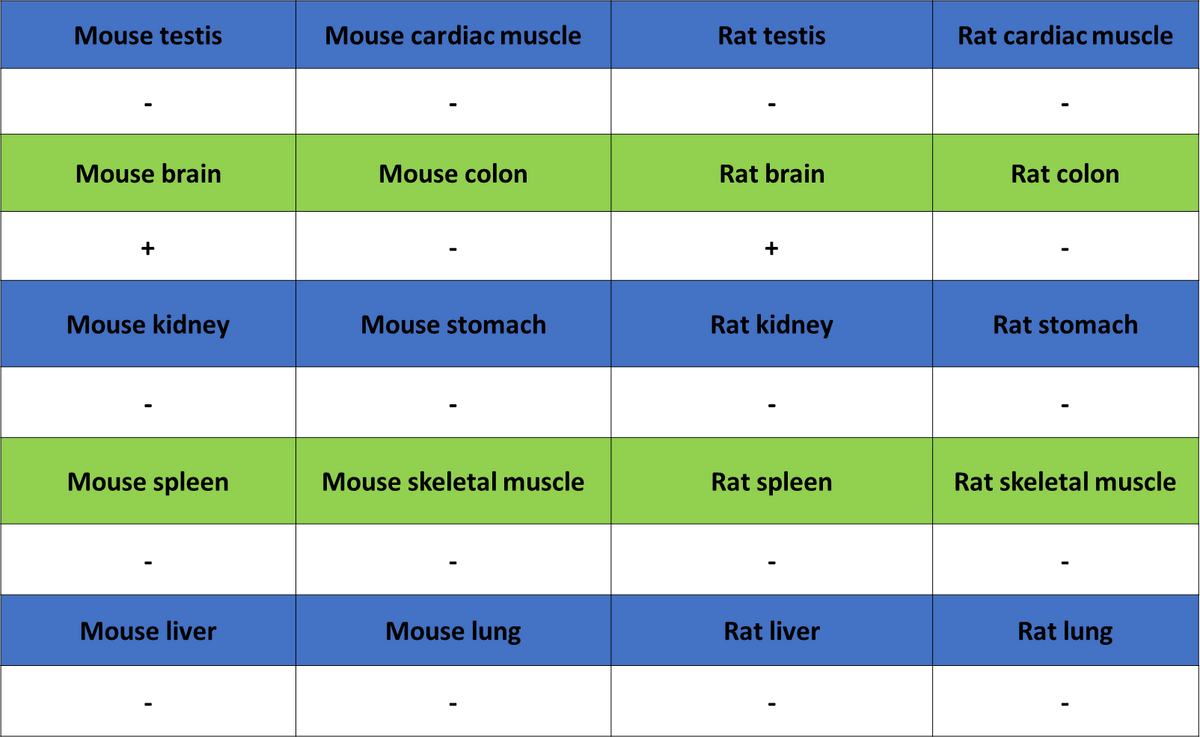
| Positive Sample | mouse brain, rat brain |
| Purification | Protein A |
| Concentration | 0.5 mg/ml |
| Conjugation | Unconjugated |
| Physical Appearance | Liquid |
| Storage Buffer | PBS, 40% Glycerol, 0.05% BSA, 0.03% Proclin 300 |
| Stability & Storage | 12 months from date of receipt / reconstitution, -20 °C as supplied |
Dilution
| application | dilution | species |
| WB | 1:1000-1:2000 | Ms, Rt |
| IHC-P | 1:2000 | Ms, Rt |
Background
CaV2.3, encoded by the CACNA1E gene, is a member of the high-voltage-activated (HVA) R-type calcium channel family, distinguished by its unique biophysical properties including rapid activation and inactivation kinetics, single-channel conductance, and insensitivity to conventional dihydropyridine, ω-conotoxin GVIA, or ω-agatoxin IVA blockers. Predominantly expressed in the central nervous system—particularly in the cortex, hippocampus, cerebellum, and thalamus—this channel plays a critical role in regulating neuronal excitability, neurotransmitter release at specialized synapses, and synaptic plasticity. Functionally, CaV2.3 channels contribute to action potential repolarization, afterhyperpolarization, and pacemaking activities in specific neuronal populations, while also modulating calcium signaling pathways that influence gene transcription and neuronal survival. Clinically, gain-of-function mutations in CACNA1E have been associated with developmental and epileptic encephalopathies, autism spectrum disorders, and chronic pain conditions, whereas the channel represents a potential therapeutic target for epilepsy, neuropathic pain, and neurodegenerative diseases due to its distinct pharmacological profile and restricted neuronal distribution.
Picture
Picture
Western Blot
WB result of CaV2.3 (CACNA1E) Recombinant Rabbit mAb
Primary antibody: CaV2.3 (CACNA1E) Recombinant Rabbit mAb at 1/1000 dilution
Lane 1: unboiled rat kidney lysate 20 µg
Lane 2: unboiled rat brain lysate 20 µg
Negative control: unboiled rat kidney lysate
Secondary antibody: Goat Anti- rabbit IgG, (H+L), HRP conjugated at 1/10000 dilution
Predicted MW: 262 kDa
Observed MW: 350 kDa
Immunohistochemistry
IHC shows positive staining in paraffin-embedded mouse cerebral cortex. Anti-CaV2.3 (CACNA1E) antibody was used at 1/2000 dilution, followed by a HRP Polymer for Mouse & Rabbit IgG (ready to use). Counterstained with hematoxylin. Heat mediated antigen retrieval with Tris/EDTA buffer pH9.0 was performed before commencing with IHC staining protocol.
Negative control: IHC shows negative staining in paraffin-embedded mouse kidney. Anti-CaV2.3 (CACNA1E) antibody was used at 1/2000 dilution, followed by a HRP Polymer for Mouse & Rabbit IgG (ready to use). Counterstained with hematoxylin. Heat mediated antigen retrieval with Tris/EDTA buffer pH9.0 was performed before commencing with IHC staining protocol.
IHC shows positive staining in paraffin-embedded rat cerebral cortex. Anti-CaV2.3 (CACNA1E) antibody was used at 1/2000 dilution, followed by a HRP Polymer for Mouse & Rabbit IgG (ready to use). Counterstained with hematoxylin. Heat mediated antigen retrieval with Tris/EDTA buffer pH9.0 was performed before commencing with IHC staining protocol.
Negative control: IHC shows negative staining in paraffin-embedded rat kidney. Anti-CaV2.3 (CACNA1E) antibody was used at 1/2000 dilution, followed by a HRP Polymer for Mouse & Rabbit IgG (ready to use). Counterstained with hematoxylin. Heat mediated antigen retrieval with Tris/EDTA buffer pH9.0 was performed before commencing with IHC staining protocol.