WB result of BRCA2 Recombinant Rabbit mAb
Primary antibody: BRCA2 Recombinant Rabbit mAb at 1/1000 dilution
Lane 1: HeLa whole cell lysate 20 µg
Lane 2: Capan-1 whole cell lysate 20 µg
Secondary antibody: Goat Anti- rabbit IgG, (H+L), HRP conjugated at 1/10000 dilution
Predicted MW: 384 kDa
Observed MW: 125, 200 kDa
BRCA2 Recombinant Rabbit mAb (S-5306)
BRCA2 Recombinant Rabbit mAb (S-5306)
Price:
Regular price
$100 USD
Regular price
Sale price
$100 USD
Unit price
per
For shipping services or bulk orders, you may request a quotation.
Secure checkout with

View full details
Product Details
Product Details
Product Specification
| Host | Rabbit |
| Antigen | BRCA2 |
| Synonyms | Breast cancer type 2 susceptibility protein; FACD; FANCD1 |
| Location | Cytoplasm, Nucleus |
| Accession | P51587 |
| Clone Number | S-5306 |
| Antibody Type | Recombinant mAb |
| Isotype | IgG |
| Application | WB, IHC-P |
| Reactivity | Hu |
| Purification | Protein A |
| Concentration | 0.5 mg/ml |
| Conjugation | Unconjugated |
| Physical Appearance | Liquid |
| Storage Buffer | PBS, 40% Glycerol, 0.05% BSA, 0.02% sodium azide |
| Stability & Storage | 12 months from date of receipt / reconstitution, -20 °C as supplied |
Dilution
| application | dilution | species |
| WB | 1:1000 | Hu |
| IHC-P | 1:500 | Hu |
Background
BRCA2 (Breast Cancer Susceptibility Gene 2) is an important tumor suppressor gene, and the protein it encodes plays a central role in maintaining genomic stability, primarily through its involvement in the homologous recombination repair (HRR) pathway to precisely repair DNA double-strand breaks—the most severe form of DNA damage. When DNA double-strand breaks occur in the cell, the BRCA2 protein interacts with multiple key partner molecules, such as the RAD51 recombinase, and through its several internal domains, it precisely loads RAD51 onto single-stranded DNA to form nucleoprotein filaments, thereby guiding homologous sequence search and strand invasion, completing the high-fidelity repair process and ensuring accurate transmission of genetic information. In addition, BRCA2 is involved in cell cycle checkpoint regulation and replication fork protection, preventing replication fork collapse and genomic rearrangements. If pathogenic mutations occur in the BRCA2 gene, its loss of function leads to ineffective DNA damage repair, causing cells to accumulate numerous mutations and significantly increasing the risk of various malignancies, including breast cancer, ovarian cancer, pancreatic cancer, and prostate cancer, with a particularly strong association with early-onset familial breast and ovarian cancers. Clinically, BRCA2 mutation testing is not only used for genetic risk assessment and early screening in high-risk populations, but also provides important guidance for treatment strategy selection. For example, tumors harboring BRCA2 mutations are often more sensitive to PARP inhibitors (such as olaparib) and platinum-based chemotherapy agents, offering a strong basis for targeted therapy and personalized medicine. Meanwhile, the synergistic interactions of BRCA2 with other DNA repair proteins, such as PALB2 and BRCA1, have also made it a hot target in synthetic lethality strategies and combination therapy research, continuously advancing the development of precision oncology.
Picture
Picture
Western Blot
Immunohistochemistry
IHC shows positive staining in paraffin-embedded human kidney. Anti-BRCA2 antibody was used at 1/500 dilution, followed by a HRP Polymer for Rabbit IgG (ready to use). Counterstained with hematoxylin. Heat mediated antigen retrieval with Tris/EDTA buffer pH9.0 was performed before commencing with IHC staining protocol.
IHC shows positive staining in paraffin-embedded human tonsil. Anti-BRCA2 antibody was used at 1/500 dilution, followed by a HRP Polymer for Rabbit IgG (ready to use). Counterstained with hematoxylin. Heat mediated antigen retrieval with Tris/EDTA buffer pH9.0 was performed before commencing with IHC staining protocol.
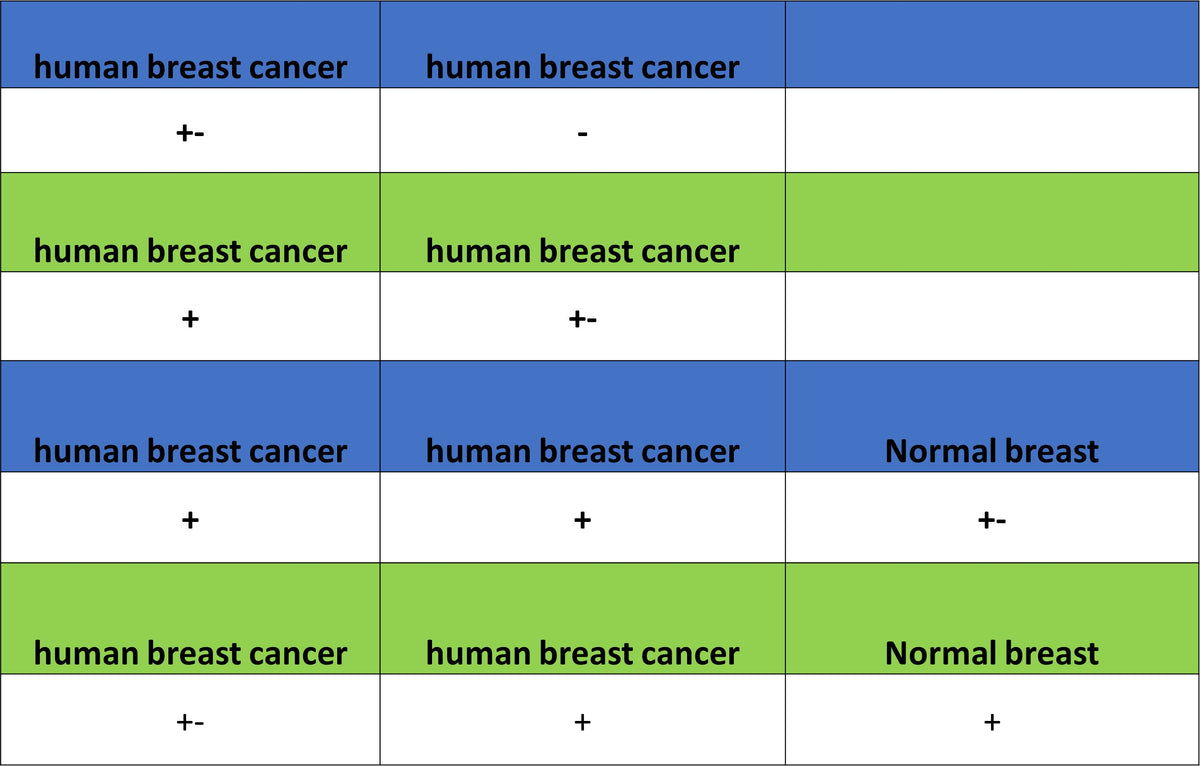
IHC shows positive staining in paraffin-embedded human breast cancer (case 1). Anti-BRCA2 antibody was used at 1/500 dilution, followed by a HRP Polymer for Rabbit IgG (ready to use). Counterstained with hematoxylin. Heat mediated antigen retrieval with Tris/EDTA buffer pH9.0 was performed before commencing with IHC staining protocol.
IHC shows positive staining in paraffin-embedded human breast cancer (case 2). Anti-BRCA2 antibody was used at 1/500 dilution, followed by a HRP Polymer for Rabbit IgG (ready to use). Counterstained with hematoxylin. Heat mediated antigen retrieval with Tris/EDTA buffer pH9.0 was performed before commencing with IHC staining protocol.