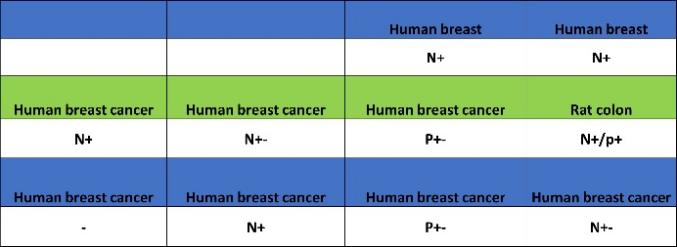
IHC shows positive staining in paraffin-embedded human breast. Anti-BRCA1 antibody was used at 1/1000 dilution, followed by a HRP Polymer for Mouse IgG (ready to use). Counterstained with hematoxylin. Heat mediated antigen retrieval with Tris/EDTA buffer pH9.0 was performed before commencing with IHC staining protocol.
BRCA1 Recombinant Mouse mAb (S-4707)
BRCA1 Recombinant Mouse mAb (S-4707)
Price:
Regular price
$100 USD
Regular price
Sale price
$100 USD
Unit price
per
For shipping services or bulk orders, you may request a quotation.
Secure checkout with

View full details
Product Details
Product Details
Product Specification
| Host | Mouse |
| Antigen | BRCA1 |
| Synonyms | Breast cancer type 1 susceptibility protein; RING finger protein 53; RING-type E3 ubiquitin transferase BRCA1; RNF53 |
| Location | Cytoplasm, Nucleus |
| Accession | P38398 |
| Clone Number | S-4707 |
| Antibody Type | Mouse mAb |
| Isotype | IgG1,k |
| Application | IHC-P, ICC |
| Reactivity | Hu |
| Purification | Protein G |
| Concentration | 2 mg/ml |
| Conjugation | Unconjugated |
| Physical Appearance | Liquid |
| Storage Buffer | PBS, 40% Glycerol, 0.05% BSA, 0.03% Proclin 300 |
| Stability & Storage | 12 months from date of receipt / reconstitution, -20 °C as supplied |
Dilution
| application | dilution | species |
| IHC-P | 1:1000 | Hu |
| ICC | 1:2000 | Hu |
Background
BRCA1 (Breast Cancer gene 1) is a critical tumor suppressor protein encoded by the BRCA1 gene in humans, playing an indispensable role in maintaining genomic stability primarily through its involvement in the high-fidelity repair of double-strand DNA breaks via homologous recombination. Functioning as a scaffold within a large multiprotein complex, BRCA1 interacts with key partners such as BARD1, PALB2, and RAD51 to coordinate cell cycle checkpoints, particularly at the G2/M transition, ensuring that cells do not divide with damaged DNA, while also participating in transcriptional regulation and ubiquitination processes; consequently, inherited loss-of-function mutations in the BRCA1 gene severely compromise these DNA repair mechanisms, leading to an accumulation of genetic errors and a significantly elevated lifetime risk of developing hereditary breast and ovarian cancers, which has made the protein a central focus for both genetic screening protocols and the development of targeted therapies like PARP inhibitors that exploit synthetic lethality in BRCA1-deficient tumors.
Picture
Picture
Immunohistochemistry
IHC shows positive staining in paraffin-embedded human breast cancer (case 1). Anti-BRCA1 antibody was used at 1/1000 dilution, followed by a HRP Polymer for Mouse IgG (ready to use). Counterstained with hematoxylin. Heat mediated antigen retrieval with Tris/EDTA buffer pH9.0 was performed before commencing with IHC staining protocol.
IHC shows positive staining in paraffin-embedded human breast cancer (case 2). Anti-BRCA1 antibody was used at 1/1000 dilution, followed by a HRP Polymer for Mouse IgG (ready to use). Counterstained with hematoxylin. Heat mediated antigen retrieval with Tris/EDTA buffer pH9.0 was performed before commencing with IHC staining protocol.
IHC shows negative staining in paraffin-embedded human breast cancer (case 3). Anti-BRCA1 antibody was used at 1/1000 dilution, followed by a HRP Polymer for Mouse IgG (ready to use). Counterstained with hematoxylin. Heat mediated antigen retrieval with Tris/EDTA buffer pH9.0 was performed before commencing with IHC staining protocol.
Immunocytochemistry
ICC shows positive staining in MCF7 cells. Anti-BRCA1 antibody was used at 1/2000 dilution (Green) and incubated overnight at 4°C. Goat polyclonal Antibody to Mouse IgG - H&L (Alexa Fluor® 488) was used as secondary antibody at 1/1000 dilution. The cells were fixed with 100% ice-cold methanol and permeabilized with 0.1% PBS-Triton X-100. Nuclei were counterstained with DAPI (Blue). Counterstain with tubulin (Red).