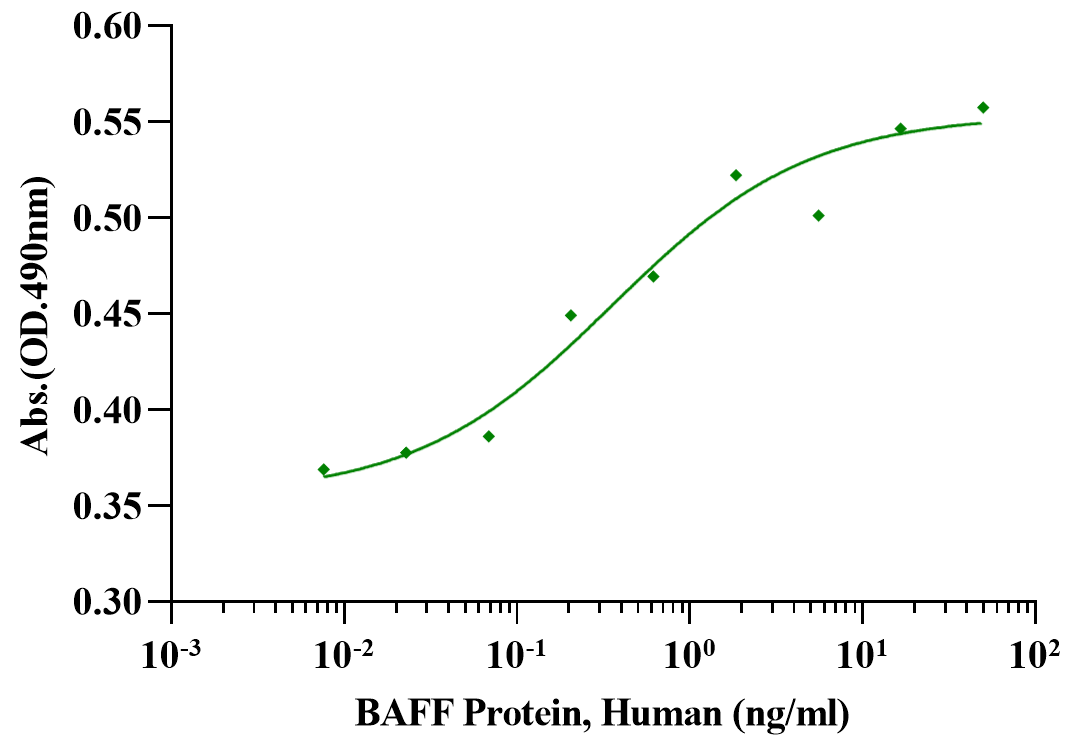
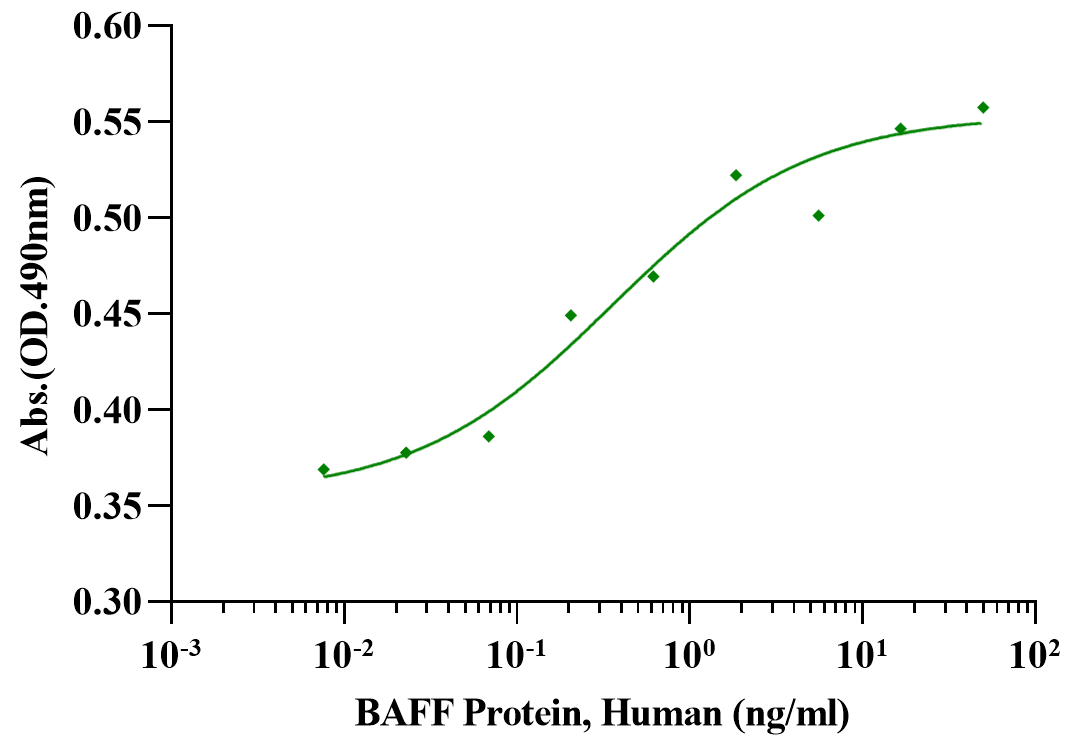
Measured in a cell proliferation assay using anti-IgM stimulated mouse B cells. The EC50 for this effect is 0.36ng/mL.
BAFF Protein, Human
BAFF Protein, Human
Price:
Regular price
$140 USD
Regular price
Sale price
$140 USD
Unit price
per
For shipping services or bulk orders, you may request a quotation.
Secure checkout with

View full details
Product Details
Product Details
Product Specification
| Species | Human |
| Synonyms | Tumor necrosis factor ligand superfamily member 13B, B lymphocyte stimulator (BLyS), B-cell-activating factor, BAFF, Dendritic cell-derived TNF-like molecule, TNF- and APOL-related leukocyte expressed ligand 1 (TALL-1) |
| Accession | Q9Y275 |
| Amino Acid Sequence | Ala134-Leu285 |
| Expression System | HEK293 |
| Molecular Weight | 16-24 kDa (Reducing) |
| Purity | >95% by SDS-PAGE |
| Endotoxin | <0.01EU/μg |
| Conjugation | Unconjugated |
| Tag | No Tag |
| Physical Appearance | Lyophilized Powder |
| Storage Buffer | PBS, pH7.4 |
| Reconstitution | Reconstitute at 0.1-1 mg/ml according to the size in ultrapure water after rapid centrifugation. |
| Stability & Storage | ·12 months from date of receipt, lyophilized powder stored at -20 to -80℃. |
| Reference | Nature. 2000 Apr 27;404(6781):995-9. |
Background
B-cell activating factor (BAFF), also known as B lymphocyte stimulator (BLyS), is a cytokine that belongs to the tumor necrosis factor (TNF) ligand superfamily and plays a crucial role in regulating B-cell development, survival, and function. In humans, BAFF is primarily produced by myeloid cells, including monocytes, macrophages, and dendritic cells, and acts on B cells through binding to its receptors, BAFF-R, TACI, and BCMA. By engaging these receptors, BAFF promotes the survival, maturation, and antibody production of B cells, as well as the formation of germinal centers and the maintenance of peripheral B-cell populations. Dysregulation of BAFF signaling has been implicated in various autoimmune diseases, such as systemic lupus erythematosus (SLE) and rheumatoid arthritis, highlighting the importance of BAFF in immune homeostasis and autoimmunity.
Picture
Picture
Bioactivity
SDS-PAGE
2μg (R: reducing condition, N: non-reducing condition).
ELISA
Immobilized BAFF Protein, Human (Cat. No. UA040517) at 2.0μg/mL (100μL/well) can bind BAFFR Fc Chimera Protein, Human (Cat. No. UA011010) with EC50 of 5.60-10.12 ng/mL.