WB result of BACH2 Rabbit Polyclonal Antibody
Primary antibody: BACH2 Rabbit Polyclonal Antibody at 1/1000 dilution
Lane 1: THP-1 whole cell lysate 20 µg
Lane 2: Daudi whole cell lysate 20 µg
Lane 3: Ramos whole cell lysate 20 µg
Negative control: THP-1 whole cell lysate
Secondary antibody: Goat Anti-Rabbit IgG (H+L), HRP conjugated at 1/10000 dilution
Predicted MW: 93 kDa
Observed MW: 125 kDa
BACH2 Rabbit Polyclonal Antibody
BACH2 Rabbit Polyclonal Antibody
Price:
Regular price
$100 USD
Regular price
Sale price
$100 USD
Unit price
per
For shipping services or bulk orders, you may request a quotation.
Secure checkout with

View full details
Product Details
Product Details
Product Specification
| Host | Rabbit |
| Antigen | BACH2 |
| Synonyms | Transcription regulator protein BACH2 |
| Immunogen | Recombinant Protein |
| Location | Cytoplasm, Nucleus |
| Accession | Q9BYV9 |
| Antibody Type | Polyclonal antibody |
| Isotype | IgG |
| Application | WB, IHC-P |
| Reactivity | Hu |
| Positive Sample | Daudi, Rmos |
| Purification | Immunogen Affinity |
| Concentration | 1 mg/ml |
| Conjugation | Unconjugated |
| Physical Appearance | Liquid |
| Storage Buffer | PBS, 40% Glycerol, 0.05% BSA, 0.02% sodium azide |
| Stability & Storage | 12 months from date of receipt / reconstitution, -20 °C as supplied |
Dilution
| application | dilution | species |
| WB | 1:1000 | Hu |
| IHC-P | 1:2000 | Hu |
Background
BACH2 (BTB and CNC homolog 2) is a lymphoid-specific transcription factor belonging to the Cap'n'Collar (CNC) basic leucine zipper (bZIP) family, and it plays a key regulatory role in B cell development, T cell differentiation, and immune homeostasis. Structurally, it contains an N-terminal BTB/POZ domain of approximately 100 amino acids (which mediates dimerization and recruits transcriptional corepressors and class II histone deacetylases) and a C-terminal bZIP domain (responsible for DNA binding and dimerization). BACH2 exists as an obligate homodimer, and can also form heterodimers with small MAF proteins (MAFF, MAFG, MAFK) through its bZIP domain, binding to MARE elements to regulate target genes. Functionally, BACH2 acts as a transcriptional repressor, suppressing the expression of genes associated with effector T cell differentiation, maintaining the suppressive function of Treg cells, and regulating B cell class switch recombination and somatic hypermutation. The nucleocytoplasmic shuttling of BACH2 is regulated by PI3K-AKT signaling-mediated phosphorylation and SUMOylation. Genetic evidence indicates that BACH2 haploinsufficiency can cause monogenic BACH2-related immunodeficiency and autoimmunity syndrome, characterized by reduced FOXP3 expression in Treg cells and increased expression of gut-homing receptors on CD4⁺ T cells, with clinical manifestations of colitis combined with B cell immunodeficiency. Polymorphisms at the BACH2 locus are also associated with susceptibility to a variety of autoimmune diseases, including rheumatoid arthritis, Crohn's disease, multiple sclerosis, type 1 diabetes, and asthma.
Picture
Picture
Western Blot
Immunohistochemistry
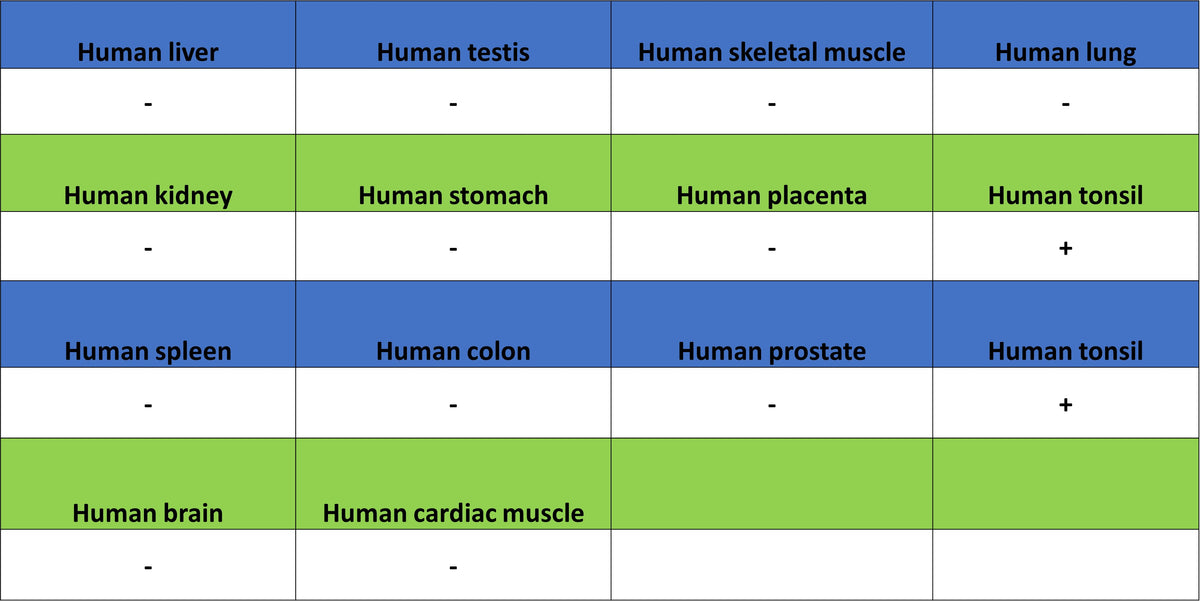
IHC shows positive staining in paraffin-embedded human tonsil. Anti-BACH2 antibody was used at 1/2000 dilution, followed by a HRP Polymer for Rabbit IgG (ready to use). Counterstained with hematoxylin. Heat mediated antigen retrieval with Tris/EDTA buffer pH9.0 was performed before commencing with IHC staining protocol.
Negative control: IHC shows negative staining in paraffin-embedded human pancreas. Anti-BACH2 antibody was used at 1/2000 dilution, followed by a HRP Polymer for Rabbit IgG (ready to use). Counterstained with hematoxylin. Heat mediated antigen retrieval with Tris/EDTA buffer pH9.0 was performed before commencing with IHC staining protocol.