IHC shows positive staining in paraffin-embedded human retina. Anti-ARR3 antibody was used at 1/2000 dilution, followed by a HRP Polymer for Mouse & Rabbit IgG (ready to use). Counterstained with hematoxylin. Heat mediated antigen retrieval with Tris/EDTA buffer pH9.0 was performed before commencing with IHC staining protocol.
ARR3 Recombinant Rabbit mAb (S-3290-27)
ARR3 Recombinant Rabbit mAb (S-3290-27)
Price:
Regular price
$100 USD
Regular price
Sale price
$100 USD
Unit price
per
For shipping services or bulk orders, you may request a quotation.
Secure checkout with

View full details
Product Details
Product Details
Product Specification
| Host | Rabbit |
| Antigen | ARR3 |
| Synonyms | Arrestin-C; Cone arrestin (C-arrestin; cArr); Retinal cone arrestin-3; X-arrestin; ARRX; CAR |
| Immunogen | Synthetic Peptide |
| Location | Cell projection |
| Accession | P36575 |
| Clone Number | S-3290-27 |
| Antibody Type | Recombinant mAb |
| Isotype | IgG |
| Application | IHC-P, IF |
| Reactivity | Hu |
| Purification | Protein A |
| Concentration | 0.125 mg/ml |
| Conjugation | Unconjugated |
| Physical Appearance | Liquid |
| Storage Buffer | PBS, 40% Glycerol, 0.05% BSA, 0.03% Proclin 300 |
| Stability & Storage | 12 months from date of receipt / reconstitution, -20 °C as supplied |
Dilution
| application | dilution | species |
| IHC-P | 1:2000 | Hu |
| IF | 1:2000 | Hu |
Background
ARR3 (Arrestin-C, also known as X-arrestin or Cone Arrestin) is a 45-kDa protein belonging to the arrestin family of regulatory proteins, specifically expressed in retinal cone photoreceptors and pinealocytes, where it plays a critical role in terminating G protein-coupled receptor (GPCR) signaling through high-affinity binding to light-activated, phosphorylated cone opsins. Structurally, ARR3 shares the characteristic two-domain arrestin fold with β-strand-dominated N- and C-domains connected by a flexible hinge region, enabling the protein to undergo a conformational change upon receptor engagement that precludes further G protein coupling while promoting receptor internalization and trafficking. Unlike the ubiquitously expressed ARR2 (β-arrestin-1) and ARR3's rod-specific counterpart SAG (S-antigen/arrestin-1), ARR3 demonstrates preferential affinity for short-wavelength cone opsins and exhibits distinct phosphorylation-dependent regulatory mechanisms that modulate its subcellular localization between the photoreceptor outer segment and synaptic terminal. Genetic mutations in the ARR3 gene have been associated with various retinal dystrophies, including Oguchi disease and certain forms of cone-rod dystrophy, underscoring its essential function in maintaining cone photoreceptor health and proper visual cycle regulation.
Picture
Picture
Immunohistochemistry
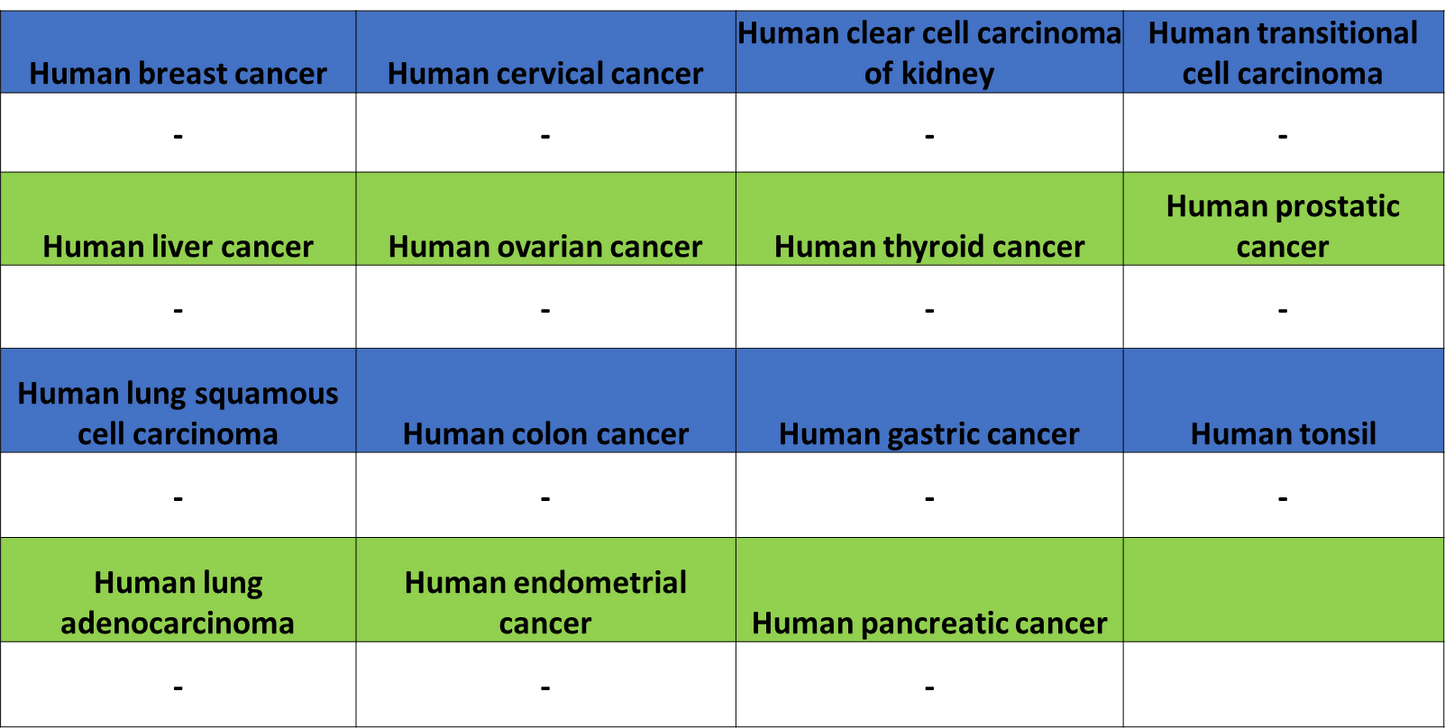
Negative control: IHC shows negative staining in paraffin-embedded human cerebral cortex. Anti-ARR3 antibody was used at 1/2000 dilution, followed by a HRP Polymer for Mouse & Rabbit IgG (ready to use). Counterstained with hematoxylin. Heat mediated antigen retrieval with Tris/EDTA buffer pH9.0 was performed before commencing with IHC staining protocol.
Negative control: IHC shows negative staining in paraffin-embedded human kidney. Anti-ARR3 antibody was used at 1/2000 dilution, followed by a HRP Polymer for Mouse & Rabbit IgG (ready to use). Counterstained with hematoxylin. Heat mediated antigen retrieval with Tris/EDTA buffer pH9.0 was performed before commencing with IHC staining protocol.
Negative control: IHC shows negative staining in paraffin-embedded human hepatocellular carcinoma. Anti-ARR3 antibody was used at 1/2000 dilution, followed by a HRP Polymer for Mouse & Rabbit IgG (ready to use). Counterstained with hematoxylin. Heat mediated antigen retrieval with Tris/EDTA buffer pH9.0 was performed before commencing with IHC staining protocol.
Negative control: IHC shows negative staining in paraffin-embedded human lung cancer. Anti-ARR3 antibody was used at 1/2000 dilution, followed by a HRP Polymer for Mouse & Rabbit IgG (ready to use). Counterstained with hematoxylin. Heat mediated antigen retrieval with Tris/EDTA buffer pH9.0 was performed before commencing with IHC staining protocol.
Negative control: IHC shows negative staining in paraffin-embedded human ovarian cancer. Anti-ARR3 antibody was used at 1/2000 dilution, followed by a HRP Polymer for Mouse & Rabbit IgG (ready to use). Counterstained with hematoxylin. Heat mediated antigen retrieval with Tris/EDTA buffer pH9.0 was performed before commencing with IHC staining protocol.
Immunofluorescence
IF shows positive staining in paraffin-embedded human retina. Anti-ARR3 antibody was used at 1/2000 dilution (Green) and incubated overnight at 4°C. Goat polyclonal Antibody to Rabbit IgG - H&L (Alexa Fluor® 488) was used as secondary antibody at 1/1000 dilution. Counterstained with DAPI (Blue). Heat mediated antigen retrieval with EDTA buffer pH9.0 was performed before commencing with IF staining protocol.
IF shows negative staining in paraffin-embedded human brain. Anti-ARR3 antibody was used at 1/2000 dilution and incubated overnight at 4°C. Goat polyclonal Antibody to Rabbit IgG - H&L (Alexa Fluor® 488) was used as secondary antibody at 1/1000 dilution. Counterstained with DAPI (Blue). Heat mediated antigen retrieval with EDTA buffer pH9.0 was performed before commencing with IF staining protocol.