WB result of Apolipoprotein CIII Recombinant Rabbit mAb
Primary antibody: Apolipoprotein CIII Recombinant Rabbit mAb at 1/1000 dilution
Lane 1: Human plasma lysate 20 µg
Secondary antibody: Goat Anti-Rabbit IgG (H+L), HRP conjugated at 1/10000 dilution
Predicted MW: 11 kDa
Observed MW: 13 kDa
Apolipoprotein CIII Recombinant Rabbit mAb (S-5408)
Apolipoprotein CIII Recombinant Rabbit mAb (S-5408)
Price:
Regular price
$100 USD
Regular price
Sale price
$100 USD
Unit price
per
For shipping services or bulk orders, you may request a quotation.
Secure checkout with

View full details
Product Details
Product Details
Product Specification
| Host | Rabbit |
| Antigen | Apolipoprotein CIII |
| Synonyms | Apolipoprotein C-III; Apo-CIII; ApoC-III; Apolipoprotein C3; APOC3 |
| Location | Secreted |
| Accession | P02656 |
| Clone Number | S-5408 |
| Antibody Type | Recombinant mAb |
| Isotype | IgG |
| Application | WB, IHC-P |
| Reactivity | Hu |
| Positive Sample | Human plasma |
| Purification | Protein A |
| Concentration | 0.5 mg/ml |
| Conjugation | Unconjugated |
| Physical Appearance | Liquid |
| Storage Buffer | PBS, 40% Glycerol, 0.05% BSA, 0.02% sodium azide |
| Stability & Storage | 12 months from date of receipt / reconstitution, -20 °C as supplied |
Dilution
| application | dilution | species |
| WB | 1:1000 | Hu |
| IHC-P | 1:1000 | Hu |
Background
Apolipoprotein CIII (APOC3) is a small glycoprotein synthesized by the liver and intestine, primarily found on the surface of chylomicrons, very low-density lipoproteins (VLDL), and high-density lipoproteins (HDL). It is a key regulator of triglyceride metabolism, and its most classical function is to inhibit the activity of lipoprotein lipase (LPL), thereby slowing down triglyceride hydrolysis, while also interfering with hepatic clearance of triglyceride-rich lipoproteins and their remnants, ultimately leading to elevated plasma triglyceride levels. Structurally, upon lipid binding, APOC3 wraps around the lipoprotein particle surface like a "necklace," and the distribution of positive and negative charges at its two termini may be closely related to its inhibitory effects on LPL and receptor binding. Excessively high plasma levels of APOC3 are a major cause of hypertriglyceridemia and are strongly associated with increased risks of cardiovascular disease, diabetes, and metabolic syndrome. Consequently, APOC3 has become a highly attractive drug target; strategies such as antisense oligonucleotides that reduce its levels have been shown to significantly lower triglycerides, offering new avenues for the treatment of related metabolic disorders.
Picture
Picture
Western Blot
Immunohistochemistry
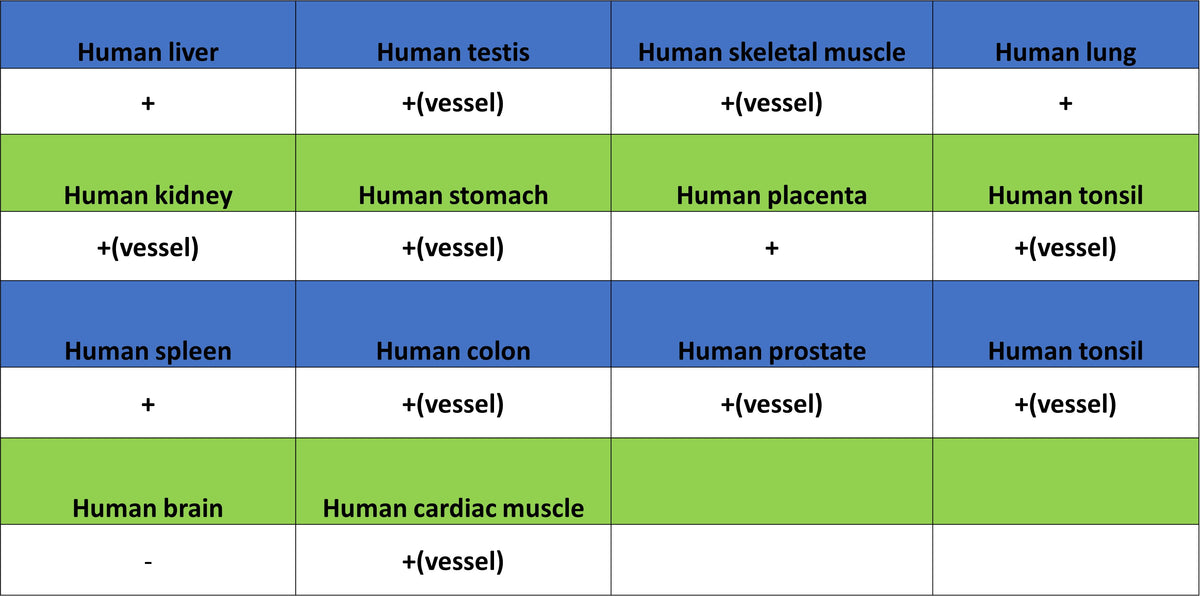
IHC shows positive staining in paraffin-embedded human colon. Anti-Apolipoprotein CIII antibody was used at 1/1000 dilution, followed by a HRP Polymer for Rabbit IgG (ready to use). Counterstained with hematoxylin. Heat mediated antigen retrieval with Tris/EDTA buffer pH9.0 was performed before commencing with IHC staining protocol.
IHC shows positive staining in paraffin-embedded human liver. Anti-Apolipoprotein CIII antibody was used at 1/1000 dilution, followed by a HRP Polymer for Rabbit IgG (ready to use). Counterstained with hematoxylin. Heat mediated antigen retrieval with Tris/EDTA buffer pH9.0 was performed before commencing with IHC staining protocol.
IHC shows positive staining in paraffin-embedded human placenta. Anti-Apolipoprotein CIII antibody was used at 1/1000 dilution, followed by a HRP Polymer for Rabbit IgG (ready to use). Counterstained with hematoxylin. Heat mediated antigen retrieval with Tris/EDTA buffer pH9.0 was performed before commencing with IHC staining protocol.
IHC shows positive staining in paraffin-embedded human ovarian cancer. Anti-Apolipoprotein CIII antibody was used at 1/1000 dilution, followed by a HRP Polymer for Rabbit IgG (ready to use). Counterstained with hematoxylin. Heat mediated antigen retrieval with Tris/EDTA buffer pH9.0 was performed before commencing with IHC staining protocol.