


Immobilized TL1A/TNFSF15 Protein, Human (UA040184) can bind Duvakitug. The EC50 for this effect is 3.824 ng/mL.
Anti-Human TL1A Monoclonal Antibody (Duvakitug)
Anti-Human TL1A Monoclonal Antibody (Duvakitug)
Price:
Regular price
$445 USD
Regular price
Sale price
$445 USD
Unit price
per
For shipping services or bulk orders, you may request a quotation.
Secure checkout with

View full details
Product Details
Product Details
Product Specification
| Synonyms | Tumor necrosis factor ligand superfamily member 15; TNF ligand-related molecule 1; Vascular endothelial cell growth inhibitor; TL1; VEGI; TNFSF15 |
| Location | Secreted |
| Accession | O95150 |
| Antibody Type | Recombinant mAb |
| Application | ELISA |
| Reactivity | Hu |
| Purification | Protein A |
| Concentration | 5 mg/ml |
| Endotoxin | <1EU/mg |
| Conjugation | Unconjugated |
| Physical Appearance | Liquid |
| Storage Buffer | PBS pH7.4, containing no preservative |
| Stability & Storage | 2 to 8 °C for 2 weeks under sterile conditions; |
Background
TL1A (also called TNFSF15, VEGI) is a 23-kDa type-II transmembrane cytokine of the TNF superfamily that forms homotrimers and is expressed by endothelial cells, monocytes, dendritic cells and fibroblasts; upon cleavage to soluble TL1A it binds chiefly to death receptor 3 (DR3/TNFRSF25) and, to a lesser extent, decoy receptor 3 (DcR3/TNFRSF6B), triggering TRADD/RIPK1/TRAF2-mediated activation of NF-κB and MAPK cascades that drive production of IFN-γ, TNF-α, IL-2, IL-5, IL-13 and IL-9, thereby amplifying Th1, Th2, Th9 and Th17 responses, enhancing NK-cell cytotoxicity, promoting dendritic-cell maturation and leukocyte chemotaxis, and, depending on context, inducing caspase-8/3-dependent apoptosis or necroptosis, while also inhibiting endothelial proliferation and angiogenesis; dysregulated TL1A is implicated in Crohn’s disease, ulcerative colitis, rheumatoid arthritis, psoriasis, asthma and cancer, making it an attractive therapeutic target.
Picture
Picture
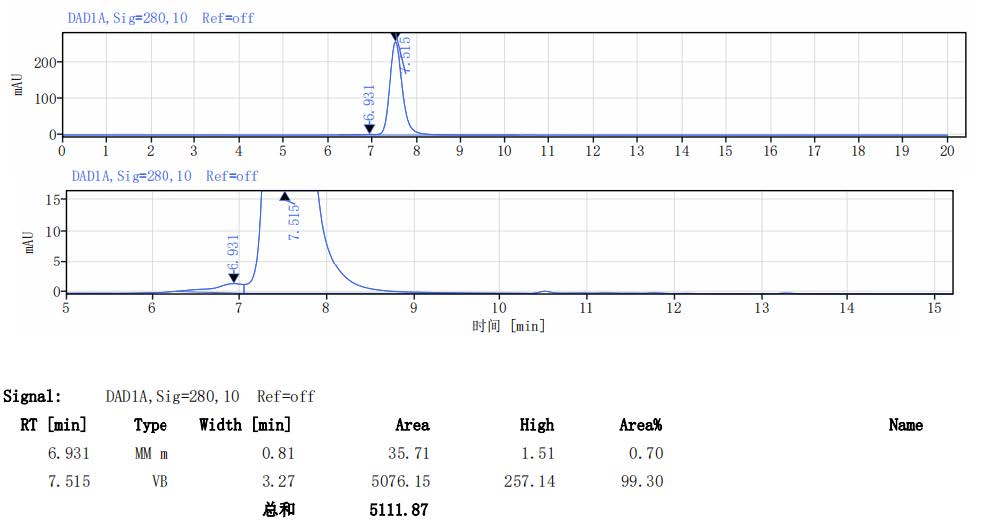
SEC-HPLC
ELISA

