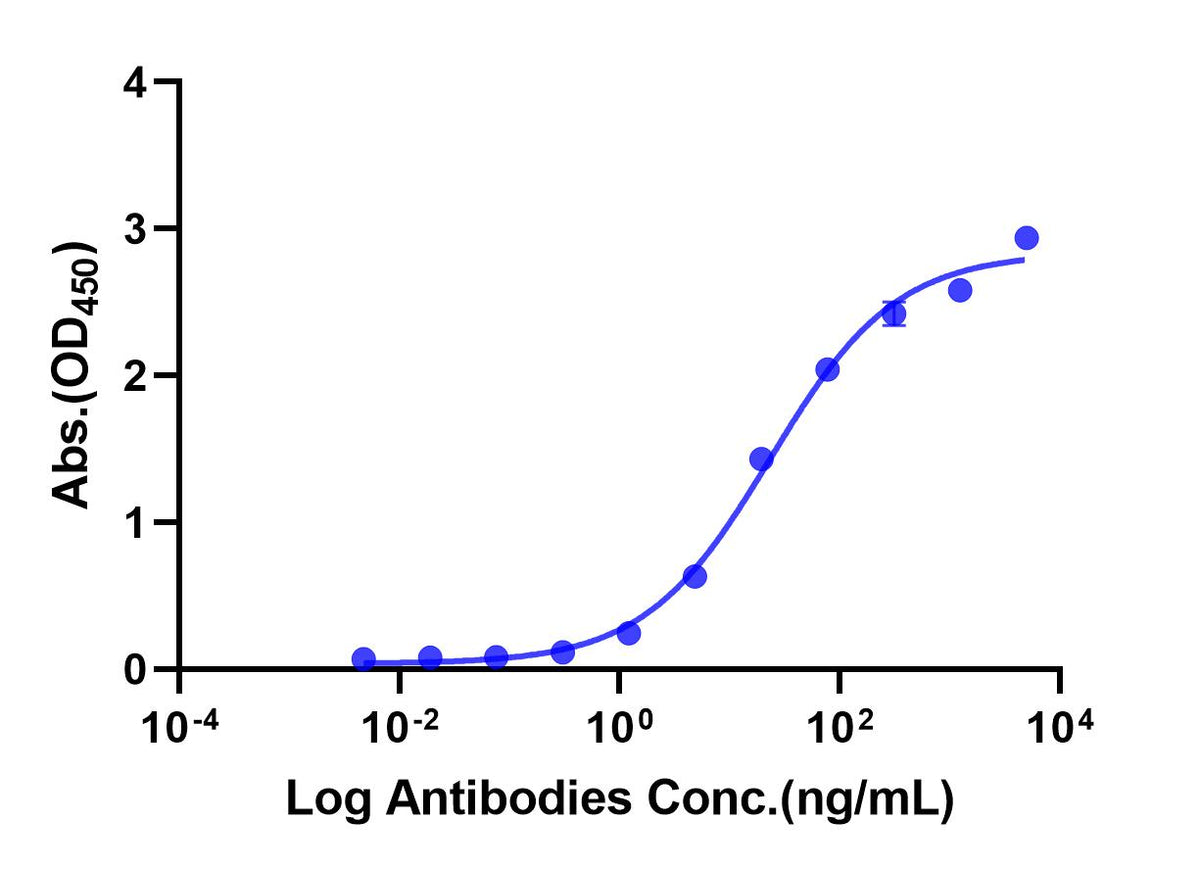
WB result of Anti-Human IL-23 Monoclonal Antibody (Mirikizumab)
Primary antibody: Anti-Human IL-23 Monoclonal Antibody (Mirikizumab) at 1/1000 dilution
Lane 1: IL-23 Protein, Human 1 µg
Secondary antibody: Goat Anti- human IgG, (H+L), HRP conjugated at 1/10000 dilution
Predicted MW: 21 kDa
Observed MW: 23 kDa
Anti-Human IL-23 Monoclonal Antibody (Mirikizumab)
Anti-Human IL-23 Monoclonal Antibody (Mirikizumab)
Price:
Regular price
$335 USD
Regular price
Sale price
$335 USD
Unit price
per
For shipping services or bulk orders, you may request a quotation.
Secure checkout with

View full details
Product Details
Product Details
Product Specification
| Host | Human |
| Antigen | IL-23 |
| Synonyms | Interleukin-23 subunit alpha; IL-23 subunit alpha; IL-23-A; Interleukin-23 subunit p19 (IL-23p19); SGRF; IL23A |
| Location | Secreted |
| Accession | Q9NPF7 |
| Clone Number | S-4823 |
| Antibody Type | Recombinant mAb |
| Isotype | IgG4,k |
| Application | Blocking of IL-23 signaling Functional assays |
| Reactivity | Hu |
| Purification | Protein A |
| Concentration | 5 mg/ml |
| Endotoxin | <1EU/mg |
| Conjugation | Unconjugated |
| Physical Appearance | Liquid |
| Storage Buffer | PBS pH7.4, containing no preservative |
| Stability & Storage | 2 to 8 °C for 2 weeks under sterile conditions; |
Background
Interleukin-23 (IL-23) is a heterodimeric cytokine composed of a p19 subunit and a p40 subunit. The p19 subunit is unique to IL-23, while the p40 subunit is shared with IL-12. IL-23 plays a crucial role in the immune system, particularly in the regulation of T cell responses. It is involved in the differentiation and maintenance of Th17 cells, a subset of T helper cells that produce pro-inflammatory cytokines such as IL-17 and IL-22. These Th17 cells are essential for host defense against extracellular pathogens but can also contribute to chronic inflammation and autoimmune diseases when dysregulated. IL-23 signaling occurs through the IL-23 receptor complex, which includes IL-23R and IL-12Rβ1 subunits, and activates downstream pathways like JAK-STAT, leading to the production of various inflammatory mediators. Due to its involvement in immune-mediated inflammatory diseases, IL-23 has become a target for therapeutic interventions, with several biologics targeting the p19 subunit or the IL-23 receptor being developed and used in the treatment of conditions such as psoriasis, Crohn’s disease, and other autoimmune disorders.
Picture
Picture
Western Blot
ELISA
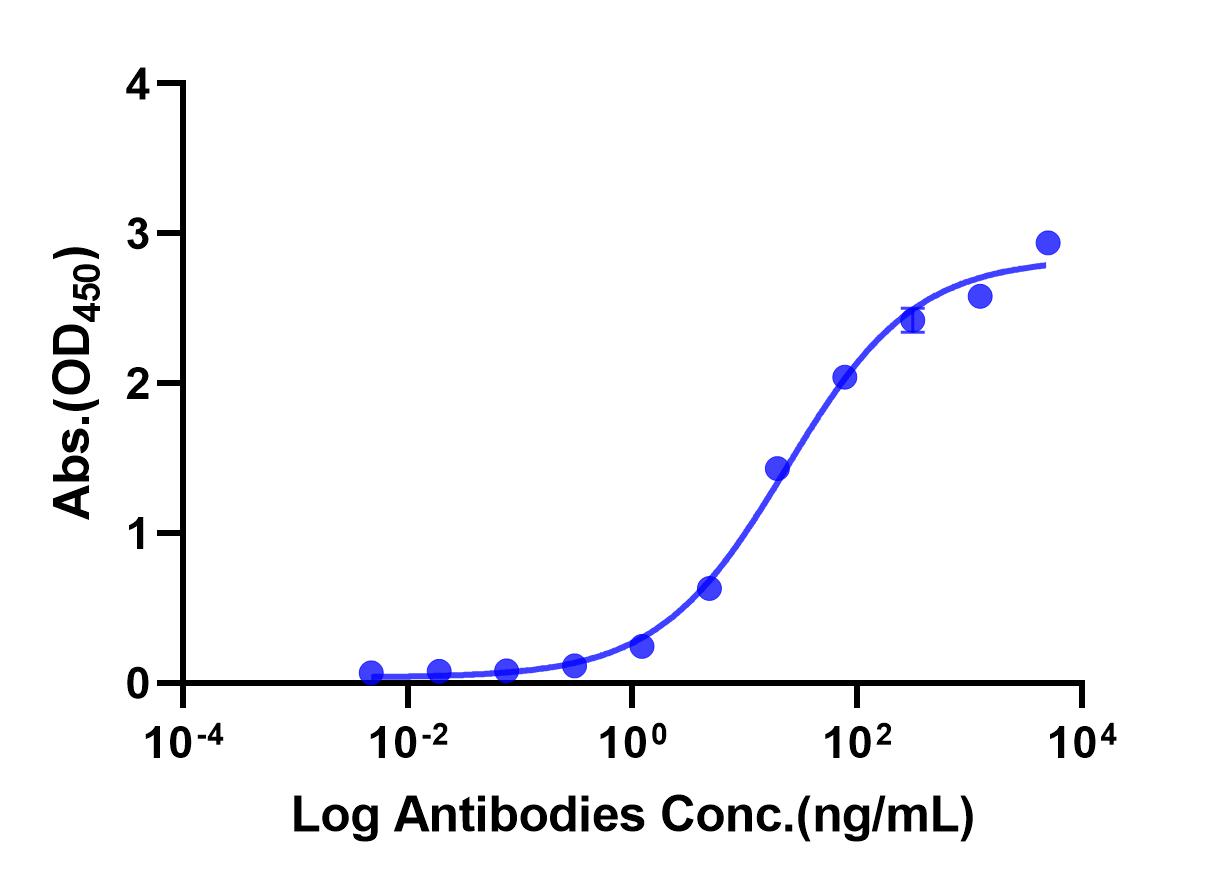
Immobilized IL-23 Protein Human(UA040502) can bind Mirikizumab. The EC50 for this effect is 23.55 ng/mL.