WB result of Anti-Human CEACAM5 Monoclonal Antibody (Labetuzumab)
Primary antibody: Anti-Human CEACAM5 Monoclonal Antibody (Labetuzumab) at 1/1000 dilution
Lane 1: CEACAM-5/CD66e His Tag Protein, Human 1 µg
Secondary antibody: Goat Anti- human IgG, (H+L), HRP conjugated at 1/10000 dilution
Predicted MW: 77 kDa
Observed MW: 110-180 kDa
Anti-Human CEACAM5 Monoclonal Antibody (Labetuzumab)
Anti-Human CEACAM5 Monoclonal Antibody (Labetuzumab)
Price:
Regular price
$500 USD
Regular price
Sale price
$500 USD
Unit price
per
For shipping services or bulk orders, you may request a quotation.
Secure checkout with

View full details
Product Details
Product Details
Product Specification
| Host | Human |
| Antigen | CEACAM5 |
| Synonyms | Cell adhesion molecule CEACAM5; Carcinoembryonic antigen (CEA); Carcinoembryonic antigen-related cell adhesion molecule 5 (CEA cell adhesion molecule 5Imported); Meconium antigen 100; CD66e; CEA s |
| Location | Cell membrane |
| Accession | P06731 |
| Clone Number | S-4671 |
| Antibody Type | Recombinant mAb |
| Isotype | IgG1,k |
| Application | Blocking of CEACAM5 signaling Functional assays |
| Reactivity | Hu |
| Purification | Protein A |
| Concentration | 5 mg/ml |
| Endotoxin | <1EU/mg |
| Conjugation | Unconjugated |
| Physical Appearance | Liquid |
| Storage Buffer | PBS pH7.4, containing no preservative |
| Stability & Storage | 2 to 8 °C for 2 weeks under sterile conditions; |
Background
CEACAM5 (Carcinoembryonic Antigen-Related Cell Adhesion Molecule 5), better known as carcinoembryonic antigen (CEA), is an acidic glycoprotein first discovered in colorectal cancer and named accordingly. It belongs to the immunoglobulin superfamily. Under normal circumstances, its expression level in the colonic epithelium of adults is extremely low, but it becomes significantly overexpressed in a variety of epithelial tumors, particularly colorectal cancer, gastric cancer, pancreatic cancer, lung cancer, and breast cancer. Through its extracellular adhesion domain, this protein mediates homophilic or heterophilic intercellular interactions. Its core function is a "double-edged sword": under normal physiological conditions, it acts as an adhesion molecule involved in maintaining tissue structural integrity; however, within the tumor microenvironment, highly expressed CEACAM5 delivers inhibitory signals into cells via its intracellular immunoreceptor tyrosine-based inhibitory motif (ITIM), thereby suppressing the activity of immune cells (such as T cells and NK cells) and facilitating tumor immune evasion. Based on these properties, CEACAM5 is not only the most widely used tumor serum biomarker in clinical practice (for monitoring treatment efficacy and follow-up for recurrence), but has also emerged in recent years as a highly promising therapeutic target.
Picture
Picture
Western Blot
ELISA
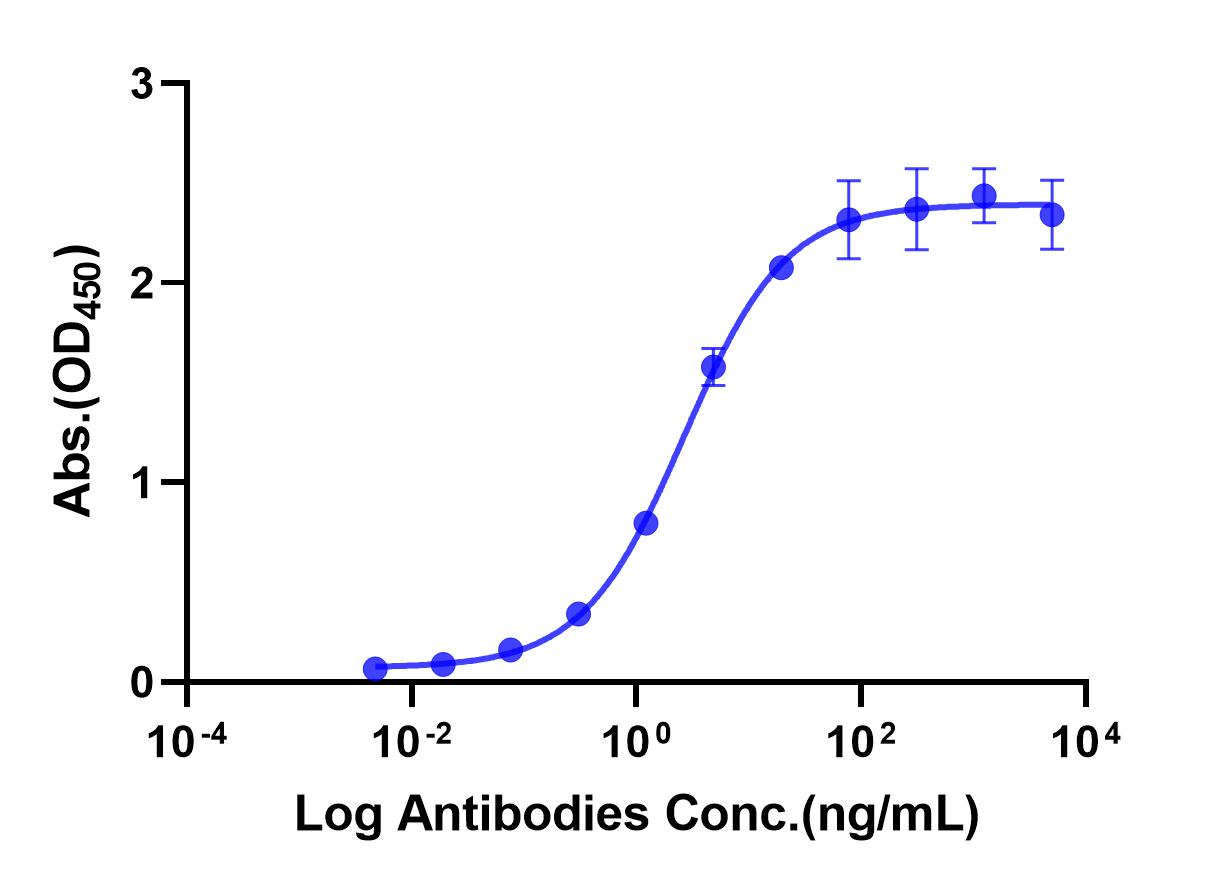
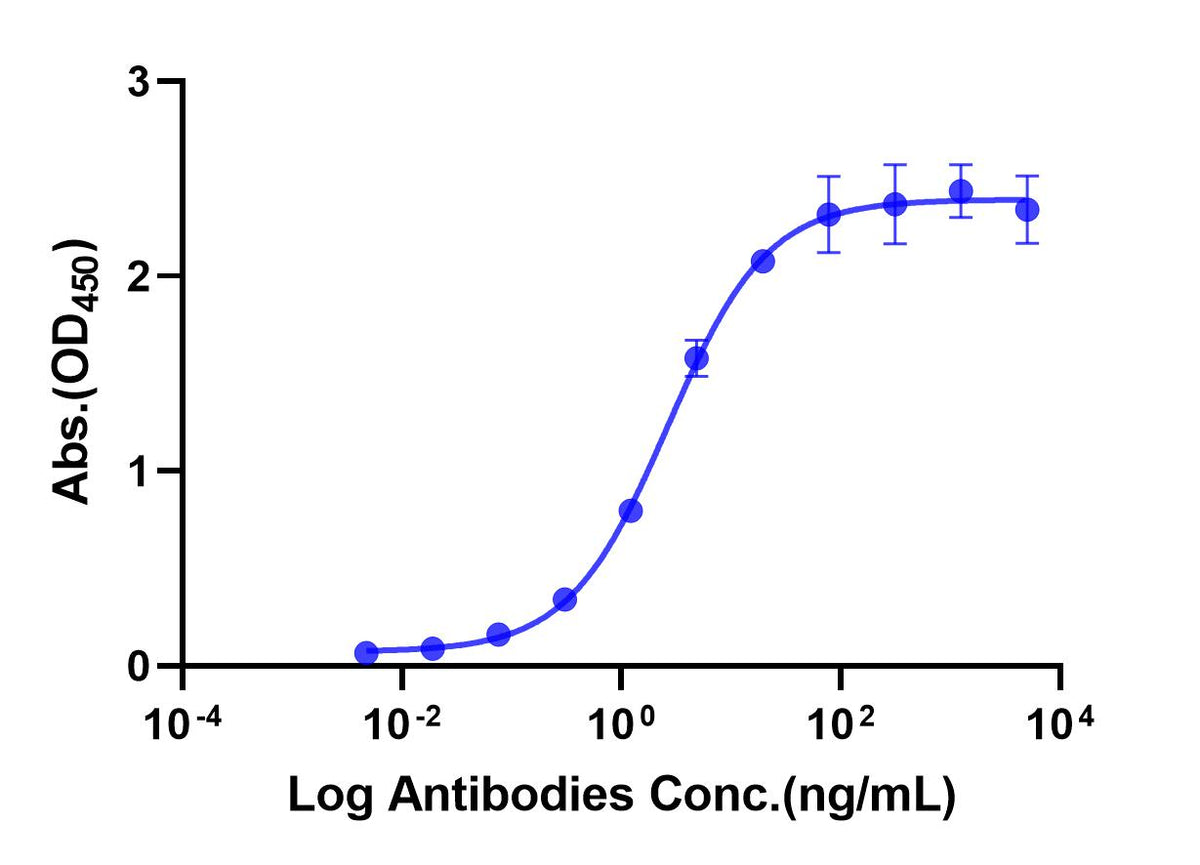
Immobilized CEACAM-5/CD66e His Tag Protein, Human(UA010288) can bind Labetuzumab. The EC50 for this effect is 2.669 ng/mL.