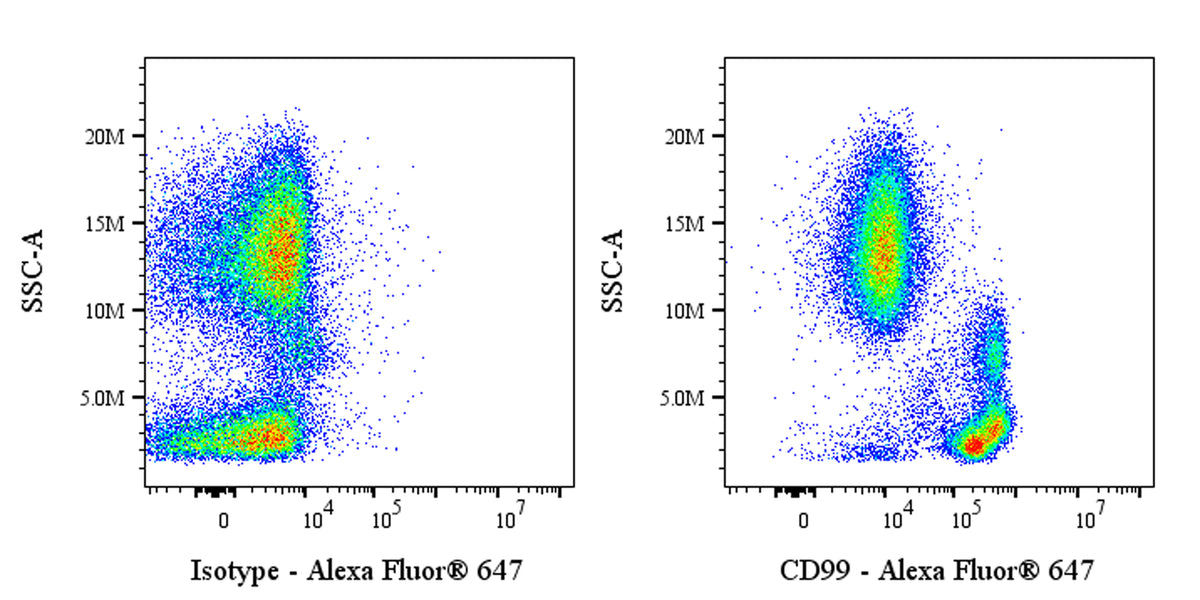
Flow cytometric analysis of CD99 expression on human peripheral blood leukocytes. Human peripheral blood leukocytes were stained with either Alexa Fluor® 647 Mouse IgG2a, κ Isotype Control (left panel) or SDT Alexa Fluor® 647 Mouse Anti-Human CD99 Antibody (right panel) at 5 μl/test. Flow cytometry and data analysis were performed using Agilent NovoCyte Quanteon and FlowJo™ software.
Alexa Fluor® 647 Mouse Anti-Human CD99 Antibody (S-R646)
Alexa Fluor® 647 Mouse Anti-Human CD99 Antibody (S-R646)
Price:
Regular price
$120 USD
Regular price
Sale price
$120 USD
Unit price
per
For shipping services or bulk orders, you may request a quotation.
Secure checkout with

View full details
Product Details
Product Details
Product Specification
| Host | Mouse |
| Antigen | CD99 |
| Synonyms | CD99 antigen; 12E7; E2 antigen; Protein MIC2; T-cell surface glycoprotein E2; MIC2; MIC2X; MIC2Y |
| Location | Membrane |
| Accession | P14209 |
| Clone Number | S-R646 |
| Antibody Type | Mouse mAb |
| Isotype | IgG2a,k |
| Application | FCM |
| Reactivity | Hu |
| Positive Sample | Human peripheral blood cells |
| Purification | Protein A |
| Concentration | 0.2 mg/ml |
| Conjugation | Alexa Fluor® 647 |
| Physical Appearance | Liquid |
| Storage Buffer | PBS, 1% BSA, 0.09% sodium azide |
| Stability & Storage | 12 months from date of receipt / reconstitution, 2 to 8 °C as supplied |
Dilution
| application | dilution | species |
| FCM | 5μl per million cells in 100μl volume | Hu |
Background
CD99, also known as MIC2 or single-chain type-1 glycoprotein, is a heavily O-glycosylated transmembrane protein encoded by the CD99 gene. It is widely expressed in various cell types, including hematopoietic cells, endothelial cells, and many types of cancer cells. This protein plays crucial roles in multiple biological processes such as cell adhesion, migration, differentiation, and apoptosis. In the immune system, CD99 is involved in T-cell activation, maturation, and the regulation of leukocyte transmigration. It also has a significant impact on tumor biology, as it is often overexpressed in cancers like Ewing sarcoma and certain leukemias. Engagement of CD99 by specific antibodies can induce caspase-independent cell death in tumor cells, making it a potential therapeutic target.
Picture
Picture
FC